
Cricket Betting Odds in Great Britain: A Complete Reader's Guide
 Available in US

Cricket is one of those sports where the odds page can tell you almost nothing useful until you understand the format underneath it. A Test match and a Twenty20 fixture look superficially similar on a betting slip — two sides, one winner market, a price — but the structure underneath them is so different that the bookmaker’s margin, the kinds of bet on offer and even which in-play markets exist all shift with the length of the game. This guide is written for the reader who wants to bet on cricket with a Gambling Commission licence behind the operator, who wants to understand the odds they are being shown rather than just accept them, and who wants to know what each of the reviewed bookmakers actually brings to a cricket price rather than what their homepage claims they do.
The angles this guide takes are those of the bettor choosing between options, not those of a market observer. Where a market or an offer has two competing pulls, both are named and one is recommended for the kind of reader it suits. The twelve sections that follow close in this order: the sport itself, the rank of bookmakers under review, the wider UK licensed market, the legal frame, player protection, bonuses and free bets in cricket terms, mobile and app betting, in-play and cash out, predictions and strategy, bet types and odds, the ten reviewed operators and a worked example of how the margin sits inside a price.
Current as of October 30, 2026 — verified against the Gambling Commission’s public register and each operator’s published terms.
Cricket the Sport, Before the Betting Line
A cricket side has eleven players. That much is constant across every format the World Test Championship, the ICC’s one-day international programme and the global Twenty20 circuit all field. From that constant, everything else fans out. Test cricket is the oldest form, played over up to five days with each team batting up to twice and a minimum of ninety overs scheduled per day. A Test can end in a win for either side or in a draw — there is no tie and no extra time. Twenty20 is the compressed end of the spectrum: each team faces a maximum of twenty overs (one hundred and twenty legal deliveries), a single bowler may bowl no more than four of those overs, and a level score is broken by a super over. One-day internationals sit between the two, with each side batting a fixed fifty overs; if scores are level when the chasing side runs out of overs or wickets the match is a tie, and rain-affected ODI innings are settled by the Duckworth-Lewis-Stern method, a calculation that resets the target to whatever total the side batting second ought, on average, to be able to chase in the overs remaining.
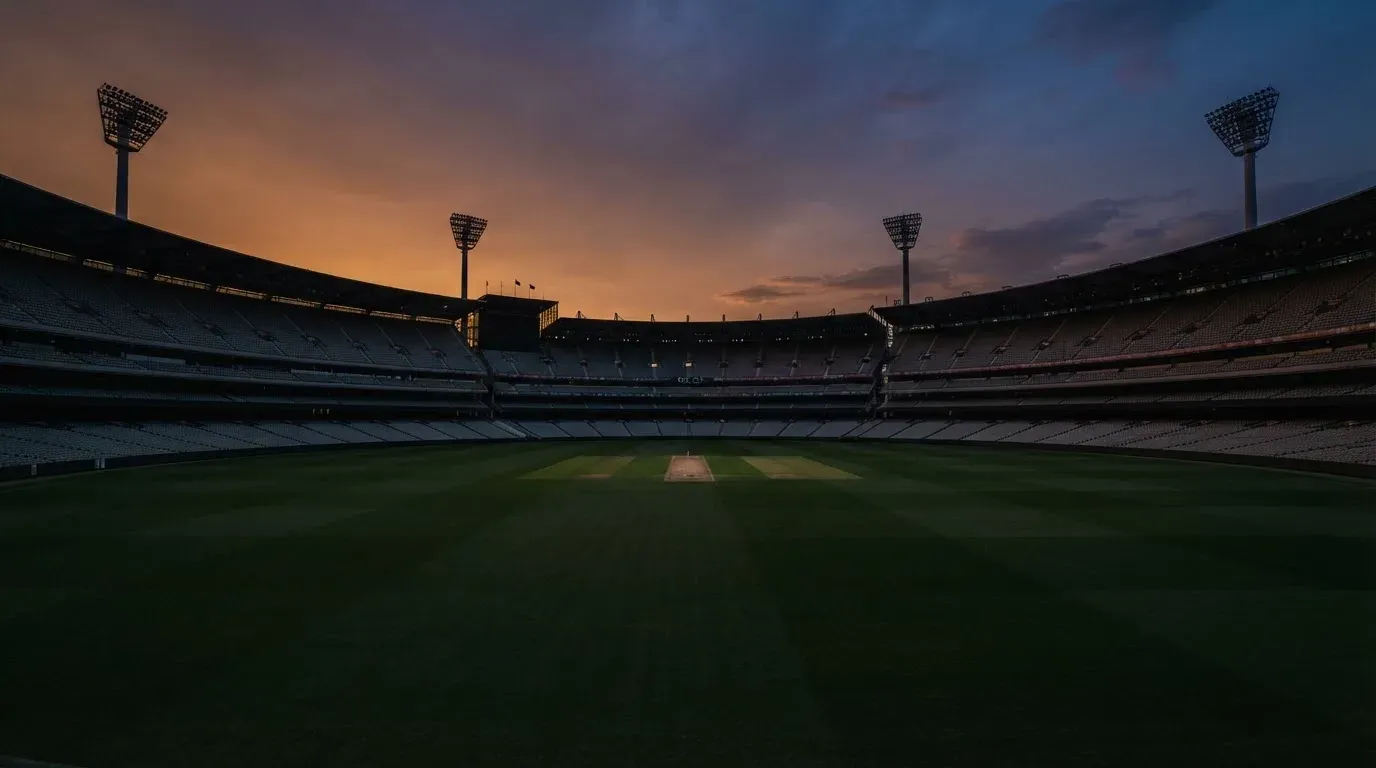
Three formats, three different betting shapes. Test matches settle at the close of play or the fifth day, which gives the in-play market long stretches during which very little changes and short bursts at the fall of a wicket or the close of an innings when everything does. Twenty20 innings last under two hours and the odds move ball by ball, which is why the in-play product matters more for T20 than for any other cricket format the licensed bookmakers price. ODIs sit somewhere in between: an innings is roughly three and a half hours long, the DLS rule means the live market can rebase at any rain break, and the over-by-over price feed is dense enough that a bettor watching is rarely staring at a frozen line for long.
At international level, twelve full ICC members hold Test status — Australia, England, India, New Zealand, Pakistan, South Africa, Sri Lanka, West Indies, Bangladesh, Zimbabwe, Afghanistan and Ireland — and the World Test Championship has run its seasons since the inaugural one in 2019, culminating in an ICC Test mace. The 2026 ICC Men’s T20 World Cup ran from 7 February to 8 March 2026 across India and Sri Lanka with twenty teams, and India won the final against New Zealand by 96 runs. Domestic fixtures — The Hundred, the Vitality Blast, the Big Bash, the Indian Premier League, the Caribbean Premier League, county cricket — flow underneath the international calendar and together give the UK-licensed bookmaker almost year-round cricket to price.
The Ten Bookmakers Reviewed, and What Sets Each Apart
Ten brands hold a place on the GB-licensed shortlist this guide reviews, in the order below. None is the only licensed UK brand; the Gambling Commission’s register lists thousands more. Each is a separate operator with its own licence, its own licence account and its own home terms, even where two of them sit inside the same parent group. The same caveat the whole page carries runs one sentence deeper here: a place in this comparison is not a recommendation, and an offer described below is described as the operator’s own terms state it.

Bet600 offers Best Odds Guaranteed on British and Irish horse racing — a starting price that beats the early or show price pays out at the SP — and a cricket price feed built around the same template. bet365 is the official global betting partner of the UEFA Champions League and the most-downloaded sports betting app in the UK, with cricket pricing inside a product that also carries Bet Builder+, Super Boosts, daily Bet Boosts and Winnings Boosts on builder singles and multiples. BetMGM runs a sports welcome in free bets that include football accumulators and sports multiples, and its UK site sits under LeoVegas Gaming PLC. BoyleSports, a long-established Irish and UK high-street name, takes the same welcome shape with regionally tuned free-bet values for GB and Irish customers. Octobet frames its cricket offering behind a sportsbook welcome split between a free-bet refund and a casino bonus. Dabble is built around peer-to-peer style betting features and runs a smaller welcome with a seven-day free-bet expiry. Sky Bet issues single-use or each-way free bets that expire after thirty days and are restricted to singles or each-way markets rather than multiples. Fitzwilliam Sports is a Dublin bookmaker running on a capped-membership model with a high-stakes welcome subject to compliance criteria. Kwiff is a Spryme Ltd trademark licensed by the Gambling Commission, with its UK app carrying a 17+ age rating. QuinnBet offers Best Odds Guaranteed on Irish and UK racing from 10:00 each day with a maximum benefit of £150 per customer per race, sitting alongside a cricket product that takes the same bookmaker-template structure as the rest of this set.
The UK Licensed Landscape Beyond the Ten
Ten brands on a shortlist is one face of the market; the wider one is considerably larger. The Gambling Commission’s public register is the test of who holds a GB licence, and any operator whose remote facilities are used in Great Britain needs a Commission licence wherever it is based. A Gibraltar, Maltese or Curaçao licence is not a substitute — the Gambling (Licensing and Advertising) Act 2014 closed that route, and the Commission can issue cease-and-desist notices, work with payment providers, hosts and registrars, and pursue court-order DNS blocking against unlicensed brands targeting British customers. There is no statutory cap on the number of licences, no state monopoly and no official list of permitted sports: cricket sits inside the operator’s own licence category and its own product terms.
The practical upshot is that a reader looking at the market sees more bookmakers than any single review can cover, and a meaningful number of them have cricket in their sportsbook year-round. Unibet, for one, has operated since 1999 and runs the UK site under Platinum Gaming Limited with Gambling Commission account 45322. Midnite cites Commission licence 101839 and packages its cricket feed around an in-play section, an acca builder and a popular-accas feed with maximum-stake price boosts. Lottoland’s UK app combines sports betting with casino, lottery and scratchcard products and holds a Commission licence for customers in Great Britain. Spreadex holds dual regulation: the Financial Conduct Authority governs its spread-betting product, where losses can exceed deposits, and the Gambling Commission governs its fixed-odds product, so a customer opening an account on the same platform gets two distinct regulatory frames depending on which side of the book they sit on. Kalooki Sportsbook operates under company number 12938274 with Gambling Commission account 57730 and signs up to GAMSTOP at the operator level. None of these carries the same UK high-street footprint as the ten above, but each has a place in the wider licensed shortlist and any of them sits inside a reader’s reasonable comparison.
The Legal Frame Around a Cricket Bet
The Gambling Act 2005 governs commercial gambling in Great Britain — England, Scotland and Wales; Northern Ireland runs on its own older law. The Gambling Commission, a non-departmental public body sponsored by the Department for Culture, Media and Sport, licenses the whole commercial market under that Act and runs the public register anyone can search by business name, trading name, domain or account number. Since the Gambling (Licensing and Advertising) Act 2014 an operator whose remote facilities are used in Great Britain must hold a Commission licence wherever it is incorporated, so offshore incorporation alone is no protection for a brand ignoring the regime.
Betting licence categories are worth knowing because they constrain what an operator can offer. Remote general betting standard (real events) covers the cricket this guide is about; remote general betting standard (virtual events) is a separate category for computer-simulated sport; remote general betting limited is a lighter-touch permission for smaller operators; remote pool betting covers off-course pool betting on horse and dog racing; and remote betting intermediary is the licence for betting exchanges, which take back-and-lay bets from customers against each other. An operator holding one of those permissions can list markets under its own rules, subject to the Licence Conditions and Codes of Practice, but there is no statutory list of permitted events or markets that adds another filter.
Identity is verified before the first deposit at any licensed remote bookmaker. Name, address and date of birth are checked, and the check runs before the customer can deposit or place a bet, including a bet paid with a free bet or bonus. Credit cards have been banned for gambling in Great Britain since 14 April 2020 — debit cards and bank-based payments are not part of that ban. The minimum age is eighteen.
The player pays no tax on betting winnings in Great Britain. General Betting Duty is the operator’s tax on its gross profits at 15% for the period up to 31 March 2027, when a new remote betting rate of 25% applies within the duty for remote bets generally; UK horse racing bets, betting-terminal bets, pool betting and in-person betting stay at 15%. Spread betting carries its own rates (3% on financial, 10% on other). Whether operators pass duty through into odds is not established, and a reader should not assume the duty shows up as a visible line on the betting slip.
A short note on the offshore question. A bookmaker targeting British customers without a Commission licence is committing an offence aimed at the operator, with penalties on summary conviction of up to fifty-one weeks’ imprisonment, a level-5 fine, or both (six months in Scotland). No offence aimed at the customer who merely places the bet was found in the statute — but the customer gives up the protections a licence brings: no GAMSTOP coverage, no approved dispute-resolution route, no Commission complaints process, no consumer redress if funds are withheld, and the offer sits outside the 10x bonus wagering cap (described below) and the £150 financial-vulnerability check (described below). It is not “legal to use” and not “safe by default”; it is unprotected, and that is a different thing.
Player Protection, Stakes and the Way the Limits Work
Three layers of protection are worth a cricket bettor’s time.
The first is GAMSTOP, the national multi-operator online self-exclusion scheme, a mandatory licence condition for online operators since 31 March 2020. Self-exclusion periods run at six months, one year, five years, or five years with auto-renewal; once the minimum period ends the exclusion runs on for a further seven years unless the customer asks GAMSTOP to remove it. GAMSTOP covers licensed online sites and apps; the betting shops use a separate service.
The second is the financial vulnerability check, in force since 28 February 2025 under LCCP condition 3.4.4. When a customer’s deposits minus withdrawals cross £150 in any rolling thirty-day window the operator runs a public-record check — bankruptcy registers, county court judgments and similar — on the customer. It is not an income check, and it is not a credit-reference check; the threshold is fixed and the trigger runs automatically. Financial risk assessments — the so-called affordability checks — were announced in a staged plan in a Commission article of 7 July 2026 without a start date, and the right line on that is “announced, staged, no start date”, because the page then matches whatever the Commission has actually published.
The third is the operator’s own deposit-limit framework under Remote Technical Standard 12. Operators must offer a gross deposit limit on a fixed time frame; the first changes have applied since 31 October 2025, a second phase was postponed to 30 September 2026, and whether that second phase is live is not established. There is no state-set maximum stake or maximum loss on a cricket bet at a licensed operator: the operator sets its own limits and may restrict individual customers. Limits the customer sets are the customer’s choice; limits the operator sets are the operator’s call.
Help sits in plain sight at every licensed site. GamCare runs the National Gambling Helpline. GambleAware funds treatment and education. The NHS runs gambling clinics. Gamblers Anonymous runs support meetings. Fitzwilliam Sports makes those four links visible on its home page; the others carry the same links lower down, which is the standard pattern across the licensed market.
Bonuses and Free Bets on Cricket — What the Headline Numbers Conceal
A sports welcome at a licensed UK bookmaker today takes one of three shapes, and the headline figure on the homepage is rarely the figure the reader keeps. The shape and the terms are what to weigh, and the wagering requirement is what makes the difference.
BetMGM’s sports welcome for new UK customers who deposit £10 or more and place a sports bet within seven days pays out as four £10 free bets — two football accumulators with four or more selections each and two sports multiples with two or more. Each free bet is valid for seven days from crediting, a minimum-odds rule applies, and an opt-in is required. BoyleSports’ UK sports welcome pays £20 in free bets against a £10 qualifying bet, with an Irish-customer variant of €30 in free bets against a €10 bet. Octobet’s sportsbook welcome is 50% back as a free bet up to £50, plus a £10 casino bonus for new customers, so a £20 deposit at the headline rate returns £10 as a free bet plus the casino bonus. Dabble’s welcome runs as “Bet £10, Get £10 in Free Bets” on a first deposit for new customers, with a minimum-odds rule, a seven-day free-bet expiry and the stake not returned on a winning free bet. Sky Bet free bets expire thirty days after crediting and are restricted to single or each-way markets, excluding virtuals and multiples; they are non-withdrawable, and the stake is not returned with winnings. Fitzwilliam Sports’s “High Stakes Welcome” is subject to compliance criteria and a capped-membership model.
Two technical points shape how much the free bet is worth in practice. First, on most UK free-bet offers the stake is not returned with a winning bet, which means a £10 free bet at odds of 3.00 returns £20 in profit, not £30. Second, the wagering cap put in force on 19 January 2026 limits the wagering requirement on a bonus to ten times its value: a £10 bonus at 50x would have needed £500 of qualifying bets; under the cap no more than £100 of qualifying bets is needed. Whether the cap applies to free bets with no wagering condition is not established, and the right read on the market is that most cricket-orientated free bets sit inside the cap and any heavier offer stands out for a reason. Mixed-product promotions — an offer that requires gambling across betting, casino, bingo and lottery together — are banned under the same 19 January 2026 rules.
A bonus is one of two things at a licensed bookmaker: it is either a cash bonus the operator credits with a wagering requirement, or it is a free bet the operator credits with no wagering condition. The two behave differently. A free bet whose stake is not paid back is worth less than its headline value the moment the odds are not even money; even a top-priced cricket selection at even money returns only the profit, never the stake. A 100% deposit match bonus that comes with a 10x wagering requirement needs ten times the bonus amount as qualifying bets at the minimum price, and the bookmaker’s margin on cricket eat into those bets at exactly the rate the next section describes. The marketing word is “free”; the arithmetic is what the reader pays it for.
Mobile and App Betting on Cricket
Cricket travels through the smartphone the way most UK sports betting now does. bet365’s iOS app is the most-downloaded sports betting app in the UK, with cricket pricing wrapped around Bet Builder+ (which combines markets from one event into a single bet both pre-match and in-play), Super Boosts, Winnings Boosts on builder singles and multiples, and a daily Bet Boosts feed. BetMGM’s UK app carries its sports welcome and the same multi-product crossing that accompanies it. BoyleSports and Octobet run dedicated sports apps with cricket inside an A-Z sportsbook. Dabble’s product is built around a feed-heavy, peer-style interface on a native app. Sky Bet’s app pairs its cricket book with a single-bet, each-way-only free-bet framework. Kwiff’s app is rated 17+ on the UK App Store and is run by Spryme Ltd under Commission licence.
The native-app customer gets three things the desktop browser customer does not get quite as easily: push notifications for innings breaks and wickets in a match the bettor has placed on, faster biometric login, and a tighter live-data feed where the in-play markets refresh ball by ball. The reader who bets on a Twenty20 match and wants to see price moves between overs will, in practice, place and settle most of those bets inside the app rather than the browser tab. The browser-tab reader still gets the same odds, the same markets and the same bonus structure, and sees them on a slightly slower pipeline.
A practical note on the cumulative effect of price-boost and builder features: each is a small uplift, but stacked under an accumulator they can lift a multi-leg price by a meaningful amount. The reader who combines a cricket match result with a player-performance leg should price the builder on the home bookmaker, on a competitor’s app and on a builder-specific app, and then place the bet on whichever shows the highest combined price for the legs the reader actually wants.
In-Play Betting and Cash Out on a Cricket Match
In-play is where the cricket format does the most work for the betting market. A Test match in-play product runs at a lower tempo: prices move at the fall of a wicket, at the close of an innings and at sessions breaks rather than ball by ball. A Twenty20 in-play product runs hot: prices move every delivery, the market for the next over, the next wicket method, the next batter’s runs sits open throughout the innings, and a bettor watching can close a position or top it up within a delivery or two. The ODI in-play product runs in between, with a hard interruption when rain hits and the Duckworth-Lewis-Stern recalculation lands.
Midnite’s site cites Commission licence 101839 and presents in-play events alongside an acca builder, popular-accas and price-boost sections with maximum-stake limits. That pattern — a separate “In-Play” tab, a live-multi market builder sitting inside it, a fixed list of boosted prices on the in-play section — is the dominant one across the ten reviewed operators. Cash out, where the operator offers to buy the bet back at a live price before the bet settles, is offered on single markets and on builder-combined singles; it is less consistently offered on accumulator legs because the operator’s edge on a multi-leg cash-out price is harder to model. The reader who wants a tight in-play pipeline should pick on the recency of the in-play data feed (sub-second price updates during a T20 powerplay) and on whether the operator runs cash out on builder singles.
Five live-bet decisions a cricket punter faces and the rule most readers end up following:
- On T20, never assume the innings-break price is the open of a new market; some books fold the break into a single live market and others split it.
- On an ODI shortened by rain, the live market resets at the DLS revision and old bets settle on the original match terms; the post-DLS price is a new market.
- On a Test, the close-of-play price freezes until the next morning; do not place a “session will be bowled” market on the basis of a stale quote.
- On a Twenty20, a tied match is decided by a super over; the live market for “match winner” can include the super over or it can stop at the tie. Check which one the operator runs.
- On a Twenty20, a bowler’s four-over limit makes the last over of an innings a market mover; the in-play feed will show the price tightening on a side holding the batting powerplay in the final over.
Predictions, Tips and the Honest Frame Around Them
“Cricket betting tips”, “cricket betting predictions”, “free cricket betting tips prediction” and the rest of the cluster around them are search terms where the marketing sits closer to the surface than on most betting searches. The honest frame is straightforward: no published tipster, model or platform can produce a “sure” bet, and the reader who acts on a tip because a tipster published it is paying for a tipster’s edge that nobody, including the tipster, can verify. A prediction is a probability statement. A price is another probability statement. They match or they don’t.
What does have value: a model that produces an estimated probability for each outcome, tested on out-of-sample data with the closing line of a sharp bookmaker as the benchmark. The standard test is whether the model’s probability beats the implied probability in the odds by enough margin to cover the bookmaker’s take. The reader who builds such a model will spend more time benchmarking it than building it, and the benchmark that matters is the closing line, not the opening line. The reader who buys tips from a tipster is buying a probability statement from someone whose incentive structure does not require the statement to be right: a tipster paid a flat subscription has no exposure to being wrong, and a tipster paid a share of profit has at least some.
Three rules most disciplined cricket bettors end up following:
- The bankroll is set first, the stake size is fixed at a small percentage of it (one to two per cent is the common band), and the stake is set before the match is watched. The point is to avoid the in-play over-stake.
- The price is checked at three bookmakers before the bet is placed, and the bet goes on the best price available on the selection the reader actually wants. Cricket markets are thin enough off the main fixture list that price-shopping is not a chore; it is the edge.
- The bettor bets fewer markets, more confidently, and keeps a written record. The record lets the bettor see whether their price-shopping and stake-sizing work over a sample of a few hundred bets rather than a feeling over twenty.
Bet Types, Odds and How the Margin Sits Inside a Price
A cricket bookmaker offers several markets at once, and the bettor’s choice of market is the bettor’s choice of bet type. The match winner is the headline — pick which side wins the match — and on a Twenty20 the tied-match outcome sits alongside the two sides because Twenty20 ties are settled by a super over. On an ODI the draw is a third outcome and a three-way book is built. On a Test the draw is one of three outcomes and the in-play market prices it as such. Beyond match winner, the standard markets the bookmakers price are: top batter, top bowler, method of first dismissal, total runs in an innings or in the match, total wickets in an innings or match, fall of next wicket, runs in the next over, partnerships, and the player-performance markets that pair the legs inside a builder.
Odds come in fractional and decimal form, and the conversion is fixed: a/b in fractional becomes a ÷ b + 1 in decimal. Odds of 5/1 in fractional are 6.00 in decimal; 11/4 are 3.75; evens (1/1) are 2.00. Decimal is what the betting slip settles in; fractional is the British idiom many readers still think in. The return on a winning bet is the stake multiplied by the decimal odds, and the profit is the stake multiplied by the odds minus one: a £10 bet at 3.75 returns £37.50 with a profit of £27.50. For a combination bet the legs multiply into one price, so a double at 1.80 and 2.20 settles at 3.96, and the return is the stake at that combined price.
The bookmaker’s margin is the edge a bookmaker builds into its odds. It is best understood by calculating the implied probability of all outcomes in a market. For a two-way market at 1.90 / 1.90, the implied probability is 1 / 1.90 = 0.5263 per side, summing to 1.0526 (or 105.26%). The overround (the amount over 100%) is 5.26%. The margin itself is (5.26 / 105.26) = 4.99% (approx 5%). This is the percentage of total stake retained by the bookmaker. A three-way market — at 2.10 / 3.40 / 3.60 — gives 1/2.10 + 1/3.40 + 1/3.60 = 0.4762 + 0.2941 + 0.2778 = 1.0481 (104.81%), meaning an overround of 4.81% and a margin of 4.59%.
The consequence is the part of the table no spreadsheet shows. Margin is the bookmaker’s edge on every market, and the bettor’s edge is whatever they can find above it. A 5% market is the kind of margin that sits behind a headline Twenty20 match-winner market at a sharp bookmaker; a 7–8% market is a thin in-play market with low liquidity; a 12% market is an exotic or a long-shot futures line. The reader who prices three bookmakers on the same Twenty20 match winner and sees 1.85 / 1.95, 1.83 / 1.97, 1.90 / 1.90 has, in the third book, an approximately 5% margin market where the first two sit in the 6–7% band. The value at decimal odds is the difference between the implied probability in the price and the bettor’s estimate; the difference between bookmakers is the difference between their margins.
The table below captures the headline data the reader is most likely to want in a single place: which bookmaker, which Gambling Commission licence sits behind it, which body is the named licence holder, and what the operator’s own terms state on a cricket-relevant subject — here, the welcome offer each one runs (qualitative only). The data is current as of October 30, 2026 and verified against the Commission’s public register and each operator’s published terms.
| Brand | Commission licence | Licence holder | Cricket-relevant operator terms |
|---|---|---|---|
| Bet600 | 044731-R-323941-016 | Tyche Tech Limited | Best Odds Guaranteed on UK and Irish horse racing |
| bet365 | 055148-R-331498-002 | Hillside (UK Sports) ENC | Bet Builder+ combining markets from one event, pre-match and in-play |
| BetMGM | 039198-R-319450-029 | LeoVegas Gaming PLC | Sports welcome paying out as four £10 free bets on qualifying deposit and bet |
| BoyleSports | 039469-R-319383-025 | Boylesports Enterprise | Sports welcome paying £20 in free bets on a £10 qualifying bet for UK customers |
| Octobet | 062545-R-337248-006 | Octopus Game Limited | Sportsbook welcome with a free-bet refund up to £50 and a £10 casino bonus |
| Dabble | 065677-R-340363-005 | Dabble Sports UK Ltd | Welcome of £10 in free bets on a £10 first-deposit qualifying bet, stake not returned |
| Sky Bet | 067370-R-341330-005 | SBG Sports Limited | Free bets restricted to single or each-way markets, expiring 30 days after crediting |
| Fitzwilliam Sports | 048760-R-335434-009 | SBKI Limited | Capped-membership model with a high-stakes welcome subject to compliance criteria |
| Kwiff | 044448-R-323408-017 | Eaton Gate Gaming Limited | Operator trademark of Spryme Ltd, App Store age rating 17+ |
| QuinnBet | 061011-R-335683-004 | QuinnBet (Gibraltar) Limited | Best Odds Guaranteed on UK and Irish horse racing from 10:00 daily, capped per race |
Worked example of the margin. Take a two-way market at 1.90 / 1.90. The implied probability is 52.63% per side, summing to 105.26%. The overround is 5.26% and the margin is 4.99%. For a wider market priced at 1.85 / 1.95, the implied probabilities are 54.05% and 51.28%, summing to 105.33%, which gives an overround of 5.33% and a margin of 5.06%. The margin on cricket markets fluctuates with liquidity. On flagship international matches, margins are typically tighter, while domestic or niche markets often carry a wider margin reflecting the risk profile.
The Ten Operators, One by One
Bet600 — a BOG-led Racing Shop with a Cricket Feed Alongside
Best Odds Guaranteed is the spine of Bet600’s offer to British customers: a starting price on horse racing that beats the early or show price pays out at the SP. The cricket feed sits underneath that spine and follows the standard match-winner and player-markets template a sharper operator would expect, with the prices re-priced to BOG-style liquidity on the bigger fixtures. The licence behind the brand is the remote general betting standard (real events) category held by Tyche Tech Limited under a Gambling Commission account published on the public register. The same operator sits behind the welcome shape and behind the same Commission-verified identity checks the rest of the licensed market runs.
Where Bet600 fits: the reader who bets mainly on horse racing, wants BOG without compromise, and wants a cricket feed that opens around the bigger international fixtures and the Hundred. The brand’s focus is clearly racing, and for the cricket-focused bettor, other options like bet365 provide more comprehensive in-play coverage.
bet365 — the Most-Used Cricket App and the Deepest Feed
bet365’s app is the most-downloaded sports betting app in the UK, and that footprint is the practical anchor for its cricket product. Inside the app the cricket feed reaches from the headline match winner down to the player-performance markets through Bet Builder+, and the price-boost and Winnings-Boost features apply to builder singles and multiples as well as selected singles. The licence behind the brand is the remote general betting standard (real events) category held by Hillside (UK Sports) ENC. bet365’s official partnership with the UEFA Champions League is the headline marketing tie, and the cricket product leans on the operational infrastructure that partnership helps fund.
Where bet365 fits: the reader who bets in-play on Twenty20 and wants the deepest in-play market on a UK-licensed site, who wants a builder product that combines several legs and lets them cash out, and who wants price boosts on the everyday cricket calendar rather than only the headline international. Its product complexity can be a hurdle for newer bettors, but for the experienced punter, the depth of market is hard to beat.
BetMGM — a Multi-Product Welcome Behind the LeoVegas Licence
BetMGM runs a sports welcome paying out as four £10 free bets — two football accumulators with four or more selections and two sports multiples with two or more — for new UK customers who deposit £10 or more and place a sports bet within seven days, with minimum-odds rules and an opt-in. Each free bet is valid for seven days from crediting. The licence behind the brand is held by LeoVegas Gaming PLC, and the operator’s multi-product positioning means cricket sits alongside casino on the same wallet. That positioning is the welcome’s logic: the four free bets cover the breadth of the product the operator offers rather than the depth of any one sport.
Where BetMGM fits: the reader who wants one app to cover casino alongside sports, who wants a free-bet welcome rather than a cash-bonus welcome, and whose cricket interest is the headline match winner rather than the in-play niche market. While the cricket feed is respectable, it remains tailored more for the casual sports fan than the dedicated cricket analyst.
BoyleSports — a Long-Established Irish and UK Brand with a £20 Free-Bet Welcome
BoyleSports’ UK sports welcome pays £20 in free bets against a £10 qualifying bet, with an Irish-customer variant of €30 in free bets against a €10 bet. The brand’s high-street heritage is its anchor, offering a multi-channel experience. The operator holds a remote general betting standard licence from the Commission (account 39469). The cricket feed covers standard markets, with an in-play product that is solid but not industry-leading.
Where BoyleSports fits: the reader who values the Irish and UK high-street heritage, who wants a £20-in-free-bets welcome against a modest stake, and whose cricket interest runs from the headline match winner to a handful of player-performance markets rather than a deep in-play pipeline. For those prioritizing high-street reliability, this is a solid choice.
Octobet — a Smaller Brand with a Cricket-Free Bet Welcome
Octobet runs a sportsbook welcome paying 50% back as a free bet up to £50, plus a £10 casino bonus. Deposits at the headline rate are matched as free bets; a £20 deposit returns £10, while £100 returns £50. The operator, Octopus Game Limited, is fully licensed by the Gambling Commission (account 62545). The cricket feed adheres to the standard template, balancing betting with casino offers.
Where Octobet fits: the reader who wants a partial-refund welcome shape against a heavier deposit, and whose cricket interest is the headline match winner rather than an in-play pipeline. The dual wallet for betting and casino appeals to some, though dedicated cricket bettors might find the in-play depth lacking compared to specialized books.
Dabble — a Feed-Heavy App with a £10-in-Free-Bets Welcome
Dabble’s welcome is £10 in free bets on a £10 first-deposit qualifying bet, with minimum-odds rules and a seven-day expiry. The product uses a social, feed-heavy interface. The licence is held by Dabble Sports UK Ltd under the Commission’s remote general betting standard (account 65677). The cricket feed covers the basics, and the welcome’s size highlights an emphasis on community interaction.
Where Dabble fits: the reader who likes a feed-style product with social commentary, whose stake size is modest, and whose cricket interest is the headline market rather than the in-play niche. The engagement-first approach is distinct, though it may not satisfy those seeking conventional, deep market access.
Sky Bet — a Free-Bet Welcome Restricted to Singles or Each-Way Markets
Sky Bet issues free bets expiring thirty days after crediting, restricted to single or each-way markets, with no stake returned on winnings. SBG Sports Limited holds the Commission licence for the brand (account 67370). Sky Bet integrates cricket into a wider product surface, using a focused single-market betting framework.
Where Sky Bet fits: the reader who bets singles or each-way and wants a brand whose welcome is built around that style rather than adapted to it, and whose cricket interest runs from a headline market to a one-off stake on a player-performance leg. It is a tailored experience, specifically excluding the multiples that some competitors encourage.
Fitzwilliam Sports — a Capped-Membership Dublin Bookmaker with a High-Stakes Welcome
Fitzwilliam Sports describes itself as a Dublin bookmaker with capped membership, instant deposits, fast withdrawals, and responsible gambling controls. The “High Stakes Welcome” is subject to compliance criteria. The operator, SBKI Limited, holds a Commission licence (account 48760). The product is tailored for the high-stake customer segment.
Where Fitzwilliam Sports fits: the higher-stake customer the operator is built around, who wants a Dublin brand identity behind the licence, and who expects the welcome to be calibrated accordingly. It serves a specific, professional-tier segment well.
Kwiff — a Spryme Ltd Brand with a 17+ App Store Age Rating and the Surprise-Promotion Frame
Kwiff operates under a Gambling Commission licence as a trademark of Spryme Ltd. Its headline feature is a “surprise” promotion where prices upgrade randomly on customer bets, which is the platform’s key differentiator. Eaton Gate Gaming Limited is the licensed entity behind the brand (account 44448).
Where Kwiff fits: the reader who enjoys a surprise-promotion product and is happy to take a slightly higher base margin in exchange for the upgrade window. Where it does not fit: the reader who wants a deterministic free-bet welcome with predictable terms, or who wants the deepest builder product on the page.
QuinnBet — BOG on UK and Irish Racing from 10:00 Daily, with a Cricket Product Alongside
QuinnBet offers Best Odds Guaranteed on Irish and UK horse racing from 10:00 each day, with a maximum benefit of £150 per customer per race. The cricket feed complements this racing spine in the standard bookmaker-template shape. QuinnBet (Gibraltar) Limited holds the Commission licence for the brand (account 61011).
Where QuinnBet fits: the reader who bets horse racing around the daily 10:00 BOG window and wants cricket feed rather than cricket depth on the same app, and who wants a per-race BOG cap that disciplines the staking on the racing side. It’s a racing-first proposition, with cricket acting as a secondary service.
Frequently asked questions
How does cricket betting work?
A cricket bet is a stake placed against a bookmaker’s price on the outcome of an event. The three principal formats — Test, ODI and Twenty20 — each get priced with the match-winner market at the head (where Test and ODI carry a draw and T20 carries a tie decided by a super over), a layer of player-performance markets underneath, and a live feed that moves ball by ball during an innings. A winning bet’s return is the stake multiplied by the decimal odds, and the profit is the stake multiplied by the odds minus one. The bookmaker’s licence regime is the Commission’s; the bookmaker’s identity check runs before the first deposit.
How do you place a cricket bet?
Open an account with a Gambling Commission-licensed bookmaker, complete the identity check the operator runs before the first deposit, pick a market under the sport header for the fixture, set a stake on the price shown, and confirm the bet on the slip. The bet settles when the market settles: a match-winner bet on a T20 settles when the match ends (or after the super over, depending on the operator’s terms); a market on “top batter” settles when the innings ends. Live bets are placed during the innings; pre-match bets are placed before it.
How do you win at cricket betting?
Nobody can guarantee a win at cricket betting, because the outcome of a cricket match is not known in advance and the bookmaker’s margin sits inside every market. The practices that disciplined bettors report as working over a sample of several hundred bets are these: pick markets where the bettor’s information advantage is genuine, stake a small fixed percentage of the bank (one to two per cent is a common band), price-shop across three bookmakers before placing the bet, and keep a written record of stake, price and outcome. The reader who follows those four practices will not necessarily win, but they will know whether their approach has worked.
How is a bookmaker’s Gambling Commission licence checked?
The Gambling Commission’s public register is the test of whether a brand holds a GB licence, and it can be searched by business name, trading name, domain or licence account number. The register entry shows the licence categories (for example remote general betting standard — real events), the licence holder and the trading names the holder is approved to operate. Cross-checking the trading name on the register against the trading name on the bookmaker’s home page is the standard reader-side check; a brand on the register but not on the page, or vice versa, is the prompt to ask the operator’s customer service before depositing.
How is a return on a bet worked out from the stake and the odds?
A winning bet’s return is the stake multiplied by the decimal odds, and the profit is the stake multiplied by the odds minus one. A £10 bet at 3.75 (11/4 in fractional) returns £37.50, with a profit of £27.50. For a combination bet the legs multiply into one price: a double at 1.80 and 2.20 settles at 3.96, and a £10 stake returns £39.60. A free bet whose stake is not returned behaves differently: a £10 free bet at 3.75 returns £27.50 in profit (the stake is not paid back), and the same bet at 1.50 returns £5.00 in profit. Fractional odds convert by the rule a divided by b, then plus one: 5/1 is 6.00, 11/4 is 3.75, evens is 2.00.
What is the bookmaker’s margin and how is it seen in the odds?
The margin is the edge built into odds. It is best understood by calculating the implied probability of all outcomes. For a two-way market at 1.90 / 1.90, the implied probability is 1 / 1.90 = 0.5263 per side, summing to 1.0526 (105.26%). The overround (the amount over 100%) is 5.26%. The margin itself is 5.26 / 1.0526 = 5.0%. A three-way market at 2.10 / 3.40 / 3.60 gives 1/2.10 + 1/3.40 + 1/3.60 = 1.0481 (104.81%), meaning an overround of 4.81% and a margin of 4.59%.
Rugby, cricket & Gaelic – oddsguaranteed
Content created by the «oddsguaranteed» team
