
Where to find boxing odds that pay what they say they will
 Available in US
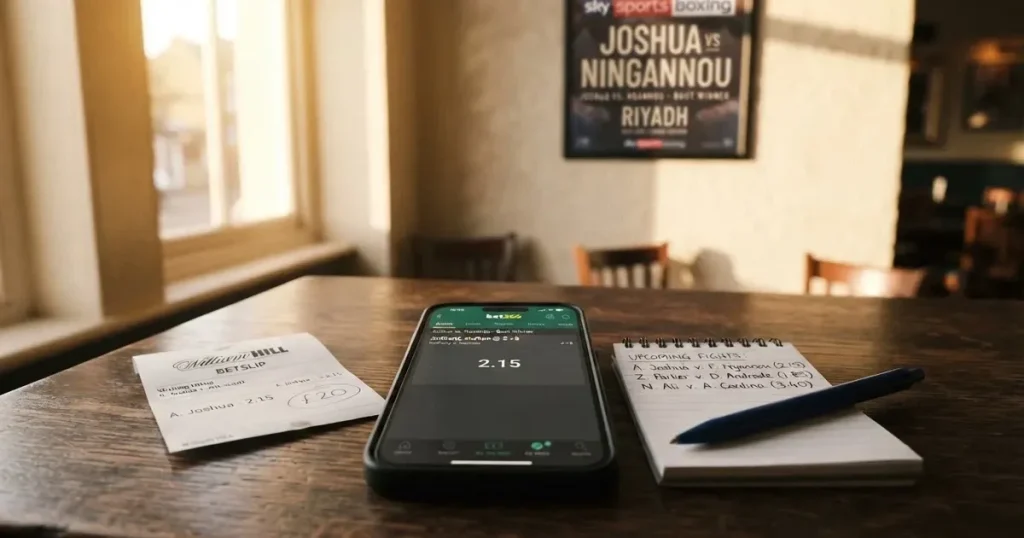
Boxing betting odds in Great Britain live at the intersection of two things the punter actually cares about: the price a bookie quotes on a given fight, and the licence that makes the rest of the experience — deposits, withdrawals, dispute routes, GAMSTOP — work the way the law says it must. Every operator in this ranking holds a Gambling Commission remote licence, because the Gambling Act 2005 and its 2014 amendment make that licence compulsory for any bookmaker taking bets from customers in Great Britain, regardless of where the company itself is incorporated. From that single decision the rest follows: this page compares ten of those licensed operators side by side, explains how the odds are built and what the margin inside them costs, and runs through the bet types, markets and tournament calendar that make boxing worth following with a betting slip in hand.
Current as of October 30, 2026, checked against the Gambling Commission’s public register and each operator’s own published terms.
Boxing betting predictions and where the honest edge stops
Boxing is the rare sport where the data the bettor really wants is hidden in plain sight. Each fighter’s record, age, reach, stance, recent opposition and stoppage rate is freely available; what is harder to come by is a clean read on how a bookmaker has turned that record into a price, and even harder to know whether the price has moved because the market knows something new or because the bookie is balancing a book. That gap is where most “boxing betting tips” services live, and it is also where most of them go wrong.
A useful starting point is to separate three layers of analysis that the marketing tends to blur together. The first is the public record: wins, losses, draws, by what method, against what calibre of opponent. A fighter with a long unbeaten run against journeymen is not the same proposition as one whose ten wins came against top-ten opposition, and a price treats them as the same shape until the form table is read properly. The second is the physical layer: reach, height, age, stance, the cut and bruise history, the training-camp reports that surface in the week of the fight. A tall switch-hitter facing a short pressure fighter is a different bet at any given price than the same two fighters reversed, and the difference compounds when you add a twelve-round title fight to a four-round debut. The third layer is the live state of the market: where the early price sits, how far it has drifted by fight week, whether the steam has gone with the favourite or against it, and whether a bookmaker is offering a price boost or acca insurance that makes a particular leg more or less attractive than it looks.
What stops being honest quickly is the leap from those three layers to a “prediction”. No public record tells you whether a fighter will throw a different combination in round eight than they did in round seven, whether a cut opens at the right moment for a doctor stoppage, or whether one man simply runs out of gas a round earlier than his record suggests. The pricing reflects this: boxing markets tend to be wider than football markets, and the bookie’s margin in a typical two-fighter fight is larger because the variance the model has to absorb is larger too. Pretending the gap can be closed with a “system” is the oldest pitch in the sport, and the page does not pretend to close it.
What the bettor can do, and what the page below tries to support, is narrower and more useful: read the public record carefully, choose markets whose pricing logic they understand, watch the margin a bookie is charging, and never confuse a confident forecast with a guaranteed one. Boxing tips and predictions work best when they are treated as a way of organising an opinion, not as a way of outsourcing one. The rest of this page is about the tools, the markets and the prices that the opinion has to be expressed through.
Bankroll structure for a boxing card-fighter tournament
Tournament cards — a televised bill with a main event, a co-main and several undercard bouts — invite a particular mistake: the punter spreads the bank across every fight on the card and ends up with five or seven small bets, none of them large enough to matter and several of them made on fights the bettor has not really thought through. The discipline that serves a card better is the opposite: pick two or three contests the bettor actually has a view on, leave the rest alone, and size each bet from the bank as a whole rather than as a slice of itself.

A workable structure is to set a bankroll for the night, decide in advance what share of it goes on the main event, what share on each undercard bet, and what share stays in reserve for live betting during the bouts. The reserve matters more in boxing than in most sports because fights end suddenly and in-play prices move on a single punch; a punter who has already spent the bankroll on pre-fight singles cannot react to a knockdown in round four, and the punter who can is the one with money still on the sideline. The two practical numbers to set in advance are a per-bet cap (so no single fight swallows the night) and a stop-loss (so a bad run on the undercard does not bleed into a reckless stake on the headline bout).
Where this page’s angle matters: ten different bookmakers are about to be compared, and not one of them improves a bankroll on its own. What they do offer is different price levels on the same fight, different markets on the same bout, and different in-play depth once the bell goes. Choosing among them is choosing among prices and features, not choosing among certainties.
Boxing bet types and how the odds settle
The bet types available on a boxing fight divide cleanly into three families: outright winner markets, method-of-victory markets, and round or stoppage markets. Each family has a different pricing logic and a different margin the bookmaker charges, and the punter who understands the difference is the one who notices when a particular bookie is unusually generous or unusually tight on a specific market.
Outright winner: the simplest price on the card
The outright winner market is the two-way price on fighter A versus fighter B, sometimes extended to a three-way line when the draw is offered as an outcome in its own right. The punter backs a fighter to win by any method; the price on each outcome reflects the bookmaker’s read on the probability of that fighter winning, plus a margin that varies by operator. In a two-way fight with no draw offered, the implied probabilities on the two prices sum to more than 100 per cent and the gap is the overround; in a three-way fight the gap is larger because the draw carries its own slice of the margin.
For a single bout the outright winner is where the bookmaker’s most public price lives, and where comparison between operators is easiest. Two bookies quoting Joshua at 4/6 and 8/11 are not quoting the same bet at different prices; one is offering roughly 1.67 in decimal and the other 1.73, and the difference is exactly what the punter saves by checking two apps before placing the slip.
Method of victory: a wider market with more margin
The method market breaks the bout into its possible endings: knockout, technical knockout, decision, disqualification. Each method carries its own price on each fighter, and a “method and fighter” combination multiplies them together — a bet on fighter A to win by knockout pays the knockout price multiplied by the price on A specifically. The method market is where a bookie’s trading team earns its margin: the model has to estimate not just who wins but how, and a four-outcome tree carries more uncertainty than a two-outcome one.
Two practical notes worth carrying into the betting slip: a knockout price usually shortens sharply as the fight progresses (a fighter down on the cards is more likely to be stopped, so the price on a stoppage win for the other man drifts shorter), and a decision price often drifts the other way as the bout goes deep. The in-play movement in method markets is the single most useful live signal in boxing, and a punter who watches the round-by-round tab on the bookie’s app is reading the same information the trader is reading.
Round betting, total rounds and the live line
Round betting names the exact round in which the fight ends, or a group of rounds (for example “in rounds seven to nine”). The market is wide and the prices are correspondingly long; the margin on round betting is usually the largest on the card because the variance is the largest. Total rounds, the over/under on how many rounds the fight lasts, sits closer to the outright market and is often the most efficient line the bookie offers.
Live betting on a boxing bout uses these same markets with prices updated round by round. A knockdown in round three resets the in-play outright winner market — the fighter who was 2/1 to win becomes 6/4 within seconds — and a punter who placed a pre-fight bet at the longer price has already locked in value. The in-play markets on the bigger fights run deep enough that almost any pre-fight market has a live equivalent, and the punter who prefers to watch the fight and bet in the late rounds is using a different tool rather than a worse one.
Each-way, accumulators and exchange betting on boxing
Each-way betting, which doubles the stake into a win bet and a place bet, is more common on horse racing than on boxing, but several bookmakers offer place terms on title fights and televised bouts. The place terms vary — typically a quarter of the outright odds for a bout that goes the distance, half the odds for a stoppage win — and the punter should check the terms before assuming a place payout covers a comfortable margin.
Accumulator bets on boxing are popular on a card with several fights: the punter combines two or more outright winners into one slip and the prices multiply. The bet is harder to win because every leg has to come in, but each leg’s price tends to be tight enough that a four-fold accumulator pays several times the stake even at modest per-leg prices. Acca insurance, offered by several bookmakers on this list, refunds the stake as a free bet if one leg lets the punter down; it changes the math, but only on the leg that loses, and the free bet is usually subject to its own wagering conditions and minimum odds.
Betting exchanges, run under a separate Commission licence category (remote betting intermediary), let the punter back a fighter at one price and lay the same fighter at another, in effect betting against other punters rather than against the bookmaker. The exchange price carries a commission on net winnings rather than a margin baked into every price, which is why exchange odds on popular fights tend to be slightly better than the equivalent bookmaker price and exchange odds on obscure fights tend to be worse — the liquidity is thinner. Matchbook, on this list, is an example.
How decimal and fractional odds read the same price
British bookmakers publish prices in fractional form (5/1, 11/4, evens), and decimal odds are usually shown beside them. The two are the same number in different clothes: fractional odds of 5/1 mean a £1 stake returns £5 in profit plus the £1 stake back, decimal odds of 6.00 mean a £1 stake returns £6 total. The conversion is straightforward — fractional a/b is decimal a ÷ b + 1, so 5/1 becomes 5 ÷ 1 + 1, the answer being 6.00, and 11/4 becomes 11 ÷ 4 + 1, the answer being 3.75.
For a punter comparing prices between operators, decimal is usually the easier form to work with because the multiplication for an accumulator is just the product of the decimals. A four-fold at 1.80, 1.90, 2.00 and 2.10 is 1.80 × 1.90 × 2.00 × 2.10, the answer being 14.36, which is the decimal odds on the combined bet. The fractional equivalent is harder to read at a glance and the punter who wants to compare a bookie’s accumulator price to an exchange’s accumulator price will end up converting to decimals either way.
Boxing sports and tournaments the bookmaker prices
Boxing, as a sport for betting purposes, divides into professional and amateur, and within professional into the four recognised world sanctioning bodies (WBA, WBC, IBF and WBO), the various regional titles, and the non-title bouts that fill out televised cards. The bookmaker follows the same hierarchy: the deeper the card and the bigger the sanctioning body, the wider the menu of markets and the tighter the margin.
The professional circuit and its titles
Professional bouts typically run ten to twelve rounds for a world-title fight and four rounds for a debut, with each round three minutes long and a one-minute rest between rounds. A bout ends by knockout, technical knockout (the referee, doctor or corner stopping the fight), decision on the judges’ scorecards, or disqualification for fouls. A draw is a possible outcome when the judges award equal scores.
The four world sanctioning bodies — the World Boxing Association (WBA), World Boxing Council (WBC), International Boxing Federation (IBF) and World Boxing Organization (WBO) — each crown their own champions, and a fighter holding all four belts at once is the rare “undisputed” champion. Bookmakers price each belt separately because the fights are scheduled and broadcast separately, and the punter following one sanctioning body’s title picture is following a slightly different schedule to the punter following another. The bigger the fight, the more markets the bookie offers: a world-title main event typically prices outright winner, method of victory, round groupings, total rounds, and either fighter to be knocked down, while a four-round debut on the same card may offer only an outright winner line.
Olympic boxing and the amateur calendar
Olympic boxing runs under different rules — shorter rounds, different scoring, headgear in some categories, and a tournament format that ends in a single bout rather than a points decision — and bookmakers in Great Britain treat it as they treat any other event under their remote general betting standard (real events) licence. Olympic boxing markets appear during the Games themselves and around the qualifying tournaments that feed into them; outside that window the market is essentially closed.
Promoter-led cards and the weekly schedule
The week-to-week rhythm of professional boxing is set by promoters and broadcasters rather than by a league table. A Saturday night card on a major broadcaster drives most of the week’s betting handle, and bookmakers publish prices in the days before, with the in-play markets going live when the broadcast begins. A midweek card on a smaller platform may still carry deep markets if the main event justifies them, and several bookmakers on this list now price fights that air only on streaming services.
For the punter, the practical consequence is that the betting menu is heaviest at the weekend and lightest midweek, and a card with three televised fights on a Saturday evening will support a wider range of bet types than a single midweek bout. The bookmaker’s own home page is the most reliable guide to what is actually priced on the day, because the menu changes fight by fight.
The top 10 boxing betting sites in Great Britain
Ten bookmakers, all holding a Gambling Commission remote licence for general betting on real events, reviewed below. Each card states the licence account number and licence holder, the welcome offer in the operator’s own terms, and the feature that distinguishes the brand in this comparison. The licence details are taken from the Commission’s public register; the welcome offer terms are taken from each operator’s own published terms; the feature is the one angle that sets the brand apart from the nine others in the table.
| Brand | Gambling Commission remote licence | What the operator’s own terms state on boxing |
|---|---|---|
| BoyleSports | 039469-R-319383-025 — Boylesports Enterprise | Sports welcome offer: £20 in free bets when a £10 bet is placed; €30 in free bets for a €10 bet for Irish players |
| Hollywoodbets | 053028-R-330019-013 — Hollywoodbets International UK Limited | New players depositing £10+ by card get their stake back as a free bet up to £30 on the first qualifying losing accumulator (stake £10+, 3+ legs, odds 4/1+, settled within 7 days); one free bet per customer |
| Bet600 | 044731-R-323941-016 — Tyche Tech Limited | Best Odds Guaranteed on horse racing: if the SP is bigger than the early or show price taken, the bet is paid at the SP |
| Tote | 054779-R-331321-008 — TDCO Limited | Pool-betting operator with a sportsbook alongside the tote product; horse and greyhound pools priced separately |
| Unibet | 045322-R-324275-019 — Platinum Gaming Limited | Operating since 1999; sports welcome offer: £40 in free bets when £20 is bet (min odds 2.0 / 1/1), free bets expire within 7 days, new GB customers using a debit card or instant bank transfer |
| Coral | 054743-R-330863-014 — LC International Limited | Sports welcome offer: £40 in free bets when £20 is bet (min odds 2.0 / 1/1), £40 issued within 7 days and expiring 7 days after issue, new GB customers who opt in |
| DragonBet | 064908-R-339041-003 — DragonBet Ltd | Welsh-focused sportsbook with racing, in-play betting and bet builder markets on its published app |
| DAZN Bet | 048756-R-327274-019 — DZBT Limited | Deposits from £5 by debit card, Apple Pay, Paysafecard, Trustly and Skrill, and from £20 by PayPal, with no processing fees |
| Matchbook | 039504-R-319407-024 — Triplebet Limited | Betting exchange where customers bet against other users, with Bet Builder, multiples, in-play betting and live streaming of horse racing and greyhounds |
| Betfred | 039544-R-319290-010 — Petfre (Gibraltar) Limited | Sports, casino and games app covering 21 sports plus over 2,000 casino-style games |
The licence account numbers above are the entries on the Commission’s public register; the punter who wants to confirm any of them can search the register by business name, trading name or domain and see the same numbers. The welcome offer columns state the offer in the operator’s own words and are current as of the snapshot date; the free bets in every case are subject to the operator’s own minimum odds, expiry and wagering conditions, which are set out in each brand’s published terms. None of these brands is “the only” licensed boxing bookmaker in Great Britain: the Commission’s register lists many more, and the table reflects the ten the page covers.
BoyleSports — the Irish-rooted sportsbook with a free-bet welcome
BoyleSports sits on the Commission’s register under account 39469, with Boylesports Enterprise as the licence holder. The sports welcome offer, taken from the BoyleSports GB App Store page, is £20 in free bets when a £10 bet is placed (€30 in free bets for a €10 bet for Irish players). The Irish heritage shows in the racing and football menu, but the boxing offering on the GB-facing site is built to the same standard as the rest of the sportsbook, with outright winner, method of victory and round-grouping markets on the bigger televised cards.
This operator distinguishes itself in this comparison through the welcome-offer-to-qualifying-bet ratio: £20 returned on a £10 qualifying bet is a 2:1 structure that costs the punter less to unlock than the £40-on-£20 structure several competitors run, and the qualifying bet can be placed at any minimum odds the brand publishes on its terms. The trade-off is the free-bet stake: like most bookmaker free bets, the £20 is paid back as a free bet whose stake is not returned with a winning wager, and the punter using it on a short-priced favourite is losing a meaningful slice of the headline value to the stake-not-returned rule.
Hollywoodbets — accumulator-first welcome for the card punter
Hollywoodbets is listed under Commission account 53028, with Hollywoodbets International UK Limited as the licence holder. The sports welcome offer, again from the GB App Store page, returns the stake as a free bet of up to £30 on the first qualifying losing accumulator: deposit £10 or more by card, place an accumulator of three or more legs at minimum odds of 4/1 (5.00 decimal), settle the bet within seven days, and the stake comes back as a free bet (one per customer) if the bet loses.
The brand’s distinguishing angle in this comparison is the structure of the welcome: the qualifying bet is an accumulator rather than a single, which is unusual among UK bookmakers and makes the offer well-suited to a punter who would have placed an acca anyway. The £30 cap on the free bet is the main thing to check — a winning first acca keeps the profit, a losing first acca at maximum stake returns £30 in free bet credit, and the credit itself is subject to its own minimum odds and expiry.
Bet600 — Best Odds Guaranteed as the headline feature
Bet600 sits under Commission account 44731, with Tyche Tech Limited as the licence holder. The published feature, per the GB App Store page, is Best Odds Guaranteed on horse racing: if the starting price (SP) on a horse is bigger than the early or show price the punter took, the bet is paid at the SP. Best Odds Guaranteed does not extend to boxing, and the punter choosing Bet600 for the racing offering will not get the same guarantee on a televised bout.
What the brand sets apart in this comparison is the BOG feature itself — a promise that pays out at the higher of two prices on the same selection — and the smaller catalogue around it. For a punter who bets horse racing heavily and uses a separate bookmaker for boxing, Bet600 is a sensible racing specialist rather than a boxing main; for a punter who bets both, the brand belongs on the racing slip rather than the boxing one.
Tote — the pool-betting heritage on a Commission-licensed site
Tote is listed under Commission account 54779, with TDCO Limited as the licence holder. The brand’s distinguishing angle is the pool-betting product itself: instead of fixing a price and laying it against the punter, Tote pools stakes together and pays out according to the pool’s final shape, with a separate take on horse and greyhound racing. The sportsbook alongside the tote product covers the standard menu of outright, method and round-grouping markets on boxing.
For a punter who has not used a pool product before, the maths is the one to get comfortable with first: a pool price is not a fixed price, the payout depends on how much was staked on each outcome and on the pool operator’s take, and the headline “dividend” is announced after the last race or fight. The boxing offering on Tote is a standard sportsbook, and the brand’s appeal to a punter who already pools on racing is the convenience of one account for both products.
Unibet — a long-established GB-facing sportsbook
Unibet is listed under Commission account 45322, with Platinum Gaming Limited as the licence holder. The brand states it has operated since 1999, and the UK site is the GB-facing version of that operation. The sports welcome offer, per the Unibet UK homepage, is £40 in free bets when £20 is bet at minimum odds of 2.0 (1/1 in fractional, evens and a fraction longer than evens), with the free bets expiring within seven days of issue and the offer open to new GB customers using a debit card or instant bank transfer.
What the brand sets apart in this comparison is the breadth of the menu: a long-established international bookmaker carries depth in both the pre-fight and the in-play boxing offering, and the welcome offer is a £40-on-£20 structure that is generous by the GB market’s own standards. The free-bet stake, as usual, is not returned with a winning wager.
Coral — same welcome structure, different operator
Coral sits under Commission account 54743, with LC International Limited as the licence holder, in the same corporate group as Ladbrokes. The sports welcome offer, per the Coral homepage, is £40 in free bets when £20 is bet at minimum odds of 2.0 (1/1), with the £40 issued within seven days and seven days to use it from issue, and the offer open to new GB customers who opt in.
The brand’s distinguishing angle in this comparison is the corporate parent — Ladbrokes Coral PLC, one of the largest high-street and online bookmakers in Great Britain — which gives Coral the depth of a major-chain sportsbook and the menu of markets that comes with it. The welcome offer is structurally identical to Unibet’s at the headline level, and the punter choosing between the two is choosing on price, on in-play depth and on the operator’s own market-specific promotions rather than on the headline bonus.
DragonBet — the Welsh-focused independent
DragonBet is listed under Commission account 64908, with DragonBet Ltd as the licence holder, and the brand’s distinguishing angle is its Welsh focus. The DragonBet app, per its GB App Store page, is published by DragonBet Ltd and features Welsh football and rugby markets alongside racing, American football, in-play betting and bet builder markets. The boxing offering sits within the same in-play and bet builder infrastructure as the rest of the sportsbook.
For a punter who follows Welsh sport closely, DragonBet’s market depth on Welsh football and rugby is the brand’s main selling point; for a punter whose interest is boxing alone, the brand belongs on a comparison list rather than at the top of it. The welcome terms are stated in the operator’s own published terms and should be checked before claiming.
DAZN Bet — the broadcaster-backed sportsbook
DAZN Bet is listed under Commission account 48756, with DZBT Limited as the licence holder. The brand’s distinguishing angle, beyond the broadcaster tie-in, is the deposit menu: the DAZN Bet help pages list deposits starting at £5 by debit card, Apple Pay, Paysafecard, Trustly and Skrill, and at £20 by PayPal, with no processing fees on any of them. The low minimum on five of the six methods makes the brand a useful option for the small-stake punter who wants to keep individual deposits below the £20 mark several competitors set.
The boxing offering sits within the standard sportsbook menu, and the in-play depth reflects the broadcaster relationship. For a punter who already subscribes to DAZN for the broadcast, the integration between app and feed is the practical upside; for a punter who does not, the deposit thresholds alone are a reason to look at the brand.
Matchbook — the betting exchange in the line-up
Matchbook is listed under Commission account 39504, with Triplebet Limited as the licence holder, and the brand operates under the Commission’s remote betting intermediary licence category rather than the standard remote general betting standard category that covers the other nine. The Matchbook app, per its GB App Store page, is a betting exchange where customers bet against other users, with Bet Builder, multiples, in-play betting and live streaming of horse racing and greyhounds.
What the brand sets apart in this comparison is the exchange model itself: prices on Matchbook are set by other punters, the operator takes a commission on net winnings, and the typical exchange price on a popular fight is slightly better than the equivalent bookmaker price once the commission is netted out. The trade-off is the thinner liquidity on less popular fights and the commission that takes a slice of any winning bet. For a punter comfortable with the back-and-lay mechanic, Matchbook is the obvious specialist on the list; for a punter who has only ever used a traditional sportsbook, the learning curve is the cost.
Betfred — the long-established high-street name
Betfred is listed under Commission account 39544, with Petfre (Gibraltar) Limited as the licence holder, and the Betfred Sports, Casino & Games app is published by Done Brothers (Cash Betting) Ltd. The app covers 21 sports plus over 2,000 casino-style games, which makes it one of the broader products in this comparison. The brand’s distinguishing angle is the high-street heritage and the breadth of the menu that comes with it.
The boxing offering sits within the standard sportsbook menu, and the welcome terms are stated in the operator’s own published terms. For a punter who values a familiar name and a wide menu, Betfred is one of the obvious choices; for a punter chasing the tightest price on a single fight, the comparison above and below is the better guide.
Boxing betting legality in Great Britain
Boxing betting in Great Britain is legal in the straightforward sense: there is no statute that prohibits a bookmaker licensed by the Gambling Commission from offering markets on professional or amateur boxing, and there is no statute that prohibits a customer from placing a bet on a licensed site. The legal framework that governs the activity is the Gambling Act 2005, the Gambling (Licensing and Advertising) Act 2014, the Licence Conditions and Codes of Practice (LCCP) that the Commission publishes, and the Remote Technical Standards (RTS) that set the operational requirements for online operators.
The point-of-consumption rule and why it matters
The single most important rule for a punter comparing sites is the point-of-consumption licence requirement. Since the 2014 amendment to the 2005 Act, an operator needs a Gambling Commission licence wherever it is based if its remote facilities are used by customers in Great Britain. A Curaçao, Maltese or Gibraltar licence is not a substitute; the relevant test is whether the operator holds a Commission licence, and the Commission’s public register is the only authoritative source for that answer. Every brand in the ranking above holds such a licence; the punter choosing a brand outside the ranking should check the register before depositing.
Identity verification and the loss of anonymous play
Since 7 May 2019, every licensed remote operator has had to verify a customer’s name, address and date of birth before the customer can deposit or gamble, including with a free bet or bonus. The verification is not optional, and the licensed site that asks for a driving licence and a utility bill at registration is following the rule, not inventing a barrier. The practical consequence is that no licensed site in Great Britain offers anonymous play: the account is tied to a verified identity, and the same identity is used for withdrawals.
For a punter coming from a market where anonymous play was the norm, the verification is the visible cost of the licensed route. The upside is the consumer protection that comes with it: a regulated complaints route, a GAMSTOP opt-out that actually excludes the punter from every licensed site for the chosen period, and a money-laundering framework that requires the operator to ask source-of-funds questions at higher spend rather than ignore them.
Age, payments and the credit-card ban
The minimum age for any gambling product in Great Britain is 18, and the licensed operator verifies age as part of the same identity check. Credit cards have been banned for gambling in Great Britain since 14 April 2020 (LCCP condition 6.1.2), and the ban extends to credit-card-funded payments through an e-wallet. Debit cards and bank-based payments are not covered by the ban, and the punter funding a betting account with a credit card is funding it through a route the licensed operator is required to block.
No British named-account rule, state list of permitted payment methods or specific rule on cryptocurrency deposits at licensed operators has been published; the operator’s own published payment terms are the source a punter checks.
What may be bet on, and what may not
There is no statutory list of permitted bets or markets. An operator holds a licence for a category — remote general betting standard (real events), remote general betting standard (virtual events), remote general betting limited, remote pool betting, or remote betting intermediary (the licence for betting exchanges) — and offers markets under its own rules and the LCCP. In-play betting is offered by GB bookmakers and the controls are the operator’s licence conditions and customer-protection duties.
Bets on politics, TV shows and novelty markets are offered by GB bookmakers and no statutory prohibition was found. Esports are treated like any other event under the same licence category. The punter who wants to check that a particular market is offered by a particular operator should check the operator’s site on the day, because menus change.
The offshore route and what the punter gives up
A bookmaker licensed only outside Great Britain — in Curaçao, Malta, Anjouan or another offshore jurisdiction — does not hold a Commission licence and is not bound by the LCCP. Using such a site from inside Great Britain does not in itself create a customer offence: the section 33 offence under the Gambling Act 2005 is aimed at the operator providing unlicensed facilities, not the customer placing a bet. The punter who chooses the offshore route nonetheless gives up the protections that come with the licensed one: no GAMSTOP coverage, no Commission complaints route, no approved dispute-resolution body, no British consumer redress if funds are withheld, and the operator is not bound by the 10x bonus cap or the £150 financial vulnerability check.
Enforcement against unlicensed operators is disruption rather than blocking: cease-and-desist notices, search-engine referrals, work with registrars, hosts and payment providers, and the court-order DNS blocking powers the Commission has been given or is about to receive. The honest framing is that a licensed site offers checks, limits, GAMSTOP and a bonus cap, but also verification before the first bet; an unlicensed site offers none of the protections and the risk that funds are withheld. Neither is “the safe choice” by default, and the punter choosing between them is choosing which set of trade-offs to accept.
Responsible gambling and the licensed-site safety net
Responsible gambling in Great Britain runs through the Gambling Commission’s social responsibility code, the LCCP conditions that operationalise that code, the GAMSTOP self-exclusion scheme, and a network of free help services funded jointly by the industry. The page does not handle this section lightly: the help lines and the protection routes are part of why a licensed site is a licensed site, and the punter reading the page in a difficult moment deserves the names in full.
GAMSTOP and the multi-operator self-exclusion
GAMSTOP is the national multi-operator online self-exclusion scheme, mandatory for every GB-licensed online operator since 31 March 2020. The self-exclusion periods are six months, one year, five years, or five years with auto-renewal; after the minimum period has elapsed, the exclusion stays in place for a further seven years unless the customer asks GAMSTOP to remove it. GAMSTOP covers online sites and apps; betting shops use a separate self-exclusion scheme operated at the shop level.
The practical effect of a GAMSTOP registration is that every licensed operator is required to take reasonable steps to prevent the customer from gambling with them while the exclusion is in force. A punter who has registered and then tries to open a new account at a licensed site is blocked at verification, and the protection is one of the more robust consumer safeguards in the regulated market.
The financial vulnerability check and what it actually does
The LCCP financial vulnerability check, condition 3.4.4, has been in force since 30 August 2024, and the threshold for the check since 28 February 2025 is deposits minus withdrawals exceeding £150 in a rolling 30-day window. The check is a public-record check — bankruptcy registers, county court judgments and the like — and is not an income check and not a credit reference check. The punter hitting the £150 threshold is asked the relevant questions at the next deposit, and the licensed operator is required to act on the information the check returns.
A second layer, the financial risk assessments that the press has called “affordability checks”, is announced in a staged plan (Commission article of 7 July 2026), with no published start date. The page notes the announcement and the staging; it does not write that the affordability checks are in force.
Deposit limits and the customer’s own choice
Operators must offer a gross deposit limit on a fixed time frame under RTS 12. The first changes have applied since 31 October 2025 and a second phase has been postponed to 30 September 2026. There is no state-set deposit or loss ceiling for betting: limits are the customer’s choice, and the punter who wants a hard ceiling sets it on the operator’s responsible-gambling page rather than waiting for the regulator to set one.
Where to get help
The free help services are funded jointly by the licensed industry and are independent of the operators. GamCare runs the National Gambling Helpline; GambleAware funds research, treatment and the National Gambling Treatment Service; the NHS runs a small network of gambling clinics for severe cases; Gamblers Anonymous runs local support groups. The punter reading this page in a difficult moment, or the family member of one, can reach GamCare on the National Gambling Helpline without giving a name and without committing to anything beyond the call.
Crypto and anonymity in UK boxing betting
No GB-licensed bookmaker accepts cryptocurrency deposits. The Commission’s public register lists licensed operators by name and domain; the deposit methods each operator publishes on its own terms are the authoritative source for what that operator accepts. The punter who wants to bet on boxing with bitcoin, litecoin or bitcoin cash is looking outside the GB-licensed set.
What the licensed route does and does not allow
The licensed route in Great Britain requires identity verification before the first deposit, which means no anonymous play at a licensed site regardless of payment method. A punter funding a licensed account with bitcoin would still have to pass the name, address and date-of-birth check, and the operator would still have to apply the LCCP money-laundering controls. The licensed site that does accept crypto is a small subset of the licensed set, and the punter should check the operator’s own deposit page before assuming any given coin is accepted.
What the offshore route looks like
A crypto-first sportsbook licensed only in Curaçao, Anjouan or a similar jurisdiction typically accepts bitcoin, ethereum, litecoin and a handful of other coins, settles withdrawals in the same coin, and asks for far less identity verification than a GB-licensed operator. The trade-off is the loss of the protections described in the offshore section above: no GAMSTOP, no Commission complaints route, no British consumer redress if funds are withheld, no obligation to apply the 10x bonus cap, no financial vulnerability check at the £150 threshold. The punter choosing the offshore route is choosing the lighter verification and the weaker protection.
The honest summary on crypto
Crypto boxing betting in Great Britain lives mostly outside the GB-licensed set. The licensed operators in the ranking above take fiat deposits through the methods each publishes; the offshore operators take crypto and offer neither the licence nor the protections. The punter who wants both — crypto funding and a GB licence — has very little to choose from.
Boxing betting bonuses and what they actually cost
A boxing betting offer in Great Britain is usually one of three shapes: a sports welcome offer for new customers, a free bet tied to a specific fight or card, or a price boost on a particular outcome. Each is marketed in the language of “free” or “boosted”, and each carries conditions the punter reads at the cost of the offer rather than at the headline value.
The sports welcome offer and the wagering question
A sports welcome offer is the most common shape on the GB market, with examples from BoyleSports, Hollywoodbets, Unibet and Coral among others. BoyleSports returns £20 in free bets when £10 is bet; Hollywoodbets returns the stake as a free bet up to £30 on the first qualifying losing accumulator; Unibet and Coral both return £40 in free bets when £20 is bet at minimum odds of 2.0. The common shape is a free bet paid on completion of a qualifying bet, with the free bet subject to its own minimum odds, expiry and (in some cases) wagering conditions.
The marketing word that needs deflating is “free”. A free bet is paid as a free bet credit whose stake is not returned with a winning wager, and the punter using a £20 free bet at decimal odds of 3.00 collects £40 in profit, not £60. The wagering requirements on bonuses, since 19 January 2026, are capped at 10x the bonus base (a £10 bonus at 50x requires £500 of bets; under the cap no more than £100), and the punter reading a bonus with a wagering requirement above that cap is reading an offer from an unlicensed operator or an offer that has been amended to comply.
Price boosts, acca insurance and the value calculation
A price boost is the bookmaker raising the price on a specific outcome above the price the rest of the market is offering; the boost is usually small (a few points of decimal odds) and the bookie applies it to a single selection rather than to an accumulator. Acca insurance refunds the stake as a free bet if one leg of a qualifying accumulator lets the punter down, and the refund is on the leg that loses rather than on the slip as a whole.
Both offers are easier to evaluate than a welcome bonus because the comparison is on a single price. A price boost that takes Joshua from 1.91 to 2.10 is worth roughly the difference in expected return on a £10 stake, and the punter who would have placed the bet at 1.91 anyway is getting the boost as pure additional value. Acca insurance is harder to evaluate because the qualifying bet has to be the kind of bet the punter would have placed anyway, and the value of the insurance depends on the price the bookie charges for the free bet credit.
The hard part: reading the terms
Every offer above is governed by terms the operator publishes, and the terms are where the offer’s true cost sits. Minimum odds for the qualifying bet, minimum odds for the free bet, expiry on the free bet, payment-method exclusions, one-per-customer rules, and (occasionally) wagering requirements on the free bet itself are stated in those pages. The punter who reads the terms before claiming spends five minutes that the offer’s headline value does not always justify; the punter who does not read them finds the cost at the point of trying to withdraw.
The page does not publish a bonus code
The page does not print a bonus code, a promo code or a voucher code: the offer exists in the operator’s own terms, and the punter who wants to claim it reads those terms on the operator’s own site.
Boxing betting apps and the mobile experience
Boxing betting in Great Britain happens mostly on the phone, and the ten operators above each publish an app on the GB App Store. The app descriptions are each operator’s own statement of what the app does, not the regulator’s.
What the apps share
The apps on this list share a common infrastructure: a sportsbook with pre-fight and in-play markets, a bet slip, a cashier, a responsible-gambling section, an account verification flow at registration, and a login protected by the customer’s chosen credentials. The differences are in market depth, in-play speed, the quality of the live tracker and the convenience of the cashier.
What sets the apps apart
bet365 is the official global betting partner of the UEFA Champions League and its app is described as the most downloaded sports betting app in the UK. The app offers Bet Builder+ (combining markets from one event into a single bet, available pre-match and in-play), Super Boosts, Winnings Boosts on Bet Builders and selected singles, and daily Bet Boosts; it offers in-play betting and live streaming of events worldwide, plus Bet Track, Match Live and a Live Golf Tracker for following bets in play. The boxing offering sits within that infrastructure.
DragonBet, by contrast, is a smaller independent whose app features Welsh football and rugby markets alongside racing, American football, in-play betting and bet builder markets. The boxing menu on DragonBet is built to the same standard as the rest of the sportsbook but is shallower than bet365’s by virtue of the brand’s smaller scale.
Lottoland UK, mentioned in the research but not in the top-10 ranking above, combines casino, lottery betting, sports betting and scratchcards in a single app and states it is licensed by the Gambling Commission for customers in Great Britain. The boxing offering is part of the sportsbook portion of the app.
Betfred’s Sports, Casino & Games app covers 21 sports plus over 2,000 casino-style games and is published by Done Brothers (Cash Betting) Ltd. The breadth of the menu is the brand’s main selling point on the app side.
The punter’s choice between app and browser
The punter who bets on a fight from a tablet at home has a different ergonomic from the punter who bets from a phone on the way to the pub, and the app the punter chooses has to fit the use case. A pre-fight single is comfortable to place in a browser; an in-play bet on a knockdown in round seven is comfortable only on an app that opens quickly and remembers the login. The punter who bets mostly pre-fight can take the browser route; the punter who bets heavily in play should download the apps of two or three competitors and pick the one that feels snappiest.
Boxing live betting and cash out
Live betting on boxing is one of the more volatile in-play markets in British sports betting, and the punter who treats it well treats it as a different product from the pre-fight card. The difference between the brands is in the depth of the in-play menu and the speed at which prices update.
How live boxing prices work
A live boxing price updates after every significant event: a knockdown, a cut opening, a fighter backing off, a clinch that disrupts the favourite’s rhythm. The bookie’s trader updates the outright winner price and the method-of-victory price after each of those events, and the in-play book carries on a delay of one to three seconds depending on the operator. The punter watching the fight on a broadcast and the bookie updating the price are reading the same information at the same moment, and the punter with the faster app has the edge.
The method market is the most useful live market in boxing. A fighter down on the cards in round eight is more likely to be stopped; the price on a stoppage win for the other man shortens sharply; the price on a decision win drifts the other way. The punter who has locked in a pre-fight bet at the longer price has already captured value, and the punter watching the in-play method prices is watching the same information the trader is acting on.
Cash out as a price on the punter’s own slip
Cash out is the bookmaker offering to buy the punter’s bet back at a price the bookie sets, and the price is usually a discount on the bet’s true value at the moment of cashing out. The punter using cash out on a pre-fight single during a fight is selling the bet at a worse price than the in-play market would offer, and the punter who wants to lock in value on a winning position should compare the cash-out price to the in-play market price before accepting.
The trade-off is convenience: cash out closes the bet in one tap, while laying the bet on an exchange or placing a counter-bet on the in-play market takes more steps and may not be available on every fight. The punter who bets in small stakes and rarely watches the in-play market will find cash out useful; the punter who watches the in-play market and bets in size will usually find a better price outside the cash-out button.
Streaming and the live feed
bet365 offers live streaming of events worldwide, with Match Live and the Live Golf Tracker as additional ways of following bets in play. Matchbook offers live streaming of horse racing and greyhounds rather than of boxing, and the punter wanting to watch a fight on the bookmaker’s app usually needs a funded account or a recent bet on the event.
The honest summary on live betting
Live boxing betting is one of the more useful in-play products in British sports betting, and it is also one of the easier markets to give money back to the bookmaker on. The punter who approaches in-play as a separate product — with its own bankroll, its own discipline and its own understanding of which markets the bookie prices well — keeps more of the value than the punter who treats in-play as an extension of the pre-fight card.
How the bookmaker’s margin sits inside every price
The bookmaker’s margin is the slice of every pound staked that the bookie keeps on average, and it sits inside every price the bookie quotes. For a two-way market with decimal odds of 1.90 on each outcome, the calculation is straightforward: the payout share is 1 ÷ (1 ÷ 1.90 + 1 ÷ 1.90), which is 1 ÷ (0.5263 + 0.5263), the answer being 1 ÷ 1.0526, or roughly 0.950. The margin is 1 minus the payout share, which is 1 − 0.950, the answer being approximately 5%, or a band of roughly 4–6% once the rounding of the bookie’s published price is taken into account. The same calculation on decimal odds of 1.80 / 1.80 gives a payout share of about 0.901 and a margin of about 10%, the answer being roughly 9.9% to a single decimal place.
For a three-way boxing market — fighter A, fighter B, the draw — the implied probabilities sum to a larger number because there are three outcomes, and the margin the bookie charges tends to be wider than on a two-way market. A typical three-way boxing market at decimal odds of 1.50 / 3.00 / 6.00 has implied probabilities of 0.667, 0.333 and 0.167, summing to 1.167; the payout share is 1 ÷ 1.167, or about 0.857, and the margin is about 14%, the answer being roughly 14.3% to a single decimal place.
The punter reading a price on a fight card can use the same calculation on any market the bookie publishes: add the implied probabilities (1 ÷ decimal odds for each outcome), invert the sum to get the payout share, and subtract from 1 to get the margin. A margin below 5% on a two-way market is unusually tight; a margin above 10% on a two-way market is loose; a margin above 20% on a three-way market is the kind of line the punter should think twice about before backing.
The reason the margin matters is that it is the cost the punter pays on every bet placed, and the punter comparing two bookies on the same fight is, in practice, comparing their margins on that specific market. A bookie quoting 1.91 / 1.91 on a fight is charging roughly 4.5% margin; a bookie quoting 1.85 / 1.85 is charging roughly 8%; the punter betting £100 at the better margin keeps about £3.50 more on average over a large number of bets at the same stake.
The margin is a statistical estimate: it describes the bookie’s edge on average over many bets, not the outcome of any single bet. A punter can lose on a low-margin market and win on a high-margin one; the long-run cost of the margin shows up across hundreds of bets, not on any individual slip.
Comparing the ten operators on the page’s own terms
The table earlier in the page is the comparison in its raw form, and the prose around it is the comparison in its honest form. The punter reading the table alone sees ten licence numbers and ten welcome offers; the punter reading the prose alongside sees the trade-offs.
Where the brands converge
Every brand on the list is licensed by the Gambling Commission for remote general betting standard (real events), and every brand participates in GAMSTOP. Every brand applies the same identity verification at registration, the same £18 minimum age, the same credit-card ban on deposits, and (where relevant) the same 10x bonus wagering cap. The punter choosing among them is not choosing among regulatory regimes; the regime is the same for all ten.
Where the brands differ
The brands differ on welcome offer structure, on in-play depth, on the deposit menu, on whether the brand is an exchange or a traditional sportsbook, on the high-street heritage behind the brand, and on the niche the brand has carved out. BoyleSports and Hollywoodbets offer different welcome structures for different kinds of first bet; Bet600’s headline feature is Best Odds Guaranteed on racing and is a racing specialist rather than a boxing one; Tote’s pool-betting heritage is its own kind of product; Unibet and Coral run near-identical welcome offers under different licence holders; DragonBet is a Welsh-focused independent; DAZN Bet’s deposit menu is the lowest on the list; Matchbook is the only exchange; Betfred carries the breadth of a high-street name.
Which brand fits which punter
A punter who values the tightest welcome-offer-to-qualifying-bet ratio should look at BoyleSports; a punter who would have placed a first acca anyway should look at Hollywoodbets; a punter who wants Best Odds Guaranteed on racing alongside a smaller boxing book should consider Bet600 as a racing specialist; a punter who pools on racing already and wants a sportsbook on the same account should consider Tote; a punter who wants the depth of a long-established international brand should consider Unibet or Coral; a punter who follows Welsh sport closely should consider DragonBet; a punter who wants the lowest deposit thresholds should consider DAZN Bet; a punter comfortable with the exchange model should consider Matchbook; a punter who values a familiar high-street name and a wide menu should consider Betfred.
The verdict on the set
The honest verdict is that no single brand on the list is the best across every dimension, and no single brand is the worst. The Commission’s register lists many more licensed boxing bookmakers than these ten, and the punter who wants the widest possible comparison should treat this list as a starting point rather than a finishing one. The punter who wants the best price on a specific fight should compare the outright winner price on that fight across two or three of these apps before placing the slip, because the price varies and the variation is exactly what the punter captures by comparing.
The legal framing for a boxer betting on themselves
One specific case sits on the boundary of the legal framework: a professional boxer betting on their own fight.
A licensed bookmaker is required to manage the integrity of the markets it offers, and a bet placed by a participant on their own contest is the kind of integrity risk the operator’s licence conditions are written to address. A bookmaker that becomes aware of such a bet is required to act on it under its own internal procedures, and the boxer placing the bet is in breach of the promoter and sanctioning body’s regulations in nearly every case.
The punter reading the page who is not a professional boxer can ignore the point; the licensed operator’s terms prohibit the bet, and the punter has no path to place it. The licensed site is not the venue for that wager, and the unlicensed site that does accept it is neither licensed nor bound by the integrity rules a Commission licensee follows.
Frequently asked questions
How does betting on boxing work?
Boxing betting works the way most sports betting works in Great Britain: the punter opens an account at a Gambling Commission-licensed bookmaker, verifies their identity, deposits by a permitted method, chooses a fight from the bookie’s menu, picks a market (outright winner, method of victory, round betting, total rounds), enters a stake, and places the bet. The bookie settles the bet when the fight ends, by knockout, technical knockout, decision or disqualification, and the punter’s return is the stake multiplied by the decimal odds on the winning selection.
How does boxing betting work in the UK?
In the UK, boxing betting is regulated by the Gambling Commission under the Gambling Act 2005 and the Gambling (Licensing and Advertising) Act 2014, which require every bookmaker taking bets from customers in Great Britain to hold a Commission licence wherever the operator itself is based. Identity verification is required before the first deposit, credit cards are banned for gambling, the minimum age is 18, and GAMSTOP self-exclusion is mandatory for every licensed online operator.
How do you bet on boxing online?
To bet on boxing online, the punter registers at a licensed bookmaker, completes the identity verification (driving licence or passport, proof of address, date of birth), deposits by debit card or another permitted method, opens the boxing section of the sportsbook, picks a fight and a market, enters a stake and confirms the bet. The bet appears in the punter’s betting history and settles when the fight ends.
How can it be checked that a bookmaker holds a Gambling Commission licence?
The Commission’s public register is searchable by business name, trading name, domain or account number, and is the whole test of whether a brand holds a licence. The punter enters the brand’s name or domain into the register’s search field, confirms the licence number and the licence holder, and checks the categories listed against remote general betting standard (real events) for a boxing bookmaker. The register is the only authoritative source; the brand’s own marketing is not.
How is the return on a bet worked out from the stake and the odds?
Return equals stake multiplied by the decimal odds; net profit equals stake multiplied by (decimal odds minus 1). A £10 bet at decimal odds of 3.00 returns £30 total (£10 stake plus £20 profit). A combination bet’s odds are the product of the legs’ odds: a double at 2.00 and 3.00 has combined odds of 6.00, and a £10 stake returns £60 total. Each-way betting doubles the stake into a win bet and a place bet, and the place payout depends on the place terms the operator publishes.
What is the bookmaker’s margin and how can it be seen in the odds?
The bookmaker’s margin is the slice of every pound staked that the bookie keeps on average. It is calculated by adding the implied probabilities of every outcome (1 divided by decimal odds), inverting the sum to get the payout share, and subtracting from 1. On a two-way market at decimal odds of 1.90 on each side, the implied probabilities sum to about 1.053, the payout share is about 0.950, and the margin is about 5%. The margin is a statistical estimate over many bets, not a guarantee on any single bet.
Combat & motorsport – oddsguaranteed
Content created by the «oddsguaranteed» team
