
Cricket betting tips 2026: how a prediction is actually built
 Available in US

Cricket betting tips promise something no one can deliver: a winner. The honest version of a tip is a process, a way of weighing form, statistics, line-ups, pitch reports, weather, and the bookmaker’s own price against an independent estimate of probability. This page is that version, written for readers in Great Britain who want to understand how a prediction is built and what it costs them to follow one. It is a guide, not a tip sheet: no match is named as a winner, no odds are invented, and no system is sold as a route to profit. The bookmakers reviewed below all hold a Gambling Commission remote licence, the licensing test that matters in this jurisdiction, and their licences are listed against their entries. The odds, offers and prices on the page are accurate as of October 30, 2026, checked against each operator’s own terms and the Gambling Commission’s public register.
The shape of the sport: formats that change everything a tip tries to predict
Before any prediction can be built, the format has to be named, because a Test match and a Twenty20 international are not the same bet. A cricket side has eleven players, and the three international formats reward entirely different skills and produce entirely different run rates. A tip that ignores this is guessing.
A Test match lasts up to five days, with up to four innings in total and a maximum of two per side; a minimum of ninety overs is scheduled per day, and a match that neither side wins is a draw. The draw is the single most important fact in Test match tipping: in any game between two closely matched sides, the draw is a real outcome, and the bookmaker’s price on it reflects that. Tips that pick a winner in a Test without naming the draw as a risk are missing the format.
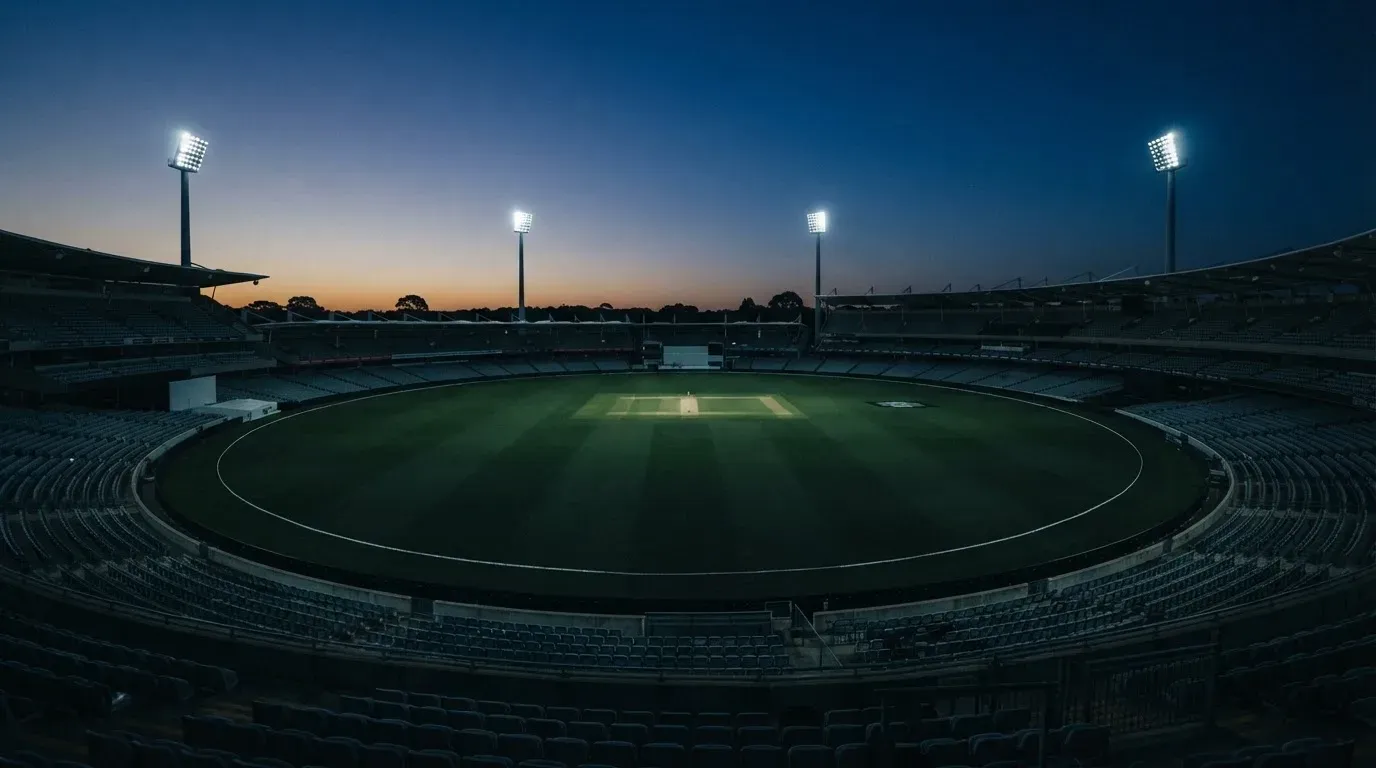
A One Day International (ODI) is bounded: each side bats a fixed fifty overs. If the chasing side is bowled out or runs out of overs with the scores level, the match is a tie. When rain intervenes in an ODI, the Duckworth-Lewis-Stern method usually sets the revised target or settles the result, and if too few overs are bowled, typically fewer than twenty, the match is declared a no result. Any tip on a one-day game played under cloud cover carries that uncertainty as part of its price.
A Twenty20 international is the shortest form. Each team bats a maximum of twenty overs, which is 120 legal deliveries, and a bowler may bowl at most four of those overs. A tied T20 is decided by a super over. Run rates are higher, swings in momentum sharper, and individual player contribution larger than in the longer formats. A tip that treats a T20 like an ODI overrates consistency and underrates variance.
The International Cricket Council governs the international game, twelve full members hold Test status, and the World Test Championship began its inaugural season in 2019. India won the 2026 ICC Men’s T20 World Cup, played between 7 February and 8 March 2026 and co-hosted by India and Sri Lanka, beating New Zealand by 96 runs in the final. The Hundred, the Indian Premier League, the Big Bash League, the Caribbean Premier League and the county competitions all run under their own playing conditions, and any tip on a domestic T20 league has to account for squad rotation, player availability and the quirks of the venue.
Choosing a bookmaker: who is licensed, and what that licence actually guarantees
Cricket bettors in Great Britain do not choose between licensed and unlicensed brands in any practical sense. Since the Gambling (Licensing and Advertising) Act 2014, any operator whose remote facilities are used in Great Britain needs a Gambling Commission licence wherever the company is based, so a Curaçao, Maltese or Gibraltar licence is not a substitute. A GB licence is the test. The Commission’s public register, searchable by business name, trading name, domain or account number, is the only place that answer comes from. The ten operators reviewed below all appear on that register, and their account numbers are listed in the comparison that follows. No one of them is “the only” licensed brand, and the order is not a ranking. It is a set, and the choice inside it is about fit.

| Brand | Gambling Commission remote licence number and licence holder | What the operator’s own terms state on the key’s subject |
|---|---|---|
| Paddy Power | 039439-R-319330-013, held by PPB Counterparty Services Limited | The app lists Bet Builder+, Popular Bet Builders, Super Sub (a bet rolls over to the replacement if a selected player is substituted), expanded Win More markets and player and ACCA stats. |
| Ladbrokes | 054743-R-330863-014, held by LC International Limited | Odds boosts on horse and greyhound bets, Best Odds Guaranteed on UK and Irish horse races, in-play betting and Acca Boosts are advertised on the app. |
| Fitzdares | 000400-R-103839-030, held by Fitzdares Limited | Cash out, accumulators, Lucky 15s, specials and antepost markets across horse racing, football, tennis, rugby, cricket, golf and American football, with in-play live odds. |
| Lottoland | 038991-R-319408-020, held by EU Lotto Limited | Casino, lottery betting, sports betting and scratchcards are all on the app, and the operator states it is licensed by the Gambling Commission for customers in Great Britain. |
| Swifty Sports | 058957-R-334734-006, held by Swifty Global (UK) Ltd | Best Odds Guaranteed, Cash Out on markets including horse racing and football, daily price boosts, live streaming and in-play betting; Bet Builder is listed as coming soon. |
| Hollywoodbets | 053028-R-330019-013, held by Hollywoodbets International UK Limited | The sports welcome offer gives new players a free bet of up to £30 on a first qualifying losing accumulator of three or more legs at odds of 4/1 or greater when they deposit £10 or more by card, settled within seven days, one free bet per customer. |
| 888sport | 039028-R-319297-014, held by 888 UK Limited | Pre-match and in-play betting, Cash Out, Bet Builder, racing streams, BetFinder form tools, a live bet feed and daily boosted odds are advertised on the app. |
| BetTom | 064959-R-339314-003, held by Bet Tom Limited | The sports welcome offer is 50% back as a free bet of up to £50, with a matching 50% back up to £50 as free slot funds for casino play; full terms apply. |
| Sky Bet | 067370-R-341330-005, held by SBG Sports Limited | The welcome offer is £30 in free bets, credited as three £10 free bet tokens after a deposit of at least £5 and a first single or each-way bet of at least 5p at odds of 1/1 or greater. |
| BetGoodwin | 002927-R-327985-008, held by Goodwin Racing Limited | Best Odds Guaranteed on all UK and Irish horse and greyhound racing is advertised on the app, up to £1,000. |
The column on the right is what each operator’s own app listing or welcome-offer page states; it is not a judgement of who is best. Paddy Power, for instance, leads on bet-builder tools; Ladbrokes leans heavily into horse-racing features; Fitzdares markets itself as a premium product with a smaller sport menu; Lottoland folds sports betting into a lottery-led offering; Swifty Sports has Bet Builder marked as coming soon rather than live. Bettors who want a wide range of cricket markets and the deepest in-play product will read these rows differently from bettors whose cricket interest is one or two series a summer. The licence number beside each name is the only fact on the page that determines whether the brand is lawful to use in Great Britain. Everything else is preference.
How a cricket betting prediction is actually built
A tip, properly understood, is the output of a process. Four inputs feed it, and any one missing makes the prediction worth less than its price.
Form is the first. Form is not a streak of wins, it is what a team or player has actually done in recent matches on surfaces and against opposition of the kind they are about to face. In T20, a side’s powerplay scoring rate, death-over economy and dot-ball percentage are the form numbers that travel. In Tests, a side’s first-innings average, fourth-innings chase record and away form travel more than their win-loss ratio in the past year. Form is a weighting, not a verdict, and the weighting changes with format.
Statistics are the second. Statistics in cricket sit at two levels: team-level, which is what bookmakers price from, and player-level, which is where the bet builder and the player-prop markets live. A team batting average on a turning subcontinent pitch is a different number from the same side’s average on a green English surface; a batter’s record against left-arm spin is a different number from their record against pace. Statistics, used well, narrow a price; used badly, they confirm what the punter already wanted to believe.
Line-ups are the third, and on T20 cricket, where franchise leagues dominate, they are often the most important. A team missing three first-choice bowlers on a flat track is a different betting proposition from the same team at full strength. The Hundred, the IPL, the BBL and the CPL all rotate heavily, and line-ups are often confirmed only an hour or two before the toss. A tip written the day before a T20 league fixture is built on a line-up that may not exist by the time the ball is bowled.
The bookmaker’s own odds are the fourth, and the most underrated. A price is the market’s collective view of the probability of each outcome, before the bookmaker’s margin is added. When the bookmaker’s price is higher than the bettor’s independent estimate of the true probability, after the margin is taken out, the bet is what the market calls a value bet. When it is not, it is just a bet. The hard part, and the part no tip can do for the reader, is forming the independent estimate. A tip that just names a winner without naming the price at which it becomes worth backing is half a prediction.
What a value bet is, and why no tip is ever certain
A value bet is a wager whose price is larger than the true probability of the outcome justifies. The arithmetic is unglamorous. If the bettor’s independent estimate is that a team has a 60% chance of winning a match, then any price whose implied probability is below 60% (decimal odds above 1.67, or fractional odds above 4/6) is a value bet. The 60% is the bettor’s number, not a fact, and the value exists only in the gap between the bettor’s number and the market’s. Two punters can look at the same game, form two different estimates, and one can see a value bet where the other sees a bad price.
A tip is a value bet only if the tipster has done the same work the bettor would have done, and the tipster is willing to publish both the estimate and the price. Most tipsters publish only the pick. A pick is not a value bet. It is an instruction to back something, at whatever price the bookmaker is offering at the moment the reader reads it, by which time the price has often moved. The honest relationship between tipster and reader is one where both know what the bettor is paying for: an estimate, with the price stated at the time the estimate was made, and an explicit acknowledgement that the bettor is betting on a probability, not a certainty.
No tip is ever certain, and that is not a hedge. Cricket has draws, rain, no results, super overs, collapses, and Last Man Standing. The shorter the format, the more variance dominates. A T20 between two evenly matched sides is the textbook example of a low-edge bet, which is exactly the market in which the bookmaker’s margin does the most damage. The bookmaker keeps a slice of every unit staked, and that slice is the price the bettor pays for the privilege of being wrong more often than not.
The bookmaker’s margin: where it hides, and how to see it
Every decimal price on a betting market is the bookmaker’s estimate of an outcome’s probability, plus a margin. The margin is the slice of every pound staked that the bookmaker keeps, on average, no matter who wins. The way to see it is to add up the implied probabilities of every outcome in a market and subtract the result from 100%. The surplus is the margin.
Take an illustrative two-way market priced at 1.90 on each side, decimal odds 1.90 / 1.90. The implied probability of each side is one divided by 1.90, which is approximately 0.5263, or 52.63%. Add the two together: 1.0526, or 105.26%. The bookmaker’s margin is 5.26%, in a band between roughly 5% and 6% depending on how the figure is rounded. The other way to read it: the bookmaker’s payout share on this market is one divided by the sum of the reciprocals, which gives approximately 95.0%. Out of every £100 staked on this market across both outcomes, the bookmaker keeps around £5 and pays back about £95 to winners. The exact margin varies by event, by market and by bookmaker, and the band the reader should keep in mind for a well-priced two-way cricket market is roughly 4% to 7%; tighter than that, and the bookmaker is competing hard for the bet, wider than that, and the reader is paying more than they need to for the same bet.
In a three-way market, such as a Test match priced for home win, draw and away win, the same logic applies but with three numbers added up, and the margin is the surplus over 100%. Three-way markets are wider than two-way markets, often 8% to 12% and sometimes more, because the draw is a third outcome the bookmaker has to price. The reader who backs a Test draw pays the wider margin; the reader who backs a T20 match-winner pays the tighter one. The format determines the market shape, the market shape determines the margin, and the margin is the price of being in the bet at all.
A margin is not a fee; it is a discount the bookmaker applies to every payout on the market. The bettor who takes 100 bets at a 5% margin over the long run loses 5% of total stakes to the bookmaker, before any skill is added. Skill is what positive bettors call the edge they have over the market’s estimate of probability, and a positive edge is what makes a value bet a value bet rather than a discounted coin flip.
The return on a bet: what a winning wager pays back
A winning single bet pays back the stake multiplied by the decimal odds. Stake £10 at decimal odds 3.50, the return is £35, the net profit £25 (the return minus the stake). In fractional odds, the same bet at 5/2 pays £25 profit on a £10 stake, plus the £10 stake back, for the same £35 return. Fractional odds express the profit, decimal odds express the total return; the conversion is a divided by b plus one, so 5/2 becomes 2.5 plus 1, or 3.50.
For a combination bet, the odds of the legs multiply into one price. Two legs at 2.00 and 3.00 give combined odds of 6.00; a £10 stake returns £60 if both win, profit £50. The same logic extends to trebles, fourfolds, accumulators of any length, and the named multiples such as the Trixie (four bets), the Patent (seven), the Yankee (eleven), the Lucky 15 (fifteen), the Super Yankee or Canadian (twenty-six), the Heinz (fifty-seven) and the Goliath (two hundred and forty-seven), in each of which the total stake is the unit stake multiplied by the number of bets.
The catch with combination bets is that the bookmaker’s margin compounds. A 5% margin on each leg becomes roughly a 14% margin on a treble, before any skill adjustment. Long accumulators are a bet on a long sequence of events the bettor cannot price independently, and the bookmaker knows it. Bet Builder and same-game multi markets are combination bets too, sold on a single screen, with the same compounded margin baked in. Paddy Power’s app, for example, advertises a Bet Builder+ and Popular Bet Builders, and 888sport’s app lists Bet Builder as a feature; both are subject to the same margin compounding as any other combination.
Each-way betting splits the stake into two equal bets: one on the win, one on the place. The place terms vary by race, sport, market and operator, and the stake doubles. An each-way bet of £10 each way is a £20 total stake; the win half pays at full odds, the place half pays at a fraction. Each-way is a horse-racing term that travels into cricket on a handful of markets, mostly in county cricket and Test cricket, and the fraction is a market-specific number the operator sets.
Bonuses and free bets: the headline, the terms, and what an offer actually costs
Cricket bookmakers in Great Britain compete heavily for new sign-ups, and the offers are loud. The CAP Code requires marketing to be socially responsible, with wagering requirements on bonuses capped at 10x since 19 January 2026, and mixed-product promotions that require gambling on two or more product types are banned. So a £10 bonus at 50x wagering, which would require £500 of bets, is no longer possible; the cap is £100 of bonus turnover for a £10 bonus. Free bets with no wagering condition, and any cap on the money value of a bonus, are not addressed in the same rulebook.
A “free bet” is not a free bet. The stake is usually not returned with a win. A £10 free bet at decimal odds 3.00 pays £30 in profit, return £30, not £40. The stake is gone. A “risk-free” bet refunded as a free bet is not a refund in money; it is a free bet on the same terms, stake not returned. Hollywoodbets’ sports welcome offer, for instance, gives new players a free bet of up to £30 on a first qualifying losing accumulator of three or more legs at fractional odds of 4/1 or greater when they deposit £10 or more by card, settled within seven days, one free bet per customer. The bet is the welcome offer; the conditions are the offer.
Sky Bet’s welcome offer for new customers is £30 in free bets, credited as three £10 free bet tokens after a deposit of at least £5 and a first single or each-way bet of at least 5p at fractional odds of 1/1 or greater. The headline is £30 in free bets; the headline does not state the deposit, the qualifying bet, the minimum price or the three-token split.
BetTom’s sports welcome offer is 50% back as a free bet of up to £50, with a matching 50% back up to £50 as free slot funds for casino play. The matching casino half is the kind of mixed-product promotion the CAP Code rule of 19 January 2026 addresses; whether a welcome package that hands back the same percentage across two product types is a “mixed-product promotion” depends on how the offer is structured, and the operator’s own terms are the place to read it.
The value of a free bet whose stake is not returned is the free-bet amount multiplied by the odds minus one, divided by the odds, multiplied by the payout share of the market the bet is placed on. A £10 free bet at decimal odds 3.00, on a market whose payout share is 95% (a 5% margin), is worth approximately £10 multiplied by 2.00 divided by 3.00 multiplied by 0.95, or about £6.33 in expected value. The market’s margin cuts the offer’s value, and the larger the margin the smaller the free bet’s worth.
Required turnover is the second number. A book bonus of £10 with a 5x wagering requirement, against a deposit of £10, requires £50 of qualifying bets, and each bet must be at or above the minimum price the offer’s terms set. The bonus-turnover calculation is the bonus base multiplied by the wagering factor; the bets needed is that turnover divided by the stake per bet. £50 turnover at £5 per bet is ten bets. Whether the bonus is paid in cash or as a free bet, and whether the deposit is part of the wagering base, is set out in the offer’s terms.
The expected cost of clearing an offer is the required turnover multiplied by the margin of the market the bonus is cleared on. £50 turnover at a 5% margin is an expected cost of £2.50; £50 turnover at a 10% margin is £5.00. Higher margin markets are more expensive to clear offers on, which is the reason an offer advertised at the headline bonus rarely matches the headline value once the terms are read.
A punter who signs up for a welcome offer is not receiving a gift. They are entering a contract that converts a deposit and a sequence of bets into a bonus with a defined cost and a defined ceiling. The ceiling is the cap on free-bet winnings, the maximum stake per qualifying bet, the deadline, the eligible markets and the minimum price. The punter who reads the terms before claiming spends less than the punter who claims first and reads later. The terms are the offer.
Mobile betting and apps: where most cricket bets are placed
The shift to mobile is complete in British sports betting. Most operators are accessed primarily through an app on a smartphone, with a browser version as a fallback, and the experience of cricket betting on a phone is a different product from the desktop one. Live odds update faster, bet slips are built with one hand, and in-play markets are designed for small screens and split-second decisions. Paddy Power’s app, for instance, lists Bet Builder+, Popular Bet Builders, Super Sub and player and ACCA stats as in-app features. Ladbrokes’ app advertises odds boosts, Best Odds Guaranteed on UK and Irish horse races, in-play betting and Acca Boosts. Fitzdares’ app offers cash out, accumulators, Lucky 15s, specials and antepost markets with in-play live odds. 888sport’s app lists pre-match and in-play betting, Cash Out, Bet Builder, racing streams, BetFinder form tools, a live bet feed and daily boosted odds. Sky Bet’s app is built around the welcome offer and the in-play product. Lottoland’s app combines casino, lottery betting, sports betting and scratchcards, which is a different shape of app entirely.
Swifty Sports’ app lists Bet Builder as coming soon. A reader choosing between operators on app quality alone will read that line as a signal. The app that is the best for a T20 bet builder punter is not the app that is the best for a casual county-chromium bettor. The bettor’s job is to match the product to the kind of bet they actually place, not the kind of bet the marketing says they should.
In-play on mobile is where the live betting and the bet builder intersect. An over-by-over market on a T20, a session market on a Test, a method-of-dismissal market on the next batter: all are most easily played on a phone, in real time, with cash out as the safety valve. Cash out is the operator’s offer to settle the bet early, at a price the operator sets, and the price reflects the operator’s view of the live probability minus the operator’s margin on the cash-out transaction. A bettor who cashes out frequently is paying the cash-out margin on top of the original market margin.
Live cricket betting: momentum, and the temptation that comes with it
Live betting on cricket is the most popular in-play market in the sport, and the one where the bookmaker’s margin does the most work. The momentum in a T20 swings in minutes; a wicket, a boundary, a missed run-out, a successful review. Each swing moves the in-play price, and the price is the bookmaker’s best estimate of the new probability, with a margin that is often wider than the pre-match margin because the bookmaker has less time to balance the book.
Cash out is the lever the bookmaker offers the bettor to lock in a profit or cut a loss mid-match. The bettor who backs a side at 2.50 before the match, sees them at 1.80 an hour in, and cashes out has taken a smaller profit than the full price would have paid. The bookmaker is offering a known sum now, in exchange for the bettor giving up the right to a larger sum if the bet wins. The trade is between certainty and the larger payout, and the bookmaker’s cash-out price is built to favour the bookmaker, on average, in the same way the original market is.
Live streaming is the third leg. The bettor who can watch the match inside the app is faster to react than the bettor watching on a separate television, and a faster reaction is, on average, a more profitable reaction. Swifty Sports’ app lists live streaming and in-play betting as features; Fitzdares’ app lists in-play live odds across the sports it covers. The bettor choosing a bookmaker for live cricket is choosing one whose app combines streaming, in-play markets and cash out in a single screen, and the depth of that combination is the practical differentiator between two operators that both hold a Gambling Commission licence.
In-play on Tests is different. Sessions, fall of next wicket, method of dismissal, runs at the fall of the next wicket: these markets run throughout the five days, and the in-play book on a Test is the deepest in-play book in cricket. The bettor who wants live cricket at Test level is choosing a bookmaker whose in-play product is the better-built one, not the better-marketed one.
Bet types and odds: the markets a cricket bettor actually uses
The most common cricket bet is the match result, priced in three ways for Tests (home, draw, away) and two ways for limited-overs internationals (home, away). Match-result markets are the simplest, the most heavily priced, and the most heavily margined, because the draw is a third outcome in Tests that the bookmaker has to price.
The top batter and top bowler markets name the player expected to score the most runs or take the most wickets for their side in a particular match. Player form, opposition, pitch and match-up are the four inputs; the price reflects all four plus the margin. Top batter markets in T20 are higher-variance than in Tests, because a single innings is twenty overs and a single batter’s contribution can dominate or be a non-factor. Top bowler markets depend on the conditions and the bowling rotation, and the price is more stable in the longer formats.
The player-prop markets sit behind the bet builder. Runs scored by a named batter, wickets taken by a named bowler, method of dismissal, total sixes, total fours, total runs in a powerplay, dot-ball percentage, economy rate, strike rate: each is a single market, and the bet builder combines several into one combined price. The compounded margin is the catch. A bet builder at four legs, each at a 5% margin, has a compounded margin of roughly 18.5%. The price looks generous; the price is not.
Method of dismissal is a market on how the next batter will get out, or whether they will not: caught, bowled, lbw, run out, stumped, hit wicket, or not out. It is a high-variance market, popular in-play, and heavily margined because each outcome is rare and the bookmaker has less data.
The over/under on total runs, the line on the highest opening partnership, the line on the total number of sixes, the line on the total number of wickets: each is a totals market, and each is a bet on a number rather than a team. The bookmaker sets the line, the bettor backs over or under, and the margin sits inside the line. A line that has moved by half a run since the market opened is a market with active money in it; a line that has not moved is a market the bookmaker is comfortable holding.
Antepost markets are the long-dated ones: the winner of a series before the series starts, the winner of a tournament before the tournament begins, the player of the series months in advance. Antepost prices are typically higher than in-running prices because the uncertainty is greater, and the margin wider. The non-runner rule is the catch: if a player withdraws before the event, the bet is usually void, and a multi-leg antepost accumulator can lose a leg without warning. Each operator sets its own non-runner rule, and the punter is bound by it.
Spread betting on cricket is a different product. Spreadex, which is regulated by the Financial Conduct Authority for spread betting and by the Gambling Commission for fixed-odds betting, states that spread betting losses can exceed the deposit. A spread bet on a cricket runs total, or on the number of wickets in an innings, can lose more than the stake, and a punter’s liability on a spread bet is set by the operator’s terms. Spread betting is a financial product for tax and regulatory purposes, and the punter who opens a spread account is in a different market from the punter placing a fixed-odds single.
Responsible gambling: the part of the page that matters most
Cricket betting is a leisure activity, and the bookmakers licensed in Great Britain are required to treat it as one. Every brand reviewed above is on GAMSTOP, the national multi-operator online self-exclusion scheme, which is a mandatory licence condition for online operators since 31 March 2020. The exclusion periods are six months, one year, five years, or five years with auto-renewal, and after the minimum period the exclusion stays in place for a further seven years unless the customer asks GAMSTOP to remove it. The scheme covers online sites and apps; betting shops use a separate service.
A financial vulnerability check applies to licensed remote betting when a customer’s deposits minus withdrawals exceed £150 in a rolling 30 days, in force since 28 February 2025 under LCCP condition 3.4.4. It is a public-record check, for example bankruptcy or county court judgments, not an income check and not a credit reference check. Financial risk assessments, the affordability checks widely discussed in the press, are announced in a staged plan with no start date; the Commission’s own article of 7 July 2026 sets the schedule, and a punter who reads the press for “affordability checks in force” will find a policy that is not yet operative.
Deposit limits are the customer’s main tool. Operators must offer a gross deposit limit on a fixed time frame, and the first changes have applied since 31 October 2025, with a second phase postponed to 30 September 2026. There is no state-set deposit or loss ceiling for betting; limits are the customer’s choice, and the bookmaker’s job is to enforce the limit the customer sets. Unibet’s safer-gambling tools include deposit limits, a Player Profile test, product restrictions and self-exclusion, with live chat support and links to BeGambleAware, GamCare, GAMSTOP, Gambling Therapy and the BGC. BetWright states it provides responsible gaming tools and that its customers must be aged 18 or over. London.bet’s app carries a 17+ App Store age rating.
The help organisations are independent of the operators. GamCare runs the National Gambling Helpline, GambleAware funds treatment and education, the NHS runs gambling clinics across the regions, and Gamblers Anonymous runs peer-support meetings. The punter who feels the activity is no longer leisure has direct routes to help that do not pass through the bookmaker.
The minimum age is 18, and it is enforced. Identity verification, including a name, an address and a date of birth, is required before a customer can deposit or gamble at a licensed site, and that includes a free bet or bonus. Kalooki Sportsbook, which is operated by Kalooki Sports Book Ltd (company number 12938274) and licensed by the Gambling Commission under account number 57730, is a GAMSTOP member; Midnite’s site cites Gambling Commission licence 101839 and shows in-play events, an acca builder, popular accas and price boosts with maximum-stake limits. The verification is the same on every licensed site: the punter cannot open an account, deposit, claim a free bet, or place a bet without proving who they are, and the bookmaker cannot keep them as a customer without keeping the verification up to date.
The legal frame: what a Gambling Commission licence guarantees, and what it does not
A Gambling Commission remote licence is a permission, granted under the Gambling Act 2005, to provide remote gambling facilities to customers in Great Britain. The Commission’s public register is searchable by business name, trading name, domain or account number, and a brand’s appearance on the register, in any of those forms, is the test. Since the Gambling (Licensing and Advertising) Act 2014, an operator whose remote facilities are used in Great Britain needs a Commission licence wherever the company is based, so a Curaçao, Maltese or Gibraltar licence is not a substitute. Northern Ireland is outside the 2005 Act, and any claim that a GB licence regulates Northern Ireland is wrong.
The licence categories the register lists are the categories the operator is permitted to operate under. A remote general betting standard (real events) licence is the one the ten operators above hold, and it is the one that permits sports betting on actual events. A remote betting intermediary licence is the one for betting exchanges. A remote general betting standard (virtual events) licence is the one for computer-generated events. Spread betting that is not a financial product is inside General Betting Duty, but the financial-spread regulator is the FCA, not the Commission, and a punter opening a financial spread account is dealing with a different regime.
What the licence guarantees is a baseline. The bookmaker is required to verify identity before the first deposit, to be a GAMSTOP member, to apply the financial-vulnerability check above the £150 threshold, to enforce the deposit limits the customer sets, to apply the 10x bonus cap, to be subject to Commission enforcement if it breaches the LCCP, and to give the customer a route to approved alternative dispute resolution if a complaint cannot be resolved. The bookmaker is not allowed to accept credit cards for gambling, including credit-card-funded payments through an e-wallet, since 14 April 2020.
What the licence does not guarantee is a winning bet. The licence regulates the operator, not the outcome. The bookmaker can still set the margin, restrict the customer’s account, cap the stake, decline a price, and close the account if it suspects bonus abuse. The bookmaker can still lose the punter’s money through a market that moves against them, a bet that loses, or a free bet whose value is consumed by the margin on the market it is placed on. The punter is protected from the operator’s misconduct, not from the operator’s prices.
The offshore alternative, a brand that does not hold a GB licence, is not “illegal to use” in a criminal sense for the customer; the offence under section 33 of the Gambling Act 2005 is aimed at the operator. What the offshore brand lacks is the protections: no GAMSTOP coverage, no Commission complaints route, no approved alternative dispute resolution, no British consumer redress if funds are withheld, no 10x bonus cap, no £150 vulnerability check. Enforcement against offshore operators is disruption rather than blocking: cease-and-desist notices, search-engine referrals, work with registrars, hosts and payment providers. The honest framing is that a GB licence is the test, and an unlicensed brand carries the loss of those protections.
Reading the offers: what to check before claiming a cricket welcome bonus
Three terms decide the cost of any welcome offer. The first is the qualifying bet: what the punter has to do to unlock the offer, and at what minimum price. Sky Bet’s offer, for example, requires a first single or each-way bet of at least 5p at fractional odds of 1/1 or greater; Hollywoodbets’ offer requires a first qualifying accumulator of three or more legs at odds of 4/1 or greater. The minimum price is the qualifier that determines whether the offer is actually accessible on a cricket market or only on a long-odds football accumulator.
The second is the bonus type. A free bet is not a cash bonus. A free bet’s stake is not returned with a win; a cash bonus is paid in withdrawable cash once the wagering is complete. The headline number is the same in both cases; the realised value is not.
The third is the expiry. A free bet or a bonus that expires in seven days, like Hollywoodbets’ qualifying window, is a tighter offer than one that runs for thirty. The expiry is the time the punter has to convert the offer into withdrawable cash, and the shorter the expiry the less the punter can choose the moment to place the bet.
The wagering requirement, where one applies, is the multiplier on the bonus base. A £30 bonus with 5x wagering, against a deposit, requires £150 of qualifying bets; the bets needed is £150 divided by the stake per bet. The minimum price for a qualifying bet is set out in the terms. The 10x cap, in force since 19 January 2026, is the upper limit on this multiplier; offers above the cap are not permitted.
The eligible markets, the stake cap per bet, the cap on free-bet winnings, and the country eligibility are the other clauses. A free bet whose winnings are capped at, say, £500 in a free-bet context, is a smaller offer than its headline suggests. A welcome offer limited to specific countries within the UK is a smaller addressable offer. Reading the terms before claiming is the single habit that separates the punter who makes a profit on a welcome from the punter who pays the offer’s cost without collecting its value.
The ten operators, in detail: what each one suits
The order below is the order of the table, not a ranking. Each entry is what the operator’s own app or terms state, the licence the Commission register lists, and the reader the operator appears to suit.
Paddy Power runs the app that lists Bet Builder+, Popular Bet Builders, Super Sub (a bet rolls over to the replacement if a selected player is substituted), expanded Win More markets and player and ACCA stats. The product is built for the punter who wants to construct bets inside a single fixture: player props, same-game multiples, and dynamic substitution. The licence is 039439-R-319330-013, held by PPB Counterparty Services Limited, on the Commission’s public register. This app is for the punter looking for depth on a single match.
Ladbrokes markets horse and greyhound racing more than cricket, with odds boosts on those sports, Best Odds Guaranteed on UK and Irish horse races, in-play betting and Acca Boosts. The licence is 054743-R-330863-014, held by LC International Limited. The reader it suits is the one whose betting is wider than cricket and who wants Best Odds Guaranteed on racing as part of the package.
Fitzdares describes itself as a premium product: cash out, accumulators, Lucky 15s, specials and antepost markets across horse racing, football, tennis, rugby, cricket, golf and American football, with in-play live odds. The licence is 000400-R-103839-030, held by Fitzdares Limited, the lowest account number in the set, which is a function of how long the operator has held a licence rather than a measure of quality. This product appeals to those who prefer a curated experience over a mass-market interface.
Lottoland is a different shape. The app combines casino, lottery betting, sports betting and scratchcards, and the operator states it is licensed by the Gambling Commission for customers in Great Britain. The licence is 038991-R-319408-020, held by EU Lotto Limited. Those who value having sports, lottery and casino in one place will find this app a good fit, provided they are comfortable with a lottery-focused product.
Swifty Sports lists Best Odds Guaranteed, Cash Out on markets including horse racing and football, daily price boosts, live streaming and in-play betting, with Bet Builder listed as coming soon. The licence is 058957-R-334734-006, held by Swifty Global (UK) Ltd. This choice is best for anyone prioritising live streaming and cash out, and who is not discouraged by the delayed bet builder launch.
Hollywoodbets carries the sports welcome offer that gives new players a free bet of up to £30 on a first qualifying losing accumulator of three or more legs at odds of 4/1 or greater when they deposit £10 or more by card, settled within seven days, one free bet per customer. The licence is 053028-R-330019-013, held by Hollywoodbets International UK Limited. Punters who value a transparent accumulator-focused welcome offer and are at ease with the seven-day window will be well served here.
888sport lists pre-match and in-play betting, Cash Out, Bet Builder, racing streams, BetFinder form tools, a live bet feed and daily boosted odds. The licence is 039028-R-319297-014, held by 888 UK Limited. This option targets the user who requires a comprehensive feature suite for both pre-match and in-play betting, including an integrated form tool.
BetTom offers 50% back as a free bet of up to £50, with a matching 50% back up to £50 as free slot funds for casino play. The licence is 064959-R-339314-003, held by Bet Tom Limited. This platform matches the needs of punters looking for a dual-product welcome package, accepting the structure described in the 19 January 2026 rule.
Sky Bet offers £30 in free bets, credited as three £10 free bet tokens after a deposit of at least £5 and a first single or each-way bet of at least 5p at odds of 1/1 or greater. The licence is 067370-R-341330-005, held by SBG Sports Limited. This operator is suited for those prioritising low entry barriers—specifically the 5p qualifying bet and £5 deposit—even if it means receiving the bonus in three smaller tokens.
BetGoodwin pays Best Odds Guaranteed on all UK and Irish horse and greyhound racing, up to £1,000. The licence is 002927-R-327985-008, held by Goodwin Racing Limited. The reader it suits is the one whose betting is anchored to UK and Irish racing rather than cricket, and who values the £1,000 BOG ceiling.
Each entry ends on what it costs the punter. Paddy Power’s depth costs the punter nothing extra, but the feature density is what other operators in the set are catching up with. Ladbrokes’ BOG is a horse-racing benefit, not a cricket one, and a cricket-only punter is paying for a feature they do not use. Fitzdares’ premium positioning is a smaller, more curated product rather than a larger one, and the punter who wants the broadest cricket menu is better served elsewhere. Lottoland’s all-in-one product is a different shape rather than a better or worse one. Swifty Sports’ missing bet builder is a feature gap on the day, not a permanent one, but it is a gap today. Hollywoodbets’ seven-day expiry on the qualifying window is a tight clock. 888sport’s full feature set is the broadest in the comparison. BetTom’s two-product welcome is a question of whether the punter plays casino as well. Sky Bet’s 5p minimum qualifying bet is the lowest in the set. BetGoodwin’s racing-anchored product is a question of whether the punter wants a racing-led book.
A staking framework, in plain prose
A staking plan is the punter’s defence against the bookmaker’s margin. Three rules travel across formats and across markets.
The first is to stake a fixed percentage of the bank on every bet, typically between 1% and 3%, and to define “the bank” as the amount set aside for betting, not the punter’s total savings. A 2% stake on a £500 bank is £10. The stake is the same whether the bet is a single or a four-fold; the punter who varies the stake with confidence is gambling on the bet, not on the price.
The second is to keep a record of every bet: the date, the match, the market, the price, the stake, the result, and the closing price at the off. The closing price is the most informative number, because it is the market’s settled view of the probability once the money has stopped moving, and a punter whose average price is consistently above the closing price is finding value the market is correcting against them. A punter whose average price is consistently below the closing price is leaving value on the table.
The third is to walk away when the staking plan is broken. A losing streak is the test of the staking plan, not the exception. A punter who doubles the stake after a loss to recover the loss is no longer staking a percentage; they are chasing, and the bookmaker’s margin is the same on the larger stake as on the smaller one. The plan survives the losing streak; the punter who abandons the plan hands the bank to the bookmaker.
Betting is not an income. The bookmaker’s margin is the discount on every payout, the variance of the sport is the tax on the punter’s confidence, and the punter’s edge, if any, is small. A punter who treats the activity as a paid leisure subscription, with the stake as the price of admission, loses less often and more slowly than a punter who treats it as an investment.
Frequently asked questions about cricket betting tips
How is a cricket betting tip actually built?
A tip is built from four inputs: form (what a team or player has done in recent matches on similar surfaces and against similar opposition), statistics (the underlying numbers that travel, not the headline ones), line-ups (the players who actually take the field, especially in T20 leagues where rotation is heavy), and the bookmaker’s own odds (the market’s collective view of probability, before the margin is added). A tip that names a winner without naming the price at which the bet becomes value is half a prediction, because the bet only exists at a price.
How does the bookmaker’s margin show up in the odds?
The margin is the slice of every unit staked that the bookmaker keeps on average, and it sits inside the prices on every outcome. To see it, add the implied probabilities of every outcome together: one divided by each decimal price. The surplus over 100% is the margin. In an illustrative two-way market priced at 1.90 on each side, the implied probabilities add to 105.26%, the payout share is around 95%, and the margin is in a band of roughly 5% to 6%. A wider sum means a wider margin and a higher cost to the punter.
How is the return on a bet worked out from the stake and the odds?
A winning single pays back the stake multiplied by the decimal odds. A £10 stake at decimal odds 3.50 returns £35, profit £25. The same bet in fractional odds at 5/2 pays £25 profit on a £10 stake, plus the £10 stake back, total £35. For a combination bet, the odds of the legs multiply into one price, and the same rule applies to the combined price. The catch with combination bets is that the bookmaker’s margin compounds on each leg, so a treble is not a single at three times the price; it is a single at a higher compounded margin.
What is a value bet, and why is no tip ever certain?
A value bet is a wager whose price is larger than the bettor’s independent estimate of the true probability justifies. The estimate is the punter’s number, not a fact, and the value exists in the gap between that number and the market’s. No tip is certain because cricket has draws, rain, no results, super overs, collapses, and Last Man Standing. The shorter the format, the more variance dominates, and the bookmaker’s margin compounds the variance into a discount on every payout. A punter who accepts the uncertainty and prices for it loses less often than a punter who does not.
How does a punter choose between licensed bookmakers?
The first test is the Gambling Commission’s public register: a brand whose name, trading name, domain or account number appears there is licensed to provide remote betting in Great Britain, and a brand that does not appear is not. Beyond the licence, the choice is about fit. Paddy Power’s bet builder, 888sport’s form tools, Sky Bet’s low minimum qualifying bet, BetGoodwin’s racing BOG, and Fitzdares’ curated product each suit a different punter. The punter whose betting is one T20 league a week and one Test series a summer is choosing a different bookmaker from the punter whose betting is five sports across the calendar. The licence is the floor; the product is the choice.
Rugby, cricket & Gaelic – oddsguaranteed
Content created by the «oddsguaranteed» team
