
Curling Betting Odds in Great Britain: The Margin, the Markets, the Money
 Available in US
Curling sits in an odd place on a British sportsbook. The ice runs cold in the UK, the men’s and women’s championships get a few days of polite coverage when the Winter Olympics come around, and the rest of the season is a niche that most punters scroll past. Yet a curling match has a structure that lends itself to betting — discrete ends, a hammer advantage, scoring only from the house — and licensed bookmakers increasingly price markets on the World Curling Tour, the Continental Cup, the World Men’s and Women’s Championships, and the Olympic tournament. This page reads the odds the way a punter should, before a penny moves.
Current as of October 30, 2026. Operator and licence claims checked against the Gambling Commission’s public register.
Where Curling Gets Bet on: Fixtures, Tours, and Tournament Footprint
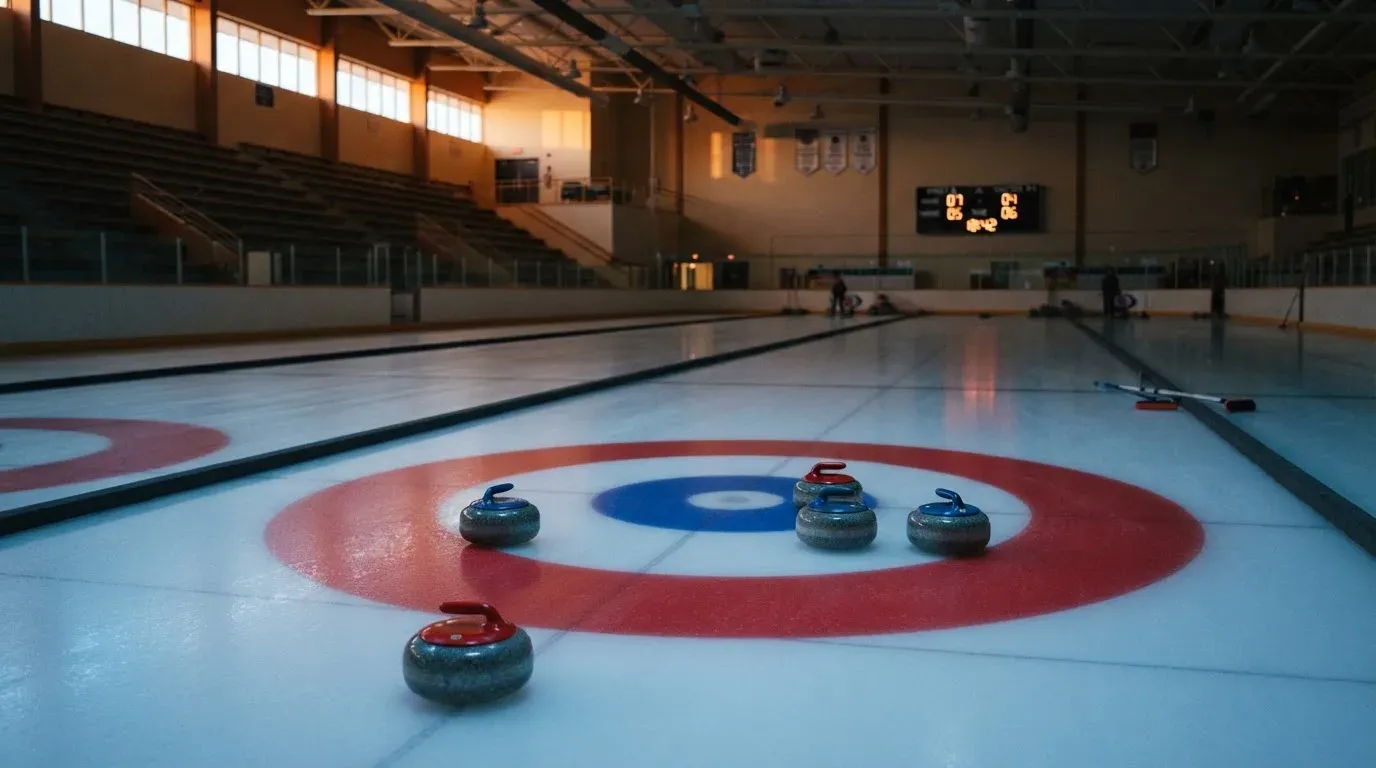
Curling is a four-player team sport — two in mixed doubles — with each player delivering two of the team’s eight stones per end. A standard game runs 8 or 10 ends; international competition uses 10. Ties go to extra ends, and the hammer (last stone of an end) goes to the team that did not score in the previous end, staying put if the end is blanked. After all 16 stones of an end are thrown, the team with the stone closest to the button scores one point for each of its own stones that lies closer than the opponent’s nearest stone — only stones inside the house count. That is the mechanism a market is built on: each end is a discrete event with two possible winners and a score attached, and the hammer is the structural lever a bookmaker can hang a handicap on.
Curling became an official Olympic medal sport at the 1998 Winter Olympics, and mixed doubles entered the Games in 2018. Stones weigh between 17.24 and 19.96 kg under World Curling Federation rules. None of that changes the bet. What it changes is the calendar: Olympic years and the run-up to them produce deeper markets across GB-licensed sites, while the rest of the season thins to outrights and match winner lines on the bigger tours. A punter looking at curling odds in spring, between the World Championships and the next major, sees fewer selections than during the European Curling Championships or the Grand Slam of Curling events in North America.
The bookmakers reviewed below all hold a Gambling Commission remote licence for general betting on real events. That is the legal floor for serving customers in Great Britain, and it is the only thing that separates a regulated book from an offshore one. Where one operator runs a richer curling menu than another — match winner, total points, correct end score, handicap on the hammer — that difference shows up in the markets, not in the licence.
The Ranked Shortlist: Ten Bookmakers, Same Licence, Different Cost
The list below is the full set of GB-licensed bookmakers this page reviews on the subject of curling odds. They are ordered for editorial reasons, not by a single composite score. The same licence line sits underneath each one: every brand is a Gambling Commission remote licence holder, every one of them is a GAMSTOP member, every one of them verifies the customer before the first deposit. The differences between them are differences of cost — margin, market depth, the rules attached to a free bet, the speed of a withdrawal — and those are what the table that follows pulls out. Brand-by-brand reviews sit further down the page.
What the Bookmakers’ Own Terms Actually Say
| Brand | Gambling Commission remote licence | What the operator’s own terms state on the key’s subject |
|---|---|---|
| BetMGM | 039198-R-319450-029 (LeoVegas Gaming PLC) | Welcome offer of four £10 free bets on deposit of £10 or more and a sports bet within 7 days; minimum odds apply; 7-day expiry. |
| Star Sports | 009177-R-104555-019 (Star Racing Limited) | Phone account opening on 08000 521 321; sportsbook and spread betting on the same licence, the latter FCA-regulated. |
| BetTom | 064959-R-339314-003 (Bet Tom Limited) | 50% back as a free bet up to £50 plus a matching 50% in free slot funds; full terms apply. |
| Betboro | 044181-R-324363-007 (Webmedia Development N.V.) | 100% matched free bet up to £25 on a first qualifying wager; £10 debit-card deposit and a £5 to £25 first bet at minimum 1.60 per selection, three or more. |
| Lottoland | 038991-R-319408-020 (EU Lotto Limited) | One account carries casino, lottery betting, sports and scratchcards; GB Gambling Commission licence in force. |
| BetGoodwin | 002927-R-327985-008 (Goodwin Racing Limited) | “Bet £10 & Get £15 in Free Bets” — a £5 sports bet, a £5 acca and a £5 Sub-Cover bet. |
| Betfair | 039439-R-319330-013 (PPB Counterparty Services Limited) | In-play, Bet Builder, free live streaming on selected UK and Irish racing and football, 90 Minute Payout market. |
| Fitzdares | 000400-R-103839-030 (Fitzdares Limited) | Cash out, accumulators, Lucky 15s, specials and antepost markets on horse racing, football, tennis, rugby, cricket, golf and American football, with in-play live odds. |
| QuinnBet | 061011-R-335683-004 (QuinnBet (Gibraltar) Limited) | Best Odds Guaranteed on UK and Irish racing from 10:00am; singles, multiples and system bets; £150-per-customer-per-race maximum benefit. |
| Bet Ahoy | 100094-R-341742-003 (Bet Ahoy Ltd) | “Bet £10 & Get £10 in Free Bets” — a £5 sports bet and a £5 acca. |
The licence line is the same shape across all ten because the law is the same shape. The right-hand column is where the cost sits: a free bet whose stake is usually not returned with a win, an acca insurance that refunds a slice of a losing line, a price boost on a single market. None of those are free money. The section on offers further down spells out what each one actually delivers.
The Fundamentals a Priced Market Is Built On
Three structural facts about curling matter more than any odds line. The first is the team: four players, two in doubles, eight stones per end, two per player. The second is the end: 8 or 10 ends in a regulation game, 10 in international play, with a blank or a steal as legitimate outcomes. The third is the hammer: the team that did not score in the previous end throws last, and a blanked end keeps the hammer where it was. A bookmaker’s handicap is built on that asymmetry — give the team without the hammer a head start of 0.5 or 1.5 ends, and a 5-4 loss becomes a winning wager.
A two-way match winner with extra-end possibility is the cleanest market. Three-way (regulation-time winner, draw, loser-with-extra-end) is rarer in curling than in football, but bookmakers do offer it during the World Championships and the Olympics. Total points is the over/under on the stones scored across the match, which runs roughly 5 to 12 in a competitive men’s game. Correct end score (0, 1, 2, 3+ for a given end) is a niche bet that pays well but is offered thinly. Outrights on tournament winner, group winner, and to reach the final show up at the bigger events; during the rest of the season they are often missing or priced with a heavy margin.
The markets that show up on a GB bookmaker’s curling page are a function of the calendar and the operator. A 10-end game with a clear hammer advantage does not produce 200 selections the way a Premier League fixture does. The punter who arrives at curling in the middle of February will see a slimmer page than the one who arrives during the Olympics. That is normal, and it is also why the margin on curling is rarely the same as the margin on football — the bookmaker runs a thinner book, charges more for it, and is right to do so given the volume of bets the sport attracts.
Legality and Regulation: What a GB Licence Buys, and What It Does Not
A bookmaker serving customers in Great Britain needs a Gambling Commission licence. That is the whole test, and it has been the whole test since the Gambling (Licensing and Advertising) Act 2014 closed the point-of-consumption loophole. The Commission’s public register, searchable by business name, trading name, domain or account number, lists every licensee. A Curaçao, Maltese or Gibraltar operating licence alone is not a substitute for that GB licence — it is the GB licence, combined with the relevant remote categories, that puts a bookmaker on the register. Several of the brands reviewed here are owned by parents in Gibraltar or Malta; the GB licence is theirs separately, and it is what the page checks.
The remote general betting standard (real events) licence is the category that covers curling. Remote general betting standard (virtual events) is a separate category and is not what a curling punter is buying. Remote general betting limited, remote pool betting and remote betting intermediary (the exchange licence) are the other categories an operator may hold; one bookmaker can hold several, and the Commission’s register shows them all. Spread betting on a financial instrument is regulated by the Financial Conduct Authority, not the Commission — that is a different regime with different rules and a different tax.
There is no statutory list of permitted sports or markets. An operator offers what its licence category covers and what its own rules and the Licence Conditions and Codes of Practice permit. In-play betting on curling is offered by GB bookmakers and is not “unrestricted” as a legal matter; the controls are the operator’s licence conditions and its customer-protection duties. Esports, virtual events, politics, TV and novelty markets each sit under their own licensing and rules; what a GB bookmaker offers on curling is what its own product team has priced, no more and no less.
The age floor is 18, and name, address and date of birth are verified before a customer can deposit or gamble — including with a free bet. That verification is the cost of using a licensed site. It is also the cost of the consumer protections that come with it: a Commission complaints route, an approved alternative dispute resolution body, a regulatory levy the operator pays into the system, and the rights that follow from a regulated market. Anonymous play is not an option at a licensed site, and no honest framing makes it one.
Bonus Rules That Bite
A bonus rule in force since 19 January 2026 caps wagering requirements on bonuses at 10x: a £10 bonus with a 50x playthrough needed £500 of qualifying bets before the cap; under the cap, no more than £100 of qualifying bets clears the bonus. Mixed-product promotions — an offer that requires gambling on two or more product types, such as “bet on football to get free spins” — are banned. Whether the cap applies to a free bet with no wagering condition and any cap on the money value of a bonus are not established in the public materials reviewed here. Every welcome offer in the table above is described in the operator’s own words, and the actual cost of clearing it is the punter’s responsibility to read before claiming.
Tax: The Operator Pays, the Punter Does Not
General Betting Duty is paid by the operator on gross profits, currently 15%. From 1 April 2027, a new remote betting rate of 25% applies within General Betting Duty on remote bets, while remote bets on UK horse racing, bets on self-service betting terminals in licensed premises, pool betting and in-person betting stay at 15%. Until 1 April 2027 the remote rate stays at 15%. Spread betting has its own rates, 3% on financial and 10% on other. The punter pays no tax on betting winnings in Great Britain. That is general information, not tax advice, and a professional gambler should ask HMRC or a tax adviser. Whether operators pass duty on through odds is not established in the public materials; never assume it does and never assume it does not.
What an Offshore Site Costs the Punter
A GB licence is compulsory at the point of consumption. Providing gambling facilities in Great Britain without the licence the Gambling Act 2005 requires is an offence under section 33 of the Act — up to 51 weeks’ imprisonment, a fine up to level 5, or both on summary conviction (six months in Scotland). The offence is aimed at the operator, not the punter: no offence aimed at a customer who merely bets on an unlicensed site was found in the public materials reviewed. The cost of using an offshore site is the loss of the protections the GB licence provides — no GAMSTOP coverage, no Commission complaints route, no approved dispute resolution, no British consumer redress if funds are withheld, no 10x bonus cap, no £150 financial vulnerability check. Honest framing: a licensed site verifies the punter’s identity and runs affordability and vulnerability checks; an unlicensed site does not. Neither is “the safe choice” by default — the licensed one is the regulated one.
Payments: Credit Cards Out, Everything Else In
Credit cards have been banned for gambling in Great Britain since 14 April 2020, including credit-card-funded payments through an e-wallet. Debit cards and bank-based payments are not covered by that ban. Identity verification before the first deposit means no anonymous play, and source-of-funds questions at higher spend are normal under the money-laundering rules. A state list of permitted payment methods, a British named-account rule and any rule for or against cryptocurrency deposits at licensed operators are not established in the public materials; payments are described from each operator’s own terms.
Responsible Gambling: The Tools a GB Licence Provides
A licensed site is a GAMSTOP member; that has been a mandatory licence condition for online operators since 31 March 2020. Self-exclusion periods are six months, one year, five years, or five years with auto-renewal, and after the minimum period the exclusion stays in place for a further seven years unless the customer asks GAMSTOP to remove it. GAMSTOP covers online sites and apps; betting shops use a separate service. None of the operators reviewed here can be played at by a GAMSTOP-registered customer, and that is a feature, not a flaw.
A financial vulnerability check (LCCP condition 3.4.4, in force since 30 August 2024) applies to licensed remote betting when a customer’s deposits minus withdrawals exceed £150 in a rolling 30 days, with the threshold binding since 28 February 2025. The check is a public-record check — bankruptcy, county court judgments — not an income check and not a credit reference check. Financial risk assessments — the “affordability checks” of the press — are announced in a staged plan, with no start date. The honest framing: announced, staged, no start date. Deposit limits under the Remote Technical Standards (RTS 12) require operators to offer a gross deposit limit on a fixed time frame; the first changes have applied since 31 October 2025, a second phase was postponed to 30 September 2026, and whether that second phase is live is not established in the public materials. There is no state-set deposit or loss ceiling for betting: the limit is the customer’s choice, and a punter who sets one is using a tool the licence makes available.
Help is available through GamCare (which runs the National Gambling Helpline), GambleAware, the NHS gambling clinics, and Gamblers Anonymous. Gambling is a leisure product, not a financial product; a punter who finds themselves chasing losses, betting more than they can afford, or borrowing to bet should treat the line between entertainment and compulsion as a real one, and the free, confidential routes above as the first call.
The Bookmakers, Reviewed
The reviews below cover the ten operators in the order they sit in the shortlist. Each one is read for what a curling punter actually pays — the margin baked into the price, the depth of the markets, the terms on the welcome offer, the friction in withdrawal. The licence line is repeated because it has to be; the verdict at the end of each block is the editorial close, and is the one paragraph in the review that does not appear in any of the others.
BetMGM
BetMGM runs on a Gambling Commission remote licence held by LeoVegas Gaming PLC (account 39198). The site is the LeoVegas sportsbook product under the MGM brand. The welcome offer is four £10 free bets — two football accumulators of four or more selections and two sports multiples of two or more — on a deposit of £10 or more and a sports bet within 7 days, with minimum odds and opt-in required, and a 7-day expiry on the free bets. Free bets whose stake is not paid back with a win are the standard mechanic; the headline value of “four £10 free bets” is £40 in stake, not £40 in expected value, and the actual cost of clearing the offer depends on the markets the free bets are spent on. BetMGM’s product carries in-play markets, an acca builder, popular accas and price boosts with maximum-stake limits, which is a useful footprint for curling when a live event is on. For a punter who wants a cross-product welcome offer and already uses LeoVegas, it is a convenient choice; a curling-only punter should check the margin on the specific curling market they are targeting.
Star Sports
Star Sports holds a Gambling Commission remote licence as Star Racing Limited (account 9177). The same parent offers spread betting on a separate FCA-regulated basis, which means a customer who wants both fixed-odds and spread betting can run them on the same platform with two different regulatory regimes. The distinctive feature is the phone line — 08000 521 321 — through which a customer can speak to a trader directly to open an account, place a bet, or ask a question, alongside email support at [email protected]. For a curling punter who wants a human on the other end of the line rather than a chatbot, that is the deciding factor; for a punter who places a bet a year on a curling final, it is not. The welcome offer on the sportsbook is not described in the materials reviewed; the operator’s own terms page is the only honest source for what it is today.
BetTom
BetTom runs on a Gambling Commission remote licence held by Bet Tom Limited (account 64959). The sports welcome offer is 50% back as a free bet up to £50, with a matching 50% back as free slot funds up to £50 for the casino product — a mixed-product promotion in form, though the question of whether it falls under the 19 January 2026 ban on mixed-product promotions depends on the terms at the time of claim. The full terms are the only honest read. For a curling punter who plays a free bet on a curling match winner, the headline is £50 of stake; the expected value of that stake depends on the price at which the free bet is placed, and a free bet at short odds is worth less than the same stake at long odds.
Betboro
Betboro holds a Gambling Commission remote licence through Webmedia Development N.V. (account 44181). The sports welcome offer is a 100% matched free bet up to £25 on the first qualifying wager, requiring a debit-card deposit of at least £10 and a first bet of £5 to £25 with at least three selections each at 1.60 (3/5) or higher. The minimum-price condition is a real cost: a free bet placed at 1.60 per leg on a treble pays back stake-less winnings of roughly £2.20 per pound of free bet, and the matched-deposit structure means the punter is fronting the qualifying stake before the free bet is unlocked. The three-leg minimum means a curling single is not a qualifying bet; the punter must add at least two more selections from other sports. For a punter who already bets on football or horse racing, that is no obstacle. For a curling-only punter, the offer forces a bet on a sport they would not otherwise have backed.
Lottoland
Lottoland holds a Gambling Commission remote licence through EU Lotto Limited (account 38991). The platform combines casino, lottery betting, sports and scratchcards in one account, and the GB licence is in force. The pitch is breadth rather than depth, and a curling punter looking for the deepest curling menu will not find it here. The advantage is convenience: a punter who plays the lottery and bets on curling once a year can do both from the same wallet, with the same verification, under the same licence.
BetGoodwin
BetGoodwin holds a Gambling Commission remote licence through Goodwin Racing Limited (account 2927). The sports welcome offer is “Bet £10 & Get £15 in Free Bets”, split as a £5 sports bet, a £5 acca and a £5 Sub-Cover bet. Sub-Cover is a Goodwin Racing product on horse racing; for a curling-only punter, two of the three free bet tokens are usable (the £5 sports bet and the £5 acca) and one is not. The headline £15 of stake is therefore £10 of usable stake for this page’s subject, and the actual expected value of those two free bets is determined by the price at which they are placed.
Betfair
Betfair holds a Gambling Commission remote licence through PPB Counterparty Services Limited (account 39439). The product is the Betfair Sportsbook rather than the exchange, and it carries in-play, Bet Builder, free live streaming of events such as UK and Irish horse racing and football, and a 90 Minute Payout market. The 90 Minute Payout is a football product and does not apply to curling, but the live streaming footprint and the Bet Builder carry over to a curling match where the operator offers them. The exchange layer, where lay bets are available, is a separate product with separate liquidity; for curling it is a thin market, and the Sportsbook is the realistic bet. The welcome offer is not described in the materials reviewed; the operator’s own terms are the source.
Fitzdares
Fitzdares holds a Gambling Commission remote licence through Fitzdares Limited (account 400). The product is positioned as premium: cash out, accumulators, Lucky 15s, specials and antepost markets on horse racing, football, tennis, rugby, cricket, golf and American football, with in-play live odds. Curling is not on the listed core sports; the punter looking for a curling outright or a curling match winner needs to check Fitzdares’ own markets for the tournament in question. The operator’s footprint prioritizes mainstream British sports, leaving curling as a peripheral option. For an enthusiast who primarily follows racing or football and occasionally dabbles in curling, it offers a high-end experience; for a curling specialist, it is unlikely to satisfy.
QuinnBet
QuinnBet holds a Gambling Commission remote licence through QuinnBet (Gibraltar) Limited (account 61011). The headline product is Best Odds Guaranteed on UK and Irish horse racing from 10:00am daily on singles, multiples and system bets, with a £150-per-customer-per-race maximum benefit. BOG does not apply to curling; for a curling punter it is a feature of the same platform that they will not use. The welcome offer is not described in the materials reviewed; the operator’s own terms are the source. QuinnBet operates as a conventional sportsbook; if your main interest is curling, evaluate the platform on its available market breadth rather than its horse-racing features.
Bet Ahoy
Bet Ahoy holds a Gambling Commission remote licence through Bet Ahoy Ltd (account 100094), with the licence covering remote general betting standard on real events. The welcome offer is “Bet £10 & Get £10 in Free Bets”, split as a £5 sports bet and a £5 acca. The headline is honest: a £10 free-bet stake for a £10 qualifying bet, with a single or an acca to choose from. For a curling punter who bets on the World Championships or the Olympics, the qualifying bet is a curling match and the free bet can be spent on a curling market. Bet Ahoy’s product footprint is the smallest of the ten reviewed; the value proposition is the simplicity of the offer, not the depth of the curling menu.
How a Curling Price Is Built: The Margin and What It Costs
Every odds line a bookmaker offers contains a margin — the cut the bookmaker keeps on every pound staked. It is the difference between what the punters collectively pay in and what the bookmaker pays out on a perfectly balanced book, and it is the single number a serious punter reads first. The mechanics are simple. On a two-way market with decimal odds 1.90 and 1.90, the implied probabilities are 1 ÷ 1.90 = 52.63% for each side, summing to 105.26%. The excess over 100% is the bookmaker’s margin. Stated the other way round, the payout share — the fraction of total stakes returned to punters on a balanced book — is 1 ÷ 1.0526, or roughly 95.0%. The margin is therefore about 5.0% on this illustrative line.
That 5% is illustrative, not a quoted price. The point is the structure: the tighter the margin, the more a winning punter keeps, and the heavier the margin, the more the bookmaker takes. Football match winner lines on major British bookmakers often run at 2% to 5% margin; tennis at 3% to 6%; curling, with a thinner book and a less liquid market, often runs higher. A punter who reads curling odds in spring, between major championships, should expect a margin that beats the football equivalent by a clear margin — sometimes 8% or more on a match winner, more on a correct-end-score market. The honest framing is that a thin market is a more expensive market, and the price a punter pays for the privilege of betting on curling mid-season is the margin they are quoted.
A worked example. On a £10 single at decimal odds 1.90, a winning bet pays £10 × 1.90 = £19.00 in return, of which £9.00 is net profit. The £10 stake is returned with the winnings. On a free bet of £10 at the same price, the stake is usually not returned, so the punter walks away with £10 × (1.90 − 1) = £9.00 in profit if the bet wins and nothing if it loses. The headline value of a £10 free bet at 1.90 is therefore £9.00, and the actual expected value of the free bet is £9.00 × 95.0% (the payout share of the market) ≈ £8.55, before any market-specific friction. The marketing language says “free bet”; the arithmetic says £8.55 of expected value at this illustrative price. A punter who takes the free bet at a longer price walks away with more; a punter who takes it at a shorter price walks away with less. The free bet is not free — it is a stake-less wager at the price the punter chooses, and the expected value is the math above.
The bonus cap in force since 19 January 2026 limits the wagering requirements on bonuses to 10x. A £10 bonus with no playthrough costs the punter nothing to clear beyond placing a single bet; a £10 bonus with a 10x playthrough costs the punter £100 of qualifying bets at minimum price before the bonus is withdrawable. The bonus is not £10 of value; it is the bonus minus the expected cost of clearing it, where the expected cost is the turnover multiplied by the margin of the market the punter bets on. A 10x playthrough on a market with a 5% margin costs the punter about £5 of expected value, on average, before the bonus is in their hand. That is the cost of a “matched” or “free” offer that the marketing copy rarely states.
Frequently Asked Questions
How do I place a bet on curling?
Open an account with a Gambling Commission-licensed bookmaker, complete the identity and age check (name, address, date of birth), deposit by debit card or bank transfer (credit cards are banned for gambling in Great Britain), find the curling event under the relevant sport, and add a selection to the bet slip. Single, each-way, accumulator and bet-builder formats are standard. Minimum and maximum stakes are set by the operator; the maximum is the punter’s responsibility to check before placing a bet.
Is curling actually available to bet on at UK bookmakers?
Yes, though the depth of the market depends on the calendar. Match winner, handicap, total points and outright tournament winner are offered at the World Curling Championships, the European Curling Championships, the Continental Cup, the Grand Slam of Curling and the Winter Olympics. Mid-season, the menu is often thinner, with outrights and the largest match-winner lines only. A bookmaker’s current curling page is the only honest read of what is on offer on a given day.
How do I check that a bookmaker holds a Gambling Commission licence?
Use the Commission’s public register, searchable by business name, trading name, domain or account number. Each of the ten operators reviewed on this page holds a remote general betting standard (real events) licence, and the account numbers are listed in the table above. A domain ending in .co.uk is not, on its own, evidence of a GB licence; a licence on the register is. The register is the whole test.
How is the return on a bet worked out from the stake and the odds?
Return = stake × decimal odds. A £10 single at 1.90 returns £19.00; net profit is £9.00. For a combination bet, the odds of the legs multiply into one price; a treble of 1.90, 2.10 and 3.00 has combined odds of 11.97, and a £10 stake returns £119.70 if all three legs win. The stake is returned with the winnings on a paid single or combination. On a free bet, the stake is usually not returned, so a £10 free bet at 1.90 pays £9.00 in profit on a win and zero on a loss.
What is a bookmaker’s margin and how is it visible in the odds?
The margin is the cut the bookmaker keeps of every pound staked, on a perfectly balanced book. On a two-way market with decimal odds 1.90 and 1.90, the implied probabilities are 52.63% each, summing to 105.26%; the 5.26% excess over 100% is the margin. The lower the margin, the more the punter keeps on a winning bet at fair odds. A bookmaker’s margin on curling is typically higher than on football or tennis, because the market is thinner and the book is shorter.
How do fractional odds like 5/1 convert to decimal odds?
Decimal odds = (numerator ÷ denominator) + 1. Fractional 5/1 → 5 ÷ 1 + 1 = 6.00. Fractional 11/4 → 11 ÷ 4 + 1 = 3.75. Fractional evens (1/1) → 1.00 + 1 = 2.00. Fractional odds-on prices (shorter than evens, such as 4/6) → 4 ÷ 6 + 1 = 1.67. The decimal form is what a GB bookmaker’s bet slip displays by default; the conversion is mechanical and worth running once by hand to feel the relationship.
Tennis, darts & cue sports – oddsguaranteed
Content created by the «oddsguaranteed» team
