
Horse Racing Betting Odds in Great Britain 2026: Prices, Markets and the Margin Behind Them
 Available in US

Horses run roughly two hundred fixtures a week between Britain and Ireland. Each meeting carries a market sheet of dozens of prices, and any British bettor looking at a race meeting has a layered choice to make — between fixed-odds bookmakers, betting exchanges, financial spread firms and pool operators — all under one regulator. Choosing among them is mostly a question of which market shape suits the punter, because the regulator is the same across the licensed field and the question of “is this bookmaker real?” reduces to a single register check.
Prices, margins and licence checks current as of October 30, 2026 against the Gambling Commission’s public register.
Today’s Racecard and the Strategy Question
For “today’s horse racing betting” the question is rarely where to find it — every licensed British bookmaker carries UK and Irish racing — it is which combination of form study, price and stake sizing makes a sustainable day. The clustering of search phrases around “tips”, “predictions” and “systems” is one piece of search volume, and a fairly small piece relative to the actual answer.
A racing system is a stated rule that turns form signals into bets. None reliably turns a profit. The bookmaker’s margin sits inside every price; systems assume it away, then attribute wins to the rule and losses to variance. A better framing of the strategy question: what is the bettor’s edge, on which market types, and how long is the sample needed to see it? For most recreational punters the honest answer is no edge, and the day is sized accordingly.
Tipsters and tip sheets are a different product. The free tip sheet pre-sells the paid one. Racing tipsters sell subscription access to a stream of opinions, and the historical strike rate is rarely disclosed in a form an outsider can audit. Tipsters are a feature of the market; they are not a system, and they do not change the price the punter gets.
What does change the picture is the value hunt — the same selection priced differently across bookmakers. Two operators quoting different prices on the same horse at the same moment is the everyday instance of value betting, and the practical strategy work of a racing punter is closer to price-hunting than to system-running. Better odds beat better tips in the long run.
The “horse racing betting tips” search is really a search for a path into the form study. A native horse racing book covers recent runs, going, distance suitability, trainer-jockey combinations and the going report on the day. None of it converts to a price automatically. The form study is the work; the tip sheet is the shortcut, and shortcuts in this market tend to move the bill, not the result.
The Anatomy of a Horse Racing Price
Decimal odds and fractional odds describe the same price from two angles. Fractional 5/1 says every £1 staked returns £6 — £5 profit plus the £1 stake back. Decimal 6.00 says the same: stake × 6.00 = total return. Decimal is the working form because a bet calculator can multiply selections directly. A double at 3.50 and 4.00 is a 14.00 accumulator price; a four-fold at 1.50, 2.20, 3.00 and 1.80 multiplies to 17.82.
Single, Double, Accumulator — How a Betting Calculator Sorts Them
The everyday horse racing bet calculator handles three jobs: it converts fractional and decimal prices, it works out returns on singles and multiples, and it breaks an each-way bet into its two component bets. Bookmakers ship one as part of the betting slip; tipsters, form sites and free-standing pages publish their own. The arithmetic is identical — what changes is the bet type the punter is pricing.
The accumulator is the bet type most punters over-rate. A four-fold at 17.82 decimal has the appeal of a single line that pays about eighteen times the stake. The price comes from four legs each with margins embedded. The combined margin of a four-fold is roughly the average of the four market margins plus compounding. A 5% margin on each leg does not produce a 20% margin on the four-fold; it produces something near 19% by simple compounding. The bettor pays the margin four times over.
Multiple bets are also sensitive to non-runners. Most bookmakers apply Rule 4 deductions when a horse is withdrawn from a race after the bet was struck. The deduction is taken from the gross return, not from the stake. Reading the rule book on Rule 4 takes about ten minutes; doing it once saves real money later.
Each-Way and Its Statute: Two Bets in One
An each-way bet is two bets of equal stake — one on the win market, one on the place market — so a £5 each-way bet costs £10. The two parts settle independently. If the horse wins, both parts pay; if it places only, the place part pays and the win part does not; if it finishes outside the places, only the stake is lost. The “place” odds are reduced from the win odds by a fraction set in the place terms. A 10/1 shot priced at 1/4 place terms returns 5/2 on the place part.

The £5 each-way stake being £10 in real money is the small print most punters underweight. A betting slip carries the headline stake of £5 next to a £10 charge to the wallet. Reading the slip carefully before confirming is a habit that pays for itself.
Place Terms by Field Size
The fraction and the number of places paid depend on the size of the field and the type of race. UK each-way place terms run roughly: handicaps with more than fifteen runners pay 1/4 odds for four places; twelve to fifteen runners pay 1/4 for three places; other races with more than seven runners pay 1/5 for three places; five to seven runners pay 1/4 for two places; fewer than five runners pay win only. Each bookmaker applies its own equivalent of this structure, and most offer extra places on feature races — six or seven for major handicaps — as a marketing line.
The each-way terms matter because they decide whether the bet actually pays the place. A £10 each-way bet on an outsider at 1/4 place terms with three places paid returns a third of the win price plus the stake on the place part. At 1/5 it returns a fifth. For long-odds each-way bets the difference between 1/4 and 1/5 place terms is the difference between a profitable place and a flat loser.
Spread Betting on Horses
Spread betting is a different instrument. Instead of a fixed price, the punter buys or sells a spread — for example, the winning distances of a race — at a stake per unit. Profits and losses are unlimited above and below the spread. Spreadex, regulated by the FCA for spread betting and by the Gambling Commission for fixed-odds betting, states that spread betting losses can exceed the deposit. Sporting Index offers both fixed-odds and spread betting under one account. For most punters, fixed-odds betting with a hard ceiling on the loss is the safer instrument.
A financial vulnerability check (described in the statutory frame further on) applies to customers at higher spend; it is not a credit reference check. Spread betting customers move under the FCA’s conduct rules and have their own protections. Recreational punters mostly don’t carry the position-sizing discipline spread requires.
Bet Builders and Same-Race Multiples
Bet builders let the punter assemble a price from several markets on one race — finishing position, winning distance, beaten-by-margin — and have it priced as a single line. The combined margin is built into the cumulative price, the same as any other multiple. LiveScore Bet’s bet builder allows up to ten selections and covers match result, both teams to score, corners, total goals, player scoring and cards — those are football markets, not horse racing. The mechanics are similar; the markets differ.
A bet builder’s edge is convenience; its cost is the margin compounding across selections. The calculus is the same as for a multi-leg accumulator and the audit takes the same form.
The Fixture List and Where Each Race Lives
British and Irish racing is unusual among betting sports in having almost constant coverage. Two turf fixtures a day is the floor; meetings stack up on summer Saturdays with seven or eight in the afternoon alone. The fixture list is a punter’s working calendar.
Fixture Formats and Race Distances
Flat races range from 440 yards to more than four miles, with five to twelve furlongs — a kilometre to two-and-a-bit — the most common distances. Jump races run from around two miles to four-and-a-half miles for the longest chases. The minimum-distance sprint at five furlongs is a five-minute betting event; the four-mile chase is a thirty-bet-day fixture where each running is an event in itself.
Going — the ground condition — moves the price. Heavy ground favours proven mudders; firm ground favours speed horses; a wetting between declaration and the race can lift the price of mud-loving horses ten ticks. Going reports are published on the morning of racing and updated through the day; price movements of more than a point are common on significant going changes.
Class is the second-order signal after going. A Class 1 handicap with twenty runners behaves differently in the market from a Class 6 selling handicap with eight. The bigger fields are where each-way terms earn their keep; the small fields are where a single win bet pays sharpest.
Major Meetings Across the Calendar
The major British Flat meetings run to a calendar: the spring classics — the 2000 Guineas and the 1000 Guineas in late April or early May, the Derby and the Oaks in early June — sit at the front of the season. Royal Ascot in mid-June, Goodwood in late July and York in August fill the middle of the summer. The St Leger in mid-September closes the British Flat season. The National Hunt season runs through the winter with its own peaks: the Cheltenham Festival in March, the Grand National meeting at Aintree in April, and the Punchestown Festival in late April or early May in Ireland.
Anticipated ante-post markets open months in advance. Most bookmakers offer non-runner money-back on ante-post bets on the major festivals. The “ante-post” prices are weaker than the day-of-race prices because the field composition is uncertain; the trade-off is that the race may not run at all, and the ante-post carry lives in that ambiguity.
The Top 10 Field: How the Shortlist Was Built
The ten operators in this comparison all hold a Gambling Commission remote licence for general betting standard on real events. The shortlist is built from the Commission’s public register against the criteria of: licence in good standing, GB-facing operation, horse racing markets carried in the published betting programme.
| Brand | Licence |
|---|---|
| Tote | Commission account 54779, held by TDCO Limited |
| BetGoodwin | Commission account 2927, held by Goodwin Racing Limited |
| Geoff Banks | Commission account 54095, held by GB Sports Advisors Limited |
| VBet | Commission account 44662, held by SCGO Limited |
| Sporting Index | Commission account 27343, held by Sporting Index Limited |
| Kalooki Sportsbook | Commission account 57730, held by Kalooki Sportsbook Limited |
| LiveScore Bet | Commission account 56859, held by LiveScore Betting and Gaming (Gibraltar) Limited |
| Dabble | Commission account 65677, held by Dabble Sports UK Ltd |
| 10bet | Commission account 43173, held by Blue Star Planet Limited |
| Betfred | Commission account 39544, held by Petfre (Gibraltar) Limited |
What the Licence Tells You, and What It Doesn’t
A Commission remote licence in the general betting standard category is the floor, not the ceiling. It tells the punter that the operator can lawfully accept bets online from customers in Great Britain, that complaints route to an approved alternative dispute resolution service, that marketing runs under the LCCP and the ASA codes, and that the operator participates in GAMSTOP. What it does not tell the punter is which bookmaker is best — that depends on the price sheet, the place terms, the in-play offerings and the welcome terms on the day.
The licence holder’s name is what links brands that may look independent. Ladbrokes and Coral operate under one banner; Paddy Power and Betfair sit under another. Among the ten operators in this shortlist each holds its own licence, so each is genuinely independent for the purposes of this comparison — but that is not the pattern across the wider licensed market.
Reading the licence number is straightforward. The first segment is the account reference; the suffix denotes the operating category. The same account number appears in every advertisement the brand runs under the Commission’s marketing conditions, so it is also the fastest route to confirming the brand is licensed rather than licensed-somewhere-else.
The Fundamentals of British Racing
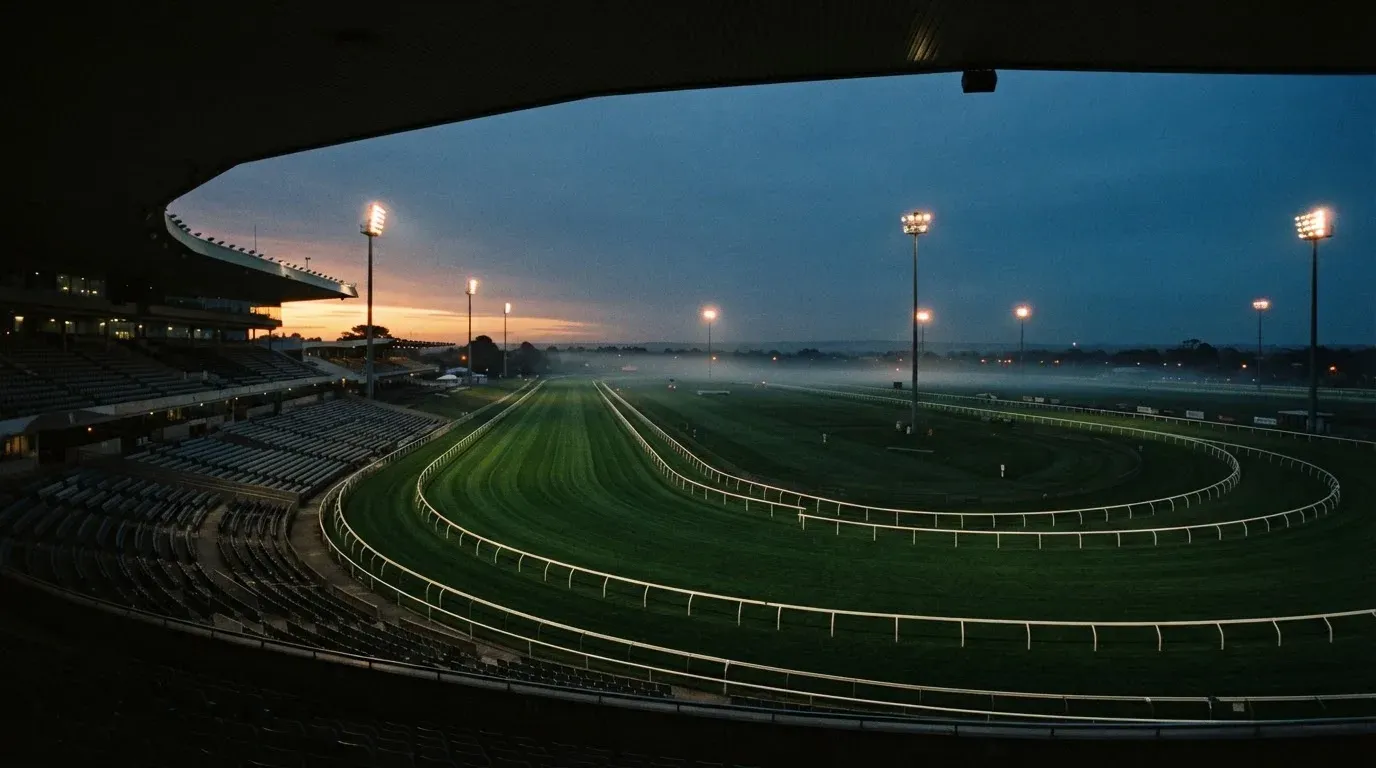
The two disciplines are flat and jump. Flat is run on a level surface around a straight or oval track; jump racing — called National Hunt in Britain and Ireland — runs over obstacles, either hurdles (smaller, faster) or fences (the bigger ones, called chases). The two seasons alternate through the year, with jump running at its peak from October to April and flat running from April to October.
Flat and Jump Disciplines
Flat racing is the faster end of the sport. Distances range from five-furlong sprints to the four-mile extremes of the stamina-testing long-distance events, with the middle distances — seven furlongs to a mile and a half — the most common in commercial meetings. Jump racing requires a different physical type: the horse that stays three miles over fences is built differently from the horse that wins over a sprint course.
The two markets behave differently for the bettor. Flat racing produces larger fields in the handicaps and tighter prices at the front of the market; jump racing has smaller fields, fewer runners per race, and a more pronounced market preference for proven course-and-distance form. Both produce tradeable prices, but the form signals that translate to price move differently across the disciplines.
The Fundamentals of the Classics
The British Triple Crown consists of the 2000 Guineas, the Derby and the St Leger — three races for three-year-olds run between late April and mid-September. A filly Triple Crown runs the 1000 Guineas, the Oaks and the St Leger. Winning all three legs in a single season is rare; the last Flat Triple Crown was Nijinsky in 1970. The Irish equivalents add the Irish Derby and the Irish 2000 Guineas to the picture.
For punters the classics are the most heavily-bet races of the year. Place terms are extended — six places on the Derby is standard — and many bookmakers offer non-runner money-back and best odds guaranteed from several days out. The form study in a Classic is dense; the prices reflect that density.
The Classics are also where cross-form studies translate best to price. A Guineas form line sets up the Derby market; the Derby sets up the St Leger. A punter with a clear view of the form chain across the three races has the rare chance of taking an early price before the market catches up — usually before the second leg.
Handicaps, Conditions and Allowances
In a handicap each horse carries a different weight, set by the official handicapper, designed to bring horses of different abilities to a level playing field. The top-weighted horse in a major handicap might carry ten stone; the bottom-weighted might carry eight. The market interprets the weights and reflects them in prices. A well-handicapped horse dropping in class is a familiar angle of value hunting.
Conditions races carry equal weights with allowances for sex and age. Fillies get a weight allowance against colts in many races; younger horses get allowances against older ones. Conditions races test ability; handicaps balance it. Both produce tradeable prices.
The allowance structure is most visible in the all-weather flat programme, where three-year-olds get weight against older horses and where form lines can be read against the allowance. For a punter, allowance races are a study in second-order reading: the official mark, the official allowance, the trainer’s apparent intent.
The Statutory Frame Around Betting in Great Britain
The Gambling Commission licences the whole commercial betting market under the Gambling Act 2005. The Act covers Great Britain — England, Scotland and Wales. Northern Ireland runs its own older law, so a “GB licence” never claims authority there. Since the 2014 Act, an operator whose remote facilities are used in Great Britain needs a Commission licence wherever it is based; a Curaçao, Maltese or Gibraltar-only licence is not a substitute.
What the Gambling Commission Licences
The Commission issues five remote betting licence categories: general betting standard (real events), general betting standard (virtual events), general betting limited, pool betting, and betting intermediary. Of the ten operators in this comparison, all hold the real-events standard; Sporting Index, which operates spread betting, has its financial product regulated by the FCA on top.
There is no statutory list of permitted sports or markets. An operator holds a licence for a category and offers markets under its own rules plus the LCCP. Horse racing is offered by all ten operators in this shortlist; esports and novelty markets are legal to offer; the constraint is the operator’s licence conditions, not a list of allowed events.
The Customer Checks Before the First Bet
Minimum age is eighteen. Since 7 May 2019, name, address and date of birth are verified before the customer can deposit or gamble at a GB-licensed site — including with a free bet. Kalooki Sportsbook runs the same verification regime and confirms its GAMSTOP membership. There is no anonymous betting at a licensed site, and there is no path through anonymity networks, cryptocurrency or otherwise, that avoids the verification step.
A financial vulnerability check applies when a customer’s deposits minus withdrawals exceed £150 in a rolling thirty days. It runs against public records (county court judgments, bankruptcies), not against a credit file. Financial risk assessments — the press’s “affordability checks” — are announced in a staged plan, no start date.
Bets, Markets and the Missing Rule Book
There is no statutory cap on stakes in sports betting. Operators set their own maximum stakes and may restrict customers individually. There is no state-set deposit or loss ceiling: deposit limits are a customer-set protection, with operators required to offer gross deposit limits on a fixed time frame under the Commission’s RTS; the first changes have applied since 31 October 2025, a second phase was postponed to 30 September 2026, and whether it has now gone live is not established here. No statutory list of prohibited bet types was found.
That absence is significant. The book decides what it takes; the punter decides whether to bet it. In-play on horse racing is an operator’s choice to host; some run a full feed with race video, others run a simulated in-running product. Exchanges set their own commission rates. Spread firms run their own stop-loss thresholds. None of this is set by statute.
In-Play, Exchanges and the Tax Frame
In-play betting is offered by GB bookmakers under their licence conditions, with the controls the operator builds into its in-play product. There is no statutory carve-out and no statutory prohibition. Betting exchanges run under a betting intermediary licence, with the back-and-lay mechanics the operator’s own.
The punter pays no tax on betting winnings in Great Britain. General Betting Duty is the operator’s tax, currently 15%, with a remote rate rising to 25% from 1 April 2027 while remote bets on UK horse racing, betting-shop bets and pool betting stay at 15%. Until 1 April 2027 the remote rate stays at 15%; whether operators pass the duty on through their prices is not established here, and never write that the player is charged duty.
Spread betting has its own rates under the FCA: 3% on financial spread betting, 10% on sports spread betting. A punter reading a spread quote sees the price per point; the duty sits on the firm’s side of the trade.
Advertising Rules, Bonus Caps and the Affiliate Trail
Advertising runs through the CAP Code for non-broadcast, BCAP for broadcast, and the ASA enforces both; the Commission’s marketing conditions sit on top. CAP Code section 16: no marketing of strong appeal to under-18s, and no one who is or seems to be under 25 may feature gambling or play a significant role in the ad. The rule is about who appears in the marketing, not who may bet.
Promotion rules in force since 19 January 2026: wagering requirements on bonuses are capped at 10x (a £10 bonus with 50x rollover would have required £500 of bets; under the cap no more than £100), and mixed-product promotions — betting plus casino plus bingo plus lottery in one offer — are banned. Whether the cap applies to free bets with no wagering condition, and any cap on the money value of a bonus, are not established here.
“Whistle-to-whistle” is an industry code, not law: since 1 August 2019 betting advertisements are not shown on TV from five minutes before a live sporting event to five minutes after it, before the 9pm watershed, with horse and greyhound racing excluded. The Premier League’s withdrawal of gambling sponsorship from the front of matchday shirts, from 2026/27, is voluntary — sleeves and hoardings remain.
Responsible Gambling in a Regulated Market
A licensed operator is bound by social responsibility codes that interact with every punter’s account. The operator must offer deposit limits, time-outs and self-exclusion. The customer must be able to set these without contacting customer service. The Commission’s safer-gambling rules run from the operator’s onboarding flow through to reality checks during play.
GAMSTOP and the Self-Exclusion Ladder
GAMSTOP is the national multi-operator online self-exclusion scheme, mandatory for online operators since 31 March 2020. A punter registers once, and every GB-licensed online operator must refuse the account. Self-exclusion periods are six months, one year, five years, or five years with auto-renewal; after the minimum period the exclusion stays in force for a further seven years unless the punter asks GAMSTOP to remove it. GAMSTOP covers online sites and apps; betting shops are a separate system. Every operator in this comparison is bound by the scheme.
A self-exclusion is not the same as a cool-off. Six months is the shortest exclusion; if the punter simply wants to take a week off, a deposit limit or a time-out is the right tool. Time-outs set by the operator are usually twenty-four hours, a week, or a custom period; deposit limits take effect on the next deposit. Most racing-heavy operators offer these tools from the account page without a chat agent — that is the regulatory expectation.
Help Lines and Counselling Services
GamCare runs the National Gambling Helpline. GambleAware funds treatment and education. NHS gambling clinics offer free specialist help across England, with branches in London, the North East and elsewhere. Gamblers Anonymous is a peer-support network. Fitzwilliam Sports links to GambleAware, GamStop and Gamblers Anonymous from its home page; that is standard across the licensed set, and is itself a marker of a brand that takes the safer-gambling code seriously rather than treating it as a footer obligation.
The right help depends on what the punter needs. A confidential self-assessment via GamCare works for a punter who is unsure. NHS clinics work for a punter with a gambling problem they want treated. Gamblers Anonymous works for a punter who wants peer support. Local-authority-funded services are uneven by region.
Crypto, Anonymity and the Limits of Both
The crypto-on-horse-racing search is a real cluster of phrases, and the answer is structural: the verification step described earlier applies to every GB-licensed bookmaker. Crypto on a GB-licensed site is a deposit method, not an anonymity tool — the operator runs the same KYC checks on a Bitcoin deposit as on a debit-card deposit. The payment method changes nothing on the regulated side.
A Curaçao-only operator may accept crypto and run no identity checks, and that is the attraction. The cost is the loss of GAMSTOP coverage, the loss of the ASA-adjudicated dispute route, the loss of the 10x bonus cap, the loss of the £150 vulnerability check, and the loss of any recourse if funds are held. For a punter who chooses this route knowingly, those are the trade-offs.
There is no LCCP rule specifically against or specifically for cryptocurrency deposits at GB-licensed operators. The customer’s account is verified at the same point regardless of payment method. Credit cards are banned for gambling in Great Britain, including credit-card-funded e-wallet top-ups; debit cards and bank-based payments are not covered. That is the only payment-type rule written into the operator’s compliance layer.
A punter who wants crypto at a GB-licensed site is choosing a payment rail, not a regulatory regime. The protection the licence offers has nothing to do with the payment rail and everything to do with the operator and the regulator behind it. An unlicensed crypto bookmaker offers the opposite: a payment rail that routes around identity checks, with every safeguard that the regulated market requires stripped out.
Bonuses and Free Bets on Horse Racing
The welcome offer is the front of every bookmaker’s sign-up funnel. The offer headline in pounds is the easy comparison; the rollover, the minimum odds, the expiry and the stake-not-returned rule are the hard comparison. A £30 free bet with a 5x rollover at minimum odds 1.50 is worth less in real money than a £10 free bet with no rollover at minimum odds 1.20. Cross-checking the headline to the small print is the difference between the two.
What a Welcome Offer Is Worth
Three of the licensed operators in this comparison state welcome offers in their published terms. BetGoodwin’s is “Bet £10 & Get £15 in Free Bets”, split as a £5 sports bet, a £5 acca and a £5 Sub-Cover bet. VBet’s is a £10 free bet for a new verified customer staking £10 or more on a first-ever bet that loses. Dabble’s is “Bet £10, Get £10 in Free Bets” on first deposit for new customers, with minimum odds applying, a 7-day free bet expiry and the stake not returned on the free bet itself.
The “stake not returned” line is the one most missed. A free bet that pays only the profit on a win — not the free-bet amount back — is structurally worth less than a refunded stake that returns both. The £10 free bet at 5.0 with the stake not returned is worth the implied win × probability, not the headline nominal. A free bet with the stake returned, where it occurs, closes that gap.
The Rollover and the Minimum Price
The wagering requirement is the multiplier on the bonus that determines how much real betting the bonus needs before it converts. Under the Commission’s 10x cap described earlier, no GB-licensed welcome bonus can demand more than £100 of qualifying bets for a £10 bonus. That ceiling binds the industry rather than reshaping it; rollover terms in the racing book typically run between 1x and 5x, with the higher multipliers concentrated in casino products.
Most welcome offers in the horse-racing category place the qualifying bet and the free bet on horse racing. The minimum odds requirement usually sits between 1.50 (about 1/2) and 2.00 (evens). A punt on a 1.20 favourite does not qualify at 1.50. Minimum odds are the most-checked place on the terms page and the easiest to miss — and the easier one is to assume that any horse at any price counts when a particular race, course or day is excluded by name.
Best Odds Guaranteed in Practice
William Hill pays Best Odds Guaranteed on UK and Irish horse racing from 8 AM on the day of the race, on both single and multiple bets; it does not apply to ante-post, tote or pari-mutuel bets. BOG is the headline concession that closes the gap between the morning price and the SP on the same selection: take the price at any point from 8 AM onwards, and if the SP is higher at the off, the bet pays the SP.
Bookmakers offering BOG use the time-window differently — some from 8 AM, some from 9 AM, some from declaration — and the BOG exclusion list varies by operator. Multiple-bet BOG is more common on the bigger bookmakers. Tote pool betting sits outside BOG because it is a different product. For punters who place racing singles the day of the race, BOG is the single most valuable concession in the racing book; for punters who bet ante-post, it changes nothing.
The App on the Handset
The phone is where most British racing bets now settle. The major bookmakers ship native apps on iOS and Android, with browser fallback for those who prefer it. The download numbers are large — bet365 is described as the most downloaded sports betting app in the UK — and the mobile product has its own shape.
What the App Adds Over the Site
The app’s edge is the push notification. A racing bettor who wants an SP change alert, a going report update, or a non-runner notice has the same information on app and site, but on the app it lands in real time without the bettor asking. The app’s second edge is the touch-friendly bet slip — three taps to place a single, with the stake and the selection confirmed together, rather than three clicks across a desktop navigation. The bet365 product sits in this space, with its Bet Builder+ combining markets from one event into a single line, pre-match and in-play, alongside Super Boosts and daily Bet Boosts.
The app’s cost is the absence of the desktop’s density. Form tables, racecards and tips run easier on the desktop because the screen is larger. Most punters shift between phone and laptop over a race day; the racing app is the bet-placement tool, the laptop is the form tool.
Geo-confirmation on the app is a known irritation for the GB punter. Some racing-specific apps require the location services to be on to confirm the bettor is in Great Britain; this is the operator complying with the point-of-consumption rule, not a glitch. With it off, no bets.
App-Specific Markets and BOG
Some operators carry app-only price boosts, app-only in-play features, or a different fingerprint-login flow on the app. Most bookmakers ship the same horse racing markets in app and browser, with the same prices. The exception is live streaming — Racing UK and At The Races broadcasts run on the mobile app where the operator has paid for the rights, and the same stream typically does not run on a competitor’s product.
Best Odds Guaranteed works the same on app and browser, though the notification layer is different — a push notification fires the moment the SP moves, which the desktop does not match. For a punter building a racing position across the day, the app is the natural hub for that real-time SP-against-price monitoring.
In-Play Racing and Cash Out
In-play horse racing is the live market on a race that has already gone off. The price on the leader, the second and the third updates in seconds as the positions change. Most bookmakers run a simulated in-play product for racing because running a live feed to every punter is expensive; some operators pay for full race feeds and price them per-frame.
Live Markets vs. Running Prices
In-running on horse racing is a margin question. The bookmaker has a fast-moving liability on the leader and a slow-moving one on the field. A punter with a sharper view of the running order than the operator’s price can take the value, but the operator’s view runs against the same feed the punter sees. Live in-play is closer to a coin-flip than pre-race; the edge that survives pre-race rarely survives a 60-second price update.
Some books offer live-streaming of racing at no additional stake, tying the video to the in-play market. Sport-specific operators license this footage. Sporting Index’s app ships in-play markets with auto cash-out and Multi-Markets on the football side, with racing running a separate format. VBet carries a multi-product in-play menu including racing, alongside other sports, and VBet’s coverage extends to player-specific markets where appropriate.
Cash Out and Settlement Rules
Cash out is the operator’s offer to settle the bet before the race’s full result has been determined, at a price the operator sets. Cash out prices are computed from the in-play market plus a margin, so a punter who cashes out a winning position accepts a price slightly below the eventual payout. Cash out is a margin product, and the prices reflect that — a “lock in £50” button that pays £43 is a closing trade on which the operator takes a margin the punter cannot negotiate down.
Auto cash-out at a set floor is a feature on some operators — including Sporting Index — where the bettor sets a threshold and the system closes the bet automatically. For recreational punters the cash-out button is most useful as a “lock in a small win” tool rather than as a way to escape a loss. The bookmaker’s offer to cash out is always weighted in favour of the book.
The Operators in This Comparison
The verdicts are the editor’s. The figures, dates and licence details come from the Commission’s register and each operator’s published terms; the comparisons are the page’s. Pricing and welcome terms move; check the operator’s own terms page before staking.
Tote — The Pool-Betting Specialist
Tote is the pool-betting product of British racing — bets are struck into a pool with other customers and paid out at the dividend, rather than against a fixed-odds price. The Commission account is 54779, held by TDCO Limited. Tote products run alongside fixed-odds on the GB racing menu, with the place market at pool terms rather than the bookmaker’s stated place fraction.
Tote is the right shape for punters who back multiple selections in big-field handicaps and prefer the pool dividend to the bookmaker’s place terms. The dividend is not knowable at bet-placement, which is also the price. For singles with a clear favourite the fixed-odds price on the same selection at a sharp book is usually the better trade.
BetGoodwin — Racing-Flavoured Licence Holder
The licence-holder name gives the brand away: Goodwin Racing Limited (Commission account 2927) trades as BetGoodwin online, and the racing focus is in the corporate structure. The sports welcome offer is split across three free bets — a £5 sports bet, a £5 acca and a £5 Sub-Cover bet.
The £15-in-free-bets package is best read as three smaller bets rather than one larger one. The £5 Sub-Cover bet is the line that interests racing punters most — Sub-Cover pays on selections that finish second to a non-runner or faller. The offer is well-targeted at regular racing singles, where the Sub-Cover insures the day’s racing action against the in-race mishap that the standard win bet does not cover.
Geoff Banks — Ante-Post Specialist
Ante-post specialist by trade. The licence is held by GB Sports Advisors Limited (Commission account 54095), and the published product emphasises ante-post prices on future events alongside live in-play markets. The betting programme leans more on racing than the all-rounder books.
This is a specialist racing book. The ante-post menu is the headline — Geoff Banks opens markets on races months ahead, and the betting programme has a racing-flavoured depth that a generic football book doesn’t match. Less suited for a punter shopping a multi-sport in-play sheet — Geoff Banks is racing-first, and the in-play product is the supporting role rather than the headline.
VBet — First-Bet-Loses Insurance
The welcome offer is the pitch: VBet pays a £10 free bet on the loss of the first £10+ stake for new verified customers. SCGO Limited holds the licence (Commission account 44662). The sportsbook covers the major GB menu plus a casino on the side, with cash-out, bet builder and live streaming among the named products.
The “first-bet-if-it-loses” structure is real insurance for a punter placing a first racing bet at a competitive price anyway. A £10 first bet at minimum odds 1.50 that loses converts to a £10 free bet with the stake not returned. The verification work lands once; the offer is a one-per-customer promotion, not a recurring line.
Sporting Index — Fixed Odds and Spread Together
Two products, one firm. Sporting Index Limited (Commission account 27343) runs a fixed-odds sportsbook alongside a spread-betting book, the latter regulated by the FCA on top of the Gambling Commission licence. In-play, Bet Builder on football, auto cash-out and Multi-Markets are the named product set.
Spread betting is the difference here. A punter who wants to take a position on the winning distances of a race, the beaten-by-margin of a horse, or the index of a meeting has access; fixed-odds customers at the same brand price against the standard sheet. The right venue for a punter who actively wants spread exposure on racing and football. Fixed-odds-only customers have plenty of sharper generalists and don’t need the spread side.
Kalooki Sportsbook — A Compact GB-Facing Sportsbook
A smaller brand in the licensed set. The Commission account is 57730, held by Kalooki Sportsbook Limited, and GAMSTOP registration is confirmed in the operator’s own terms. The product set runs the standard GB sportsbook menu without the racing-specialist depth of the books above.
The right fit for a punter looking for a smaller, GB-focused sportsbook whose product set is the standard major-sports menu. Anyone after the racing depth of Tote, the ante-post menu of Geoff Banks, or the spread side of Sporting Index should look elsewhere — Kalooki is a generalist, not a specialist, and the price sheet reflects that.
LiveScore Bet — Live Scores and the Bet Builder Alongside
The product sits beside the LiveScore scores app, and the bet builder allows up to ten selections across match result, both teams to score, corners, total goals, player scoring and cards. LiveScore Betting and Gaming (Gibraltar) Limited holds the licence (Commission account 56859).
The LiveScore pairing is the difference. Live scores push the moment a goal goes in; the in-play product on the betting side responds in seconds. For football this is a strong tie-in; for horse racing it is more an aside than a centrepiece. The right venue for football-led punters already running LiveScore for scores. Racing-focused bettors looking for an ante-post menu or racing depth will find the offering thin.
Dabble — A Straight-Forward Welcome Offer
The brand leans on a straightforward welcome offer and a structure designed around copy-trading tipsters within the app. Dabble Sports UK Ltd holds the licence (Commission account 65677). The offer is “Bet £10, Get £10 in Free Bets” on a first deposit for new customers, with minimum odds applying, a 7-day free bet expiry and the stake not returned on the free bet.
The shape for punters who want to follow a tipster inside the bookmaker’s app, where a list of racing tipsters sits alongside the betting slip and a single tap copies the position. Self-directed form workers won’t get value from the social side. The matched welcome in £10-for-£10 terms is meaningful; the small print is short and the qualifier is one qualifying bet, not a multi-stage ladder.
10bet — Horse Racing Named Among Covered Sports
A multi-sport bookmaker whose published menu names horse racing. Blue Star Planet Limited holds the licence (Commission account 43173). The product set covers football, tennis and horse racing, with cash-out, bet builder and live streaming among the named features.
The right venue for a punter looking for an all-rounder with horse racing named explicitly among the covered sports. Not a racing-specialist price sheet — 10bet is a generalist, with horse racing on a long list rather than as the headline. For punters who place one racing bet a week and a regular football acca, the consolidated menu is the appeal.
Betfred — Twenty-One Sports and a Casino Hall
The app covers twenty-one sports and over two thousand casino-style games. Done Brothers (Cash Betting) Ltd publishes the app; Petfre (Gibraltar) Limited holds the remote licence (Commission account 39544). The product spans the high-street brand and the online shop.
The right venue for a punter who wants a brand with a deep British heritage bookmaker name and a casino-and-sports product alongside it. Racing specialists after the deepest ante-post menu should look further — Betfred carries it but does not lead with it. The combined retail-and-online footprint is the point; the racing price sheet sits inside that.
The Margin Inside a 1.90 / 1.90 Market
A bookmaker’s margin is the share of every pound staked that the book keeps, on average, across all outcomes of one market. With decimal odds the arithmetic is mechanical. The punter pays the margin on every bet — win or lose. Run the worked example and the cost of a bet becomes a number rather than a feeling.
Take a two-way market priced at 1.90 / 1.90. The reciprocal of each price is roughly 0.5263, summing to 1.0526. Divide 1 by 1.0526 to get the payout share: 0.95. Subtract the payout share from 1 to get the margin: 0.05, about 5%. That is the share of every pound staked the book keeps on average across the two outcomes of that market. The punter loses 5p of every pound whether the bet wins or loses.
The shape of the margin depends on the price structure. The same calculation at 1.95 / 1.95 produces roughly 2.5% margin; the same shape at 1.85 / 1.85 produces about 7.5%. The further the prices move from even-money, the more the margin builds, with the favourite side typically carrying more of the margin than the outsider side in asymmetric markets. Real horse racing win markets sit in the 5-10% band, with exotic markets wider — forecasts, tricasts and place-only markets all carry a heavier margin because the books have less information and need to hedge more.
The arithmetic does not change with the welcome offer. A price-boost token widens the margin on the boosted selection by definition, because the boosted price sits inside a market whose other prices still carry the book’s standard margin. The free bet that pays only the profit carries a margin of its own — what it is worth on average is the implied probability of winning times the profit, not the headline nominal. The margin sits behind every price the book publishes, every day; reading it once lets the punter see it everywhere.
Frequently Asked Questions
How do betting odds work in horse racing?
Fractional 5/1 says every £1 staked returns £6 (£5 profit plus the £1 stake). Decimal 6.00 says the same. Decimal is the working form because multi-leg bets multiply leg prices into one number; a four-fold at 1.50, 2.20, 3.00 and 1.80 multiplies to 17.82, and that is one stake against one combined price.
How to bet on horse racing?
Place a single, an each-way bet or a multiple through any GB-licensed operator’s website or app. The minimum age is 18, identity is verified before the first deposit, and a stake settles against a registered account. Pick a race, choose win or each-way, enter the stake, confirm; withdrawals take hours to days depending on the method.
How is the return on a bet worked out from the stake and the odds?
Multiply the stake by decimal odds to get the total return, or by decimal odds minus one to get the net profit. A £10 bet at 4.50 returns £45 total — £35 profit plus the £10 stake. An each-way bet is two bets, so the stake doubles: a £5 each-way bet costs £10 and pays two lines independently.
What is the bookmaker’s margin and how can it be seen in the odds?
Reciprocals of every market price sum to the overround. For a 1.90 / 1.90 two-way market the reciprocals sum to roughly 1.0526, payout share is 0.95 and the margin is 5%. That is the bookmaker’s average take across all outcomes — paid on every bet, win or lose.
How can it be checked that a bookmaker holds a Gambling Commission licence?
Search the Commission’s public register by business name, trading name or domain. The register confirms the licence category, account number and current status. A GB-facing online operator must appear there; if a brand does not, it is not licensed for customers in Great Britain and British consumer protections do not apply.
Horse racing & greyhounds – oddsguaranteed
Content created by the «oddsguaranteed» team
