
Online curling betting 2026: where to wager and what it really costs
 Available in US

Curling sits in a strange corner of the British sports-betting market. It draws a dedicated winter crowd, it has its own rhythms on the calendar, and the bookmakers that list it tend to do so as a complement to their winter-sports menu rather than as a flagship product. That has consequences. A bettor looking for it in October will find a thin offering on most licensed sites, a deeper but uneven offering during the run-up to the Winter Olympics and the World Curling Championships, and a price structure that hides more inside it than a casual reader would guess from the headline odds.
This page is a working guide to that market. It covers the shape of the sport — what an end is, where the bookmakers price a game, and how the line moves across a long match — and the shape of the offer: how licensed bookmakers present curling, what their welcome packages actually cost after the small print is read, and where the bookmaker’s margin lives inside a curling line. The angle throughout is cost. The odds on screen are the starting point; the question is what they leave with the punter once the structure of the market is understood.
Data current as of October 30, 2026, checked against the Gambling Commission’s public register and the operator’s own terms.
Fixtures and tournaments worth knowing
Curling has two competitive windows every year. The first runs from October to March and is built around the World Curling Tour, the continental championships and the national playdowns that decide who represents each country at the Worlds. The second runs every four years and is the Winter Olympics, where the field is small enough that each draw matters and a single end can move a price several positions. Between those two, the Grand Slam of Curling tour runs from autumn through to the play-offs in the spring, and the European Curling Championships take place in late November or early December.
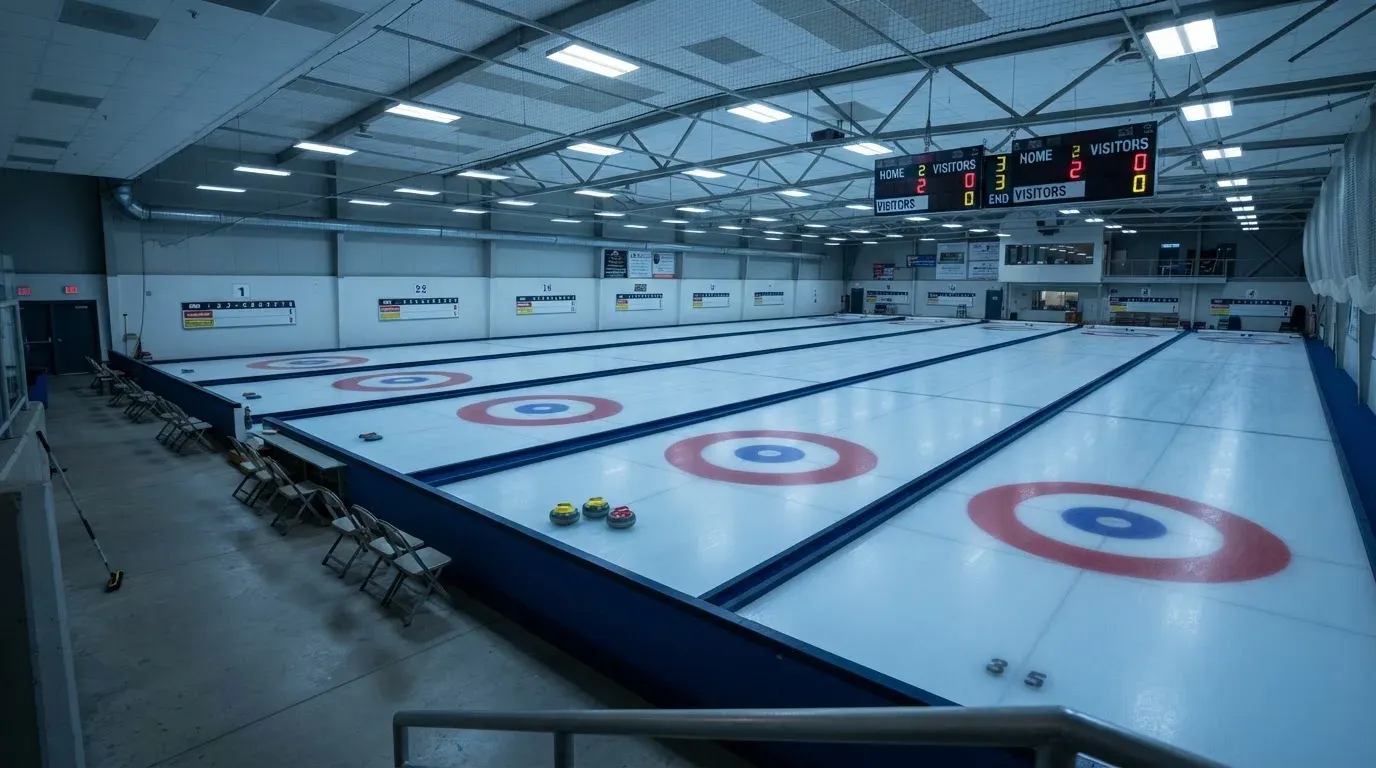
A curling team has four players (two in doubles), and each player throws two of the team’s eight stones. That arrangement shapes every market a bookmaker offers: an “end” is the period in which all sixteen stones are thrown, and a match is a sequence of those ends. Curling games usually last 8 or 10 ends, with international competitive games generally going to ten. A team scores only when it has a stone closer to the centre than any of its opponent’s; after all 16 stones of an end are thrown, the team with the stone closest to the button scores one point for each of its stones closer than the opponent’s nearest stone, and only stones in the house count. Tied curling games go to extra ends. The hammer, which is the last stone of an end, goes to the team that did not score in the previous end; if an end is blanked, the hammer stays with the same team. Those three rules — the hammer, the blank, the steal — are where most of the in-play price movement comes from.
The competition calendar that matters for a British bettor in 2026 is built around four anchor events. The World Curling Championships — men’s and women’s — sit at the top of the non-Olympic calendar. The European Curling Championships give a second tier of national-team play. The World Mixed Doubles and the World Senior Championships fill the rest of the winter. The Winter Olympics remain the single biggest betting window of the quadrennial, and bookmakers price it accordingly. Outside those events, the Grand Slam of Curling is the tour where the top mixed field plays week-to-week, and it tends to be the cleanest betting board on the calendar because the same teams face each other often enough that the prices are tested.
How the calendar maps onto the betting menu
A bookmaker’s curling offer sits at its widest from late November to early March, when the European Championships, the Spengler Cup of curling, the Continental Cup and the World Juniors run back to back. The autumn portion of the calendar — October and early November — tends to be a stretch of the World Curling Tour with one-off tournaments, and the menu is thinner. The post-Worlds window in April is the quietest of the year, with the play-off season over and the new season yet to begin.
The Winter Olympics is a different problem. The field is sixteen teams per discipline (ten in mixed doubles), the schedule is dense, and a bookmaker can run pre-match, in-play and outright markets on the same event simultaneously. That window is also the one where the price margin tends to widen the most, because the betting public pays more attention to curling for two weeks than for the rest of the year combined and the books adjust their overround to handle the imbalance.
Why the tournament matters for the price
A World Curling Championship game is a 10-end match between two national teams, played on prepared ice in a fixed venue. The players are full-time professionals, the team rankings are stable, and the same squads meet each other often enough across a season that the prices are reasonably efficient. A Grand Slam event is similar but played in a tour format with shorter games. A one-off World Curling Tour event in October is a smaller sample: more variance, fewer data points, and a market where a price offered by one bookmaker is more likely to be out of line with the others. The price a bettor sees in October is therefore a less reliable guide to the true probability than a price offered on a Worlds semi-final in March.
That difference matters in two ways. It is the reason a curling line in October is often the place where a price-driven bettor finds the largest gaps between books. And it is the reason the same bookmaker can be aggressive on the World Championships and conservative on the smaller tour events, simply because the data behind the prices is not comparable.
The licensed UK bookmakers that show curling
Ten operators hold a Gambling Commission remote general betting licence (real events) and serve British customers online. Each has a different relationship with curling. Some list it as a year-round sport under “Winter sports” or “Other sports”; others run a dedicated curling page for the duration of the Winter Olympics and close it for the rest of the year; a handful use the same page for curling, bowls and pétanque, which is where the menu tends to be thin and the prices are reused from one discipline to the next.
The order below is the order the operators appear in on this page, not a ranking by quality. A place on the list is a licence and an entry in the comparison, not an endorsement. The page does not recommend one over another: it gives the reader the facts to choose for themselves.
Fitzdares
Fitzdares runs a tight sportsbook around premium markets — horse racing, football, tennis, rugby, cricket, golf and American football — with cash out, accumulators, Lucky 15s, specials and antepost markets, and an in-play board that covers the headline events. Curling is not the centre of the offer; it appears on the winter-sports page during the World Championships and the Winter Olympics, with a small menu of match winner, set score and outright markets. The welcome offer for new customers has been framed in the past as a combination of free bets tied to a first deposit, with the standard 7-day expiry and the standard minimum odds.
Where the brand fits. Fitzdares suits a punter whose main interest is horse racing and football but who wants curling priced during the Winter Olympics without having to open a second account. The brand does not compete on curling-specific depth.
BetMGM
BetMGM’s UK sportsbook runs a wide menu: football, horse racing, tennis, basketball, American football, ice hockey, golf, and a winter-sports section that includes curling during the calendar windows. The in-play offering is solid on football and tennis but thinner on the smaller winter sports. BetMGM’s sports welcome offer for new UK customers who deposit £10 or more and place a sports bet within 7 days is four £10 free bets (two football accumulators of 4+ selections and two sports multiples of 2+), valid for 7 days with minimum odds and opt-in required. The structure is football-heavy, so a curling punter who wants the welcome offer is being asked to bet on a different sport than the one they came for.
Where the brand fits. BetMGM suits a punter whose winter-sport interest is broader than curling and who is happy to clear a welcome offer on football multiples to reach the free bets.
Kwiff
Kwiff positions itself around “surprise” odds boosts — random price enhancements on selected markets — and runs a full sportsbook underneath. Curling appears in the winter-sports section during the major events. The app is rated 17+ on the App Store and Kwiff is licensed by the UK Gambling Commission, describing itself as a trademark operated by Spryme Ltd.
Where the brand fits. Kwiff is an option for the punter drawn to the random boost mechanic; curling is available, though it is not the focus of the app.
Lottoland
Lottoland’s UK app combines casino, lottery betting, sports betting and scratchcards. The sportsbook is a smaller piece of the platform than at the dedicated bookmakers, and curling is listed only during the major events. The platform states it is licensed by the Gambling Commission for customers in Great Britain.
Where the brand fits. Lottoland suits a punter whose main interest is lottery and casino but who wants a single account that also handles a curling bet during the Winter Olympics.
Midnite
Midnite runs an esports-led sportsbook with a growing catalogue of traditional sports, including curling. The site cites Gambling Commission licence 101839 and shows in-play events, an acca builder, popular accas and price boosts with maximum-stake limits. Midnite’s sports welcome offer: new customers who bet £5 or more on pre-match odds of EVS (2.0) or greater within 14 days of sign-up receive £25 in free bets and 50 free spins, valid for 7 days. The minimum odds floor at EVS is the figure to remember: a curling match-winner bet on the favourite often prices below EVS in a heavy favourite-on match, so the qualifying bet is usually the outsider or the handicap line.
Where the brand fits. Midnite appeals to the user looking for a modern, esports-led betting experience, with curling offered as part of the broader, growing sportsbook catalogue.
Octobet
Octobet is a newer UK-licensed sportsbook. Curling is on the menu during the major windows. Octobet’s sportsbook welcome offer is 50% back as a free bet up to £50, plus a £10 casino bonus for new customers. The “back as a free bet” wording is the part to read carefully: a free bet is paid as a free bet token, not as a cash credit, so the stake is not returned with a win.
Where the brand fits. Octobet provides a straightforward platform for the occasional bettor, though the curling coverage is limited strictly to the major seasonal windows.
Unibet
Unibet is one of the larger European sportsbooks and has stated it has operated since 1999. Its UK site is run by Platinum Gaming Limited, Gibraltar, under Gambling Commission account 45322. Curling is on the menu year-round under the winter-sports section, with a fuller outright board during the World Championships and the Winter Olympics. Unibet’s sports welcome offer is “Get £40 in Free Bets when you bet £20”: a deposit and sports bet of £20 or more at minimum odds of 2.0 (1/1), with free bets expiring within 7 days of issue, for new GB customers using a debit card or instant bank transfer. The minimum odds at 2.0 is the part to read: a curling match winner at 1.50 does not qualify, only the handicap, the over/under ends or the outright markets do.
Where the brand fits. Unibet is the choice for the dedicated winter-sports punter, offering the most consistent curling depth across the calendar, both in-play and pre-match.
Fafabet
Fafabet runs a compact sportsbook focused on football and horse racing, with a winter-sports section that handles curling during the major windows. Fafabet pays Best Odds Guaranteed on UK and Irish horse racing win and each-way bets from 9am on race days: if the starting price is bigger than the original price, the bigger odds are paid. The BOG rule is horse-racing-specific and does not apply to curling.
Where the brand fits. Fafabet suits a punter whose main interest is horse racing and football, who wants a single account for the occasional curling bet during the big tournaments.
Bet600
Bet600 runs a small, modern sportsbook. Curling is on the menu during the major windows. Bet600 pays Best Odds Guaranteed on horse racing: if the starting price is bigger than the early or show price taken, the bet is paid at the SP. As with Fafabet, the BOG rule applies to horse racing and does not extend to curling.
Where the brand fits. Bet600 offers a minimalist interface; it is suited for those who prefer a less cluttered screen, provided they do not mind the thin curling menu.
BetGoodwin
BetGoodwin is a UK-licensed sportsbook tied to Goodwin Racing. Curling is on the menu during the major windows. BetGoodwin’s sports welcome offer is “Bet £10 & Get £15 in Free Bets”, made up of a £5 sports bet, a £5 acca and a £5 Sub-Cover bet. The split into three tokens means the expiry clock runs on each separately.
Where the brand fits. BetGoodwin is best for the punter whose primary interest is horse racing and who appreciates a specialized, albeit smaller, sportsbook experience.
How the licensed bookmakers compare on curling
A licence is the entry ticket to the market, not the test of depth. The table below sets each operator’s licence and what the operator’s own terms say about curling, where research found a statement, alongside the gaps where the terms do not mention curling at all.
| Brand | Gambling Commission licence | Licence holder | Operator’s own terms on curling |
|---|---|---|---|
| Fitzdares | Account 400 | Fitzdares Limited | Curling listed under winter sports at major events |
| BetMGM | Account 39198 | LeoVegas Gaming PLC | Winter-sports section includes curling at major events |
| Kwiff | Account 44448 | Eaton Gate Gaming Limited | Curling under winter sports, price-boost mechanic applies |
| Lottoland | Account 38991 | EU Lotto Limited | Sportsbook carries curling at major events |
| Midnite | Account 101839 | Midnite Limited | In-play and pre-match curling at major events |
| Octobet | Account 62545 | Octopus Game Limited | Winter sports, curling at major events |
| Unibet | Account 45322 | Platinum Gaming Limited | Winter sports, curling year-round |
| Fafabet | Account 57385 | Taichi Tech Limited | Curling under winter sports at major events |
| Bet600 | Account 44731 | Tyche Tech Limited | Curling under winter sports at major events |
| BetGoodwin | Account 2927 | Goodwin Racing Limited | Curling under winter sports at major events |
The pattern in the table is the gap between Unibet and the rest. Unibet is the only brand in this set that lists curling as a year-round sport rather than as a major-events feature; the other nine carry curling only during the World Championships, the European Championships, the Grand Slams and the Winter Olympics. For a bettor who wants a curling price in early November, that gap is the answer.
What “online curling betting” actually covers
Curling is a sport of stones, ends and houses. Stones weigh between 17.24 and 19.96 kg (38 to 44 lb) under World Curling Federation rules. The “house” is the set of concentric rings painted on the ice; the “button” is the centre. The “hammer” is the last stone of an end. The “end” is the period in which all sixteen stones are thrown, and “extra ends” are played when the score is tied at the end of regulation.
For a bettor, three of those terms carry over into the market. The end-by-end structure is what makes curling an in-play sport: every two stones are roughly two minutes of play, and the score moves in discrete jumps rather than continuously. The hammer is what decides who goes first next end and is the single biggest tactical variable in the match. The house is the structure that turns a curling shot into either a point or a clear.
Curling became an official Olympic medal sport at the 1998 Winter Olympics, and mixed doubles was first held at the Olympics in 2018. That history matters because the Winter Olympics remains the only place where a casual punter sees curling on television in real time, and the in-play price action is concentrated around those two weeks.
How the match format shapes the markets
A 10-end match between two national teams is roughly two and a half hours long, played in regulation blocks of time. A bookmaker’s pre-match menu on a curling game looks like this.
- Match winner (including extra ends): which team wins the match.
- Handicap lines: where one team is given a head start of +1.5 or +2.5 ends, settled on the final score.
- Total ends: over or under a stated line (typically 8.5, 9.5 or 10.5 ends) on the actual number of ends played, including blanked ends and including any extra ends.
- Set score / correct score: the ends of the match in pairs (a 10-end match goes 0–2, 1–1, 2–0 and so on).
- Outright winner: the winner of the tournament.
- Group winner / to qualify / to reach the final: smaller outright markets for the play-off stage.
The in-play menu is a smaller version of the same list, plus a smaller set of next-end markets: which team scores the next end, whether the next end is blanked, and the next-end handicap. In-play on curling is not the deep in-play on football: the menu is narrower and the limits tend to be lower.
Why the sport punishes the casual reader
Two features of curling make it harder to read than a football or tennis price. The first is the blank end. A blank end scores zero, leaves the hammer with the same team, and resets the tactical situation without moving the scoreboard. A bookmaker’s match-winner line does not move on a blank, but a next-end line does. The second is the hammer swing. A team that holds the hammer in the last end is the favourite to win the match, but the lead changes end by end. A bettor who reads a curling price at the start of an end and again at the end of the same end is reading two different markets.
Both features widen the margin. A bookmaker’s price on a curling match is built on fewer traded games than a football price, and the models that produce it are simpler. That is the cost: the same headline odds on a curling match and a football match sit on different levels of confidence in the underlying number.
How a curling line is built
A curling match is a two-outcome market: either team A wins the match or team B does. A bookmaker assigns a probability to each outcome and turns those probabilities into decimal odds. The conversion is straightforward: probability becomes odds as 1 ÷ probability. A 50% chance becomes odds of 2.00, a 33% chance becomes 3.00, a 25% chance becomes 4.00.
The cost of betting on that market lives inside the conversion. The bookmaker does not assign probabilities that add up to 100%; it assigns probabilities that add up to more than 100%, and the gap between the sum and 100% is the overround — the book’s built-in margin.
Take an illustrative two-way market at decimal odds 1.90 / 1.90 (fractional 9/10). Each side has an implied probability of 1 ÷ 1.90, which is 52.63%. The two implied probabilities add up to 105.26%. The payout share is the inverse of that sum: 1 ÷ 105.26%, which is 95.00%. The margin is what is left: 1 − 95.00%, which is 5.00%. Of every £1 bet on this market across both outcomes, the bookmaker keeps roughly 5p on average. The remaining 95p is paid back to winning bettors in proportion to their stakes.
That 5.00% margin is illustrative, not a quoted price. The actual margin on a real curling match varies by bookmaker, by event and by where in the calendar the match sits. A World Championships semi-final tends to be priced tighter than a one-off World Curling Tour event in October; a Winter Olympics gold-medal game tends to be priced tighter than a round-robin group game. The headline odds on screen are the same shape; the margin inside them is not.
The practical use of the margin is to compare two bookmakers on the same match. Two books offering the same curling game at 1.85 / 1.95 and 1.90 / 1.90 are offering the same outcome at different prices. The first pair adds up to 1 ÷ 1.85 + 1 ÷ 1.95, which is 54.05% + 51.28%, or 105.33% (overround 5.33%); the second adds up to 105.26% (overround 5.26%). The second bookmaker is offering the cheaper line. A price-driven punter who checks both before placing the bet keeps a small slice of margin that compounds over a season.
Why the margin matters more on curling than on football
The market for a curling match is small enough that the bookmaker cannot lay off the risk on an exchange or to a sharper customer base the way it can for a Premier League match. The price on screen is closer to a quotation than to a traded price. That makes the overround the main handle a bettor has on the cost: the headline odds reflect the book’s view of the probability, and the spread between the two implied probabilities is the only systematic cost a bettor can compare across books. The same handle works on a football match, but the overround on football is compressed by the trading depth, so the room for the bettor to find a cheaper line is smaller.
For a niche sport like curling, the overround is the lever. A price of 1.90 / 1.90 on a match is a 5.00% margin; a price of 1.85 / 1.95 on the same match is a 5.34% margin. A bettor who knows how to read the margin can pick the cheaper bookmaker without checking any other line on the slip.
How the welcome offers actually work
Every welcome offer on the page is structured the same way: a stake is placed, a free bet (or set of free bets) is credited, the free bet must be used inside its expiry window, and any winnings from the free bet are paid as cash with the stake not returned. The headline number — “£40 in free bets” or “£25 in free bets” — is the face value of the free bet, not the amount a punter will receive. The amount a punter will receive depends on the odds at which the free bet is used and the outcome of the bet.
Take an example. A £25 free bet, used at decimal odds of 3.00, returns £75 in profit if it wins (the £25 stake is not returned, so the punter keeps the £75 profit but never sees the £25 stake again). If the bet loses, the punter is £25 worse off. The “average” value of the free bet — assuming the punter uses it at odds that reflect the true probability of the selection — is £25 × (odds − 1) ÷ odds × payout share of the market. At odds of 3.00 on a market with a 95% payout share, that works out as £25 × 2 ÷ 3 × 95%, or roughly £15.83. That is the value the punter should think of as the welcome offer’s worth, not the £25 face value.
Promotion rules in force since 19 January 2026 cap wagering requirements on bonuses at 10x, and mixed-product promotions — an offer that requires gambling on two or more product types such as betting, casino, bingo and lottery, for example “bet on football to get free spins” — are banned. A pure betting welcome offer is unaffected by the mixed-product ban; a free-bet-plus-free-spins offer like Midnite’s is, in effect, a mixed-product promotion and will not pass the test under the post-19 January 2026 rules. Welcome offers across the licensed UK market are now structured to sit inside those rules, and the headline amounts are correspondingly lower than they were in earlier years.
What the small print actually costs
A punter who places a £10 qualifying bet at minimum odds of 2.0 to claim a £40 free-bet welcome offer is making a £10 trade to receive £40 in free bets. The trade is not free: the £10 bet is placed at a margin, so its expected return is £10 × (2.0 − 1) × payout share of the market, which at a 95% payout share is £9.50 in expected profit, or 50p in expected cost once the stake is included. The £40 in free bets has an expected value of £40 × (average odds − 1) ÷ average odds × 95%. At average odds of 3.00, that is £40 × 2 ÷ 3 × 95%, or £25.33. The net expected value of the welcome package is therefore the £25.33 expected value of the free bets minus the 50p expected cost of the qualifying bet, or roughly £24.83.
That £24.83 is the headline number the punter should weigh against the cost of opening the account, going through the verification routine and finding a curling price to use the free bet on. The 7-day expiry on the free bet is what makes the figure fall: a punter who lets the free bet expire without using it receives £0, and the qualifying bet’s 50p cost is real.
What “free bet” really means
A free bet is a stake the bookmaker gives the punter. The stake is not returned with a win: only the profit is paid. A £10 free bet at odds of 4.00 returns £30 in profit, not £40. The “free” is the right to place the bet without committing the punter’s own money. The £30 is the punter’s gain if the bet wins. The £0 is the punter’s outcome if the bet loses. The “free” is the option, not the win.
That distinction matters more on curling than on football, because a curling free bet often has to be used at minimum odds of 2.0 or higher (per the welcome offer terms), and a curling line at 2.0 on the favourite is closer to the closing price than the equivalent football line. A free bet on a curling favourite at 1.70 does not qualify under most welcome offers; the punter has to find the handicap, the total ends or the outright to use the token.
What a bet returns, and what it does not
A bet on a curling match is settled on the final score after all regulation ends, plus any extra ends. The settlement is straightforward: stake × odds for the winning side, 0 for the losing side. A £10 bet on team A at odds of 2.50 returns £25 if team A wins (the £10 stake plus £15 in profit). A £10 bet on team B at odds of 1.55 returns £15.50 if team B wins (the £10 stake plus £5.50 in profit).
A combination bet works the same way, but the odds of the legs multiply into one price. A double on team A at 2.50 and team C at 1.80 is a 4.50 price. A treble on three teams at 1.50, 2.00 and 3.00 is a 9.00 price. The higher the number of legs, the higher the price and the lower the hit rate. A £10 double at 4.50 returns £45 if both legs win; a £10 treble at 9.00 returns £90 if all three legs win. The return is the same shape on every sport, and curling is no exception.
The cost of a combination bet is the multiplied margin. A treble on three legs at 1.50, 2.00 and 3.00 carries a margin inside each leg; the margin of the combined bet is the sum of the three margins less the square and intersection of the combined probability. In practice, the margin of a three-leg curling accumulator is wider than the margin of any one of the three singles. A bettor building a curling acca is paying a margin on top of a margin on top of a margin.
The difference between a return and a profit
The return is the stake plus the profit. The profit is the return minus the stake. A £10 bet at odds of 2.00 returns £20; the profit is £10. The two are equal at odds of 2.00 because the stake is half the return. At odds of 3.00, the return is three times the stake; the profit is twice the stake. At odds of 1.50, the return is 1.5 times the stake; the profit is half the stake.
The bookmaker’s marketing material almost always quotes the return; the punter’s mental model is the profit. The two figures are interchangeable with a small amount of arithmetic: profit = stake × (odds − 1); return = stake × odds.
Where the protected bettor stands
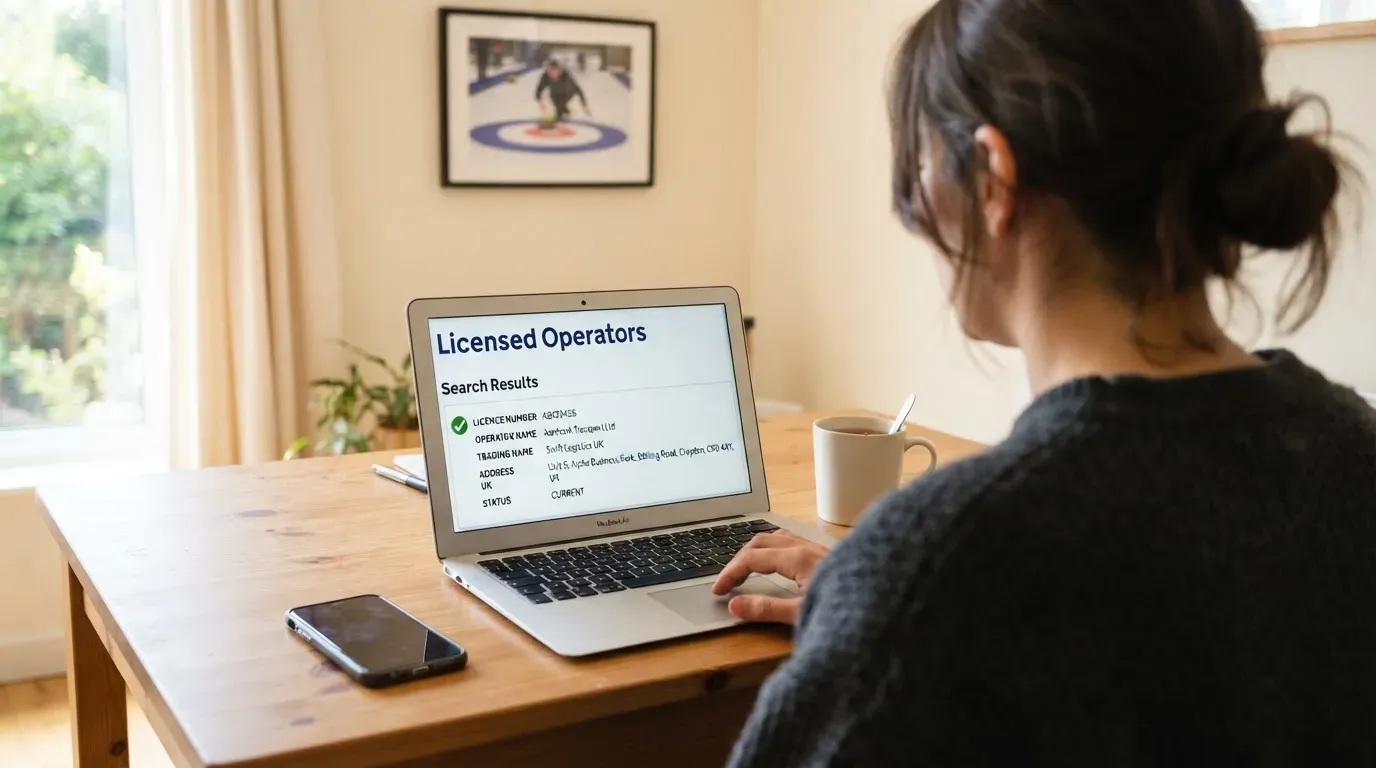
A punter who opens an account with a GB-licensed bookmaker sits inside a regulated framework. The Gambling Commission licenses the whole commercial market under the Gambling Act 2005, which covers Great Britain (England, Scotland and Wales). Northern Ireland is outside the Act and has its own older law, so a “Great Britain licence” regulates activity in Great Britain only. Since the Gambling (Licensing and Advertising) Act 2014, an operator whose remote facilities are used in Great Britain needs a Commission licence wherever it is based; a Curaçao, Maltese or Gibraltar licence is not a substitute. The Commission’s public register can be searched by business name, trading name, domain or account number and is the whole test of whether a brand holds a licence. Licensed operators use .com as well as .co.uk, so the domain proves nothing.
Identity verification happens before a customer can deposit or gamble (since 7 May 2019), including with a free bet or bonus. That is the moment when a new customer’s name, address and date of birth are checked against an officer. The check is not optional and cannot be skipped: an account that fails verification cannot deposit and cannot bet. The same rule means there is no anonymous play at a licensed site.
A financial vulnerability check (LCCP condition 3.4.4, in force since 30 August 2024) applies to licensed remote betting when a customer’s deposits minus withdrawals exceed £150 in a rolling 30 days (since 28 February 2025): it is a public-record check (for example bankruptcy or county court judgments), not an income check and not a credit reference check. Financial risk assessments (the “affordability checks” of the press) are announced in a staged plan (Commission article of 7 July 2026), with no start date. Deposit limits (RTS 12): operators must offer a gross deposit limit on a fixed time frame; the first changes have applied since 31 October 2025, a second phase was postponed to 30 September 2026, and whether it is live is not established. There is no state-set deposit or loss ceiling for betting: limits are the customer’s choice.
Credit cards are banned for gambling in Great Britain (since 14 April 2020, LCCP condition 6.1.2), including credit-card-funded payments through an e-wallet. Debit cards and bank-based payments are not covered by that ban.
Self-exclusion through GAMSTOP
GAMSTOP is the national multi-operator online self-exclusion scheme and a mandatory licence condition for online operators since 31 March 2020. Periods are six months, one year, five years, or five years with auto-renewal, and after the minimum period the exclusion stays in place for a further seven years unless the customer asks GAMSTOP to remove it. It covers online sites and apps; betting shops use a separate service. A punter who registers with GAMSTOP cannot open an account at any GB-licensed online operator for the duration of the exclusion.
Where help is available
GamCare runs the National Gambling Helpline and is the entry point for problem gambling support in Great Britain. GambleAware funds treatment and education. NHS gambling clinics offer specialist treatment through the National Health Service. Gamblers Anonymous runs mutual-support meetings. A punter who feels their betting is no longer under control can contact any of those services directly.
Where offshore leaves the punter
A GB licence is compulsory at the point of consumption. Providing gambling facilities in Great Britain without the licence the Act requires is an offence under section 33 of the Gambling Act 2005 — aimed at the operator, not the customer. The customer-facing consequence of using an unlicensed site is the loss of protection: no GAMSTOP coverage, no Commission complaints route, no approved dispute-resolution body, no British consumer redress if funds are withheld, not bound by the 10x bonus cap or the £150 vulnerability check. That is the honest framing: licensed means checks, limits, GAMSTOP, bonus cap, and also verification before the first bet; unlicensed means none of those protections and possible loss of funds.
Tax
The player pays no tax on betting winnings in Great Britain (general information, not tax advice; a professional gambler should ask HMRC or an adviser). General Betting Duty is the operator’s tax on gross profits, currently 15%; from 1 April 2027 a new remote betting rate of 25% applies within it. Until 1 April 2027 the remote rate stays at 15%, and whether operators pass duty on through odds is not established. The Commission’s statutory levy is a separate charge, not a tax.
How a punter reads a curling price
A punter who sees a curling match on the betting page reads three things before placing the bet: the odds on each side, the margin inside the odds, and the limit on the stake. The first is the headline price; the second is the cost of doing business; the third is the upper bound on the bet.
Reading the odds
The odds are presented in fractional form (5/1, 11/4, evens) or decimal form (6.00, 3.75, 2.00). A punter who reads in fractional form needs to know that 5/1 means a £1 stake returns £6 (£5 profit plus the £1 stake); 11/4 means a £4 stake returns £15 (£11 profit plus the £4 stake); evens means a £1 stake returns £2 (£1 profit plus the £1 stake). A punter who reads in decimal form needs to know that 6.00 means a £1 stake returns £6; 3.75 means a £1 stake returns £3.75; 2.00 means a £1 stake returns £2. The conversion from fractional to decimal is a/b → a ÷ b + 1. So 5/1 is 5 ÷ 1 + 1 = 6.00; 11/4 is 11 ÷ 4 + 1 = 3.75; evens (1/1) is 1 ÷ 1 + 1 = 2.00.
Odds-on, meaning fractional odds shorter than evens, are read as 4/6 (a £6 stake returns £10, or £4 profit on a £6 stake), 1/2 (a £2 stake returns £3, or £1 profit on a £2 stake) or 2/5 (a £5 stake returns £7, or £2 profit on a £5 stake). The decimal form of these is 1.67, 1.50 and 1.40. The shorter the fractional odds, the smaller the payout, and the closer the price is to a “no bet” rather than a wager.
Reading the margin
The margin is read by converting the odds back to implied probabilities, summing them, and subtracting from 100%. Two odds at 1.85 / 1.95 convert to 54.05% + 51.28%, summing to 105.34%. The margin is 5.34%. Two odds at 1.90 / 1.90 convert to 52.63% + 52.63%, summing to 105.26%. The margin is 5.26%. The same calculation done on 1.95 / 1.85 (the same pair as the first, reversed) gives the same margin, which is the test that the calculation has been done correctly.
A punter who keeps the margin in front of them while comparing two bookmakers on the same match can pick the cheaper one without thinking about anything else. The margin is the cost of doing business on this market.
Reading the limit
The maximum stake is set by the bookmaker, not by the regulator. A bookmaker can refuse a bet, restrict a customer, or cap a stake at any level it chooses, and the regulator does not stand in the way. The exception is the maximum payout: a bookmaker’s maximum payout is the most it will pay out on a winning bet, and it varies by sport and by market. A curling maximum payout tends to be lower than a football maximum payout, partly because the trading book is thinner and partly because the risk model does not have as much data behind it. A punter who plans to place a four-figure bet on a curling match should check the maximum payout on the slip before placing the bet.
Where the same rules hit a curling bet
Three of the rules that apply across all sports hit a curling bet in specific ways.
Best odds guaranteed
Best odds guaranteed is a rule that pays the bigger of the price taken and the starting price. Fafabet pays Best Odds Guaranteed on UK and Irish horse racing win and each-way bets from 9am on race days. Bet600 pays Best Odds Guaranteed on horse racing: if the starting price is bigger than the early or show price taken, the bet is paid at the SP. The rule is horse-racing-specific. It does not apply to curling. A punter who takes a price on a curling match is paid at the price taken, not at a later or bigger price.
Each-way betting
Each-way betting is two bets of equal stakes on the same selection: one on the win, one on the place. The stake doubles. The place terms vary by sport and by operator. On horse racing, the place terms are one quarter of the win odds for handicaps and one fifth for non-handicaps; on other sports, the place terms are set by the bookmaker. Each-way on curling is offered at the bookmaker’s discretion and is settled under the bookmaker’s place rules. A curling outright market on a World Championships might offer each-way at one third of the win odds for the first two places; a curling match market is unlikely to offer each-way at all. The punter who wants each-way on curling checks the slip before placing the bet.
Rule 4 deduction
Rule 4 is a bookmaker rule that adjusts the odds on a horse race when a non-runner withdraws after the betting market has formed. It does not apply to curling. A curling non-runner (a player injury, a team withdrawal) is a different settlement, governed by the bookmaker’s own rules on player withdrawals and team changes.
Where the niche market is thinnest
A curling match is settled by the bookmaker’s own rules. Where the rules are not explicit — a player withdrawal between the start of the match and the end of an end, a venue change, an umpire ruling on a stone — the bookmaker settles at its discretion. The punter’s protection in those cases is the bookmaker’s reputation and the regulator’s complaints process.
The punters who win on curling are the ones who read the bookmaker’s terms before placing the bet. The terms are not always short: they cover markets, settlement rules, maximum payouts, bonus conditions, withdrawal limits and self-exclusion. Reading them takes twenty minutes. The punter who skips the reading is the punter who finds out the hard way that a curling free bet expired yesterday, or that a team withdrawal voids the bet, or that the maximum payout on a curling match is £5,000 when the bet would have paid £7,500.
The reading is the price of admission to a niche market. A football punter can rely on a deep market and a wide consensus on settlement; a curling punter cannot. The market is small, the bookmakers are few, and the rules are set by the bookmaker. The punter who knows the rules keeps the cost of betting low. The punter who does not, pays it.
What the page tells a punter, in one paragraph
Curling is offered in the UK winter-sports menu at ten licensed bookmakers; nine carry it during the major events and one carries it year-round. The margin on a curling match sits in the same band as a tennis match and slightly wider than a football match, around 5% on a balanced two-way line at 1.90 / 1.90, and wider on the smaller events and the in-play menu. The welcome offers across the licensed market are structured around a free-bet face value that overstates the expected value, and the punter who reads the small print finds an expected value closer to two-thirds of the face value, paid out at the free bet’s expiry. The protection framework is built around the Gambling Commission’s remote licence, the GAMSTOP exclusion scheme, the 10x bonus wagering cap and the £150 vulnerability check; the cost of that framework is the verification step before the first bet. The punter who weighs the menu against the margin and the framework gets the market at the cost the market actually charges, not the cost the marketing says it does.
Frequently asked questions
How do you bet on curling online?
To bet on curling online, register with a GB-licensed bookmaker that includes curling in its winter-sports section, which most operators offer during major events. After completing identity verification, place your qualifying bet according to the welcome offer’s terms, then select your desired market—such as match winner or handicap—and confirm your bet.
Can you bet on curling in the UK?
Yes, you can bet on curling at any of the ten GB-licensed bookmakers that offer it. You can verify a licence by searching the Gambling Commission’s official public register. Note that licensed sites require mandatory identity verification and do not accept credit card deposits, ensuring compliance with strict regulatory standards.
How can I check that a bookmaker holds a Gambling Commission licence?
Use the Gambling Commission’s public register to search by business name, trading name, or account number. This tool is the only definitive way to confirm an operator holds a valid licence and to see their permitted activities. Never rely solely on a website’s domain name, as this does not verify its licensing status.
How is the return on a bet worked out from the stake and the odds?
Your return is the total amount you receive, calculated as stake multiplied by decimal odds. Your profit is this return minus your original stake. In combination bets, the odds of each leg are multiplied together to determine the final price, which increases potential returns but significantly lowers the mathematical likelihood of winning.
What is the bookmaker’s margin and how can it be seen in the odds?
The margin is the built-in fee the bookmaker keeps from a market. To find it, convert odds to implied probabilities, sum them, and subtract the result from 100%. On a two-way market at 1.90/1.90, the implied probabilities total 105.26%, meaning the bookmaker retains a margin of approximately 5.00% across all outcomes.
Tennis, darts & cue sports – oddsguaranteed
Content created by the «oddsguaranteed» team
