
Where the smart money goes on the horses this year
 Available in US
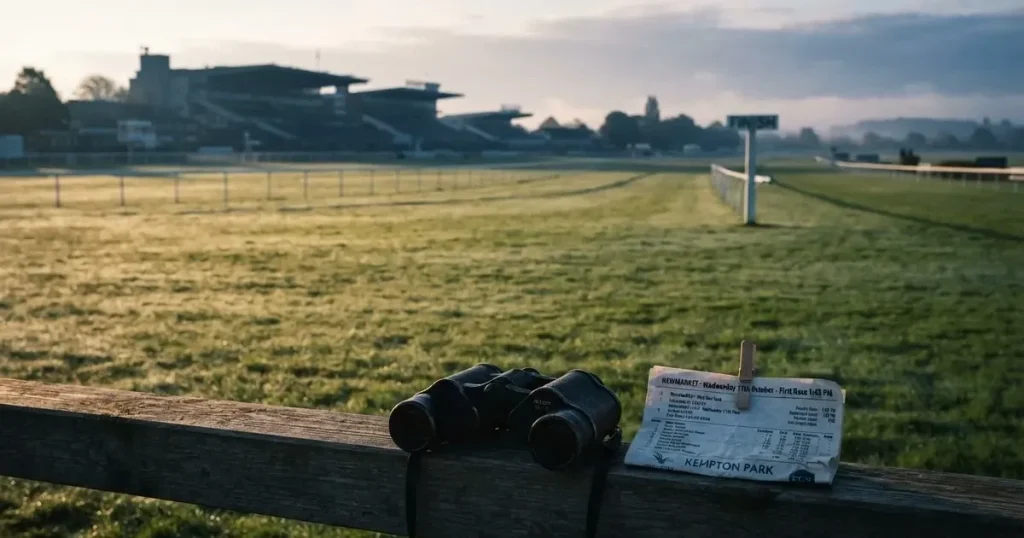
Horse racing carries British betting culture further back than the Commission itself, and in 2026 it still sets the pace that every other sport has to chase. The British Horseracing Authority runs the fixture list from Newmarket in April to Doncaster in November, the Gambling Commission keeps the public register of who is allowed to take a bet on those fixtures, and the day’s prices settle on a trader’s screen somewhere between an 8 a.m. BOG tick and a 4.50 p.m. course commentator. Most punters never see that machinery. They see a betting app, a horse, a number, and a small panel that names the field.
*Current as of October 30, 2026 and verified against the Gambling Commission’s public register.*
Picking winners: strategy, tips and where the day’s money goes
The earliest move on a race day is the morning trade. By 9 a.m. the smart-money lines have already appeared on the exchange: a £4,000 lay on the favourite at Ascot, a slow drift in a maiden at Newcastle, a matched accumulator with one leg slipping toward SP. The punter who arrives at 2 p.m. will be pricing what that earlier reader priced and waiting for the jockey to come out.
Horse racing tips today work best when they are narrow: this jockey on this course at this trip, this trainer’s record in class 4 handicaps off a 28-day break, this sire’s strike rate going left-handed. A prediction page that runs to twenty lines at 2 p.m. is a coupon dressed as advice. The professional tipping outfits price every selection to a tenth of a point and stamp the strike rate; the rest is influence, which is fine to read but not fine to back blind.
Systems, in the older sense, were staking plans tied to losses: Martingale, Fibonacci, Labouchère. They are public knowledge and the Commission names them as a sign that a customer may be in trouble. None of them beats the margin the bookmaker carries in every market. The discipline that does work is bankroll: a unit is one or two per cent of the fund, a bet is one unit, a losing run of eight units is a bad week rather than a catastrophe. The rest of “strategy” is reading the race card with the same care the trainer read it.
There is also an honest version of “today’s betting odds” that has nothing to do with picking: the BOG clock, the SP of the morning favourite, the place-only markets for traders who don’t want the win-and-place risk. The page that follows looks at the building blocks behind those numbers, and then at the panel of bookmakers the Commission has licensed to take them.
Bet types, odds and how a price is built
Three things sit on every slip: a selection, an odds figure, and a stake. The first decides who can win. The second decides what a win pays. The third decides what that win is worth in the bank.

Single bets and each-way bets
A single is one horse to win. A £10 single at 5/1 (decimal 6.00) returns £60 (£50 profit plus the £10 stake), and the punter walks away with the lot if the horse comes first. Decimal odds quote the same settlement as a single number: 6.00 means every £1 returns £6, and the profit is the stake multiplied by the number minus the stake.
An each-way bet is two bets of equal stake. The £5 each-way at 10/1 with three places and 1/4 place terms costs £10 in total: £5 on the win and £5 on the place. If the horse wins, both legs pay and the return is £145 from the same £10 outlay. If the horse runs second or third, only the place leg pays. The number of paid places and the fraction of the win odds applied to them depend on the type of race. For handicap races with more than fifteen runners, bookmakers pay 1/4 odds for four places; the table shifts down through 12–15 runners (1/4 for 3), other races with more than seven runners (1/5 for 3), 5–7 runners (1/4 for 2), and fewer than five runners where only the win market pays. Each-way is the most popular structure on the high street for a reason: a long-priced selection that runs a place but loses the photo still leaves something on the table.
Multiples: doubles, trebles and accumulators
A double is two selections, both of which must win. A treble is three. An accumulator, or “acca”, is four or more. The odds multiply at each leg, which is why an acca of six 5/1 shots settles at several thousand to one on paper. The acca is also where the margin compounds, and the longer the chain the heavier the bookmaker’s edge becomes. An acca insurance token, which refunds the stake as a free bet if one leg loses, softens that edge without removing it: only one leg, not a chain of them.
System bets spread the risk across a small set: a Trixie is three doubles and a treble from three selections (4 bets), a Patent adds three singles (7 bets total), a Lucky 15 is four selections in singles, doubles, trebles and an acca (15 bets), a Yankee is eleven bets from four picks, and a Heinz is fifty-seven. The unit stake multiplies by the number of bets, so a £1 Lucky 15 costs £15.
Spread betting and betting exchanges
Spread betting is a separate product, regulated by the Financial Conduct Authority rather than the Commission when it is on financial markets. The stake is the figure multiplied by the number of points the result overshoots or undershoots the quoted spread, which means a loss can comfortably exceed the deposit. Sporting index products sit on the same mechanics but stay inside betting duty rather than FCA rules. Punters should read the margin call terms before sizing a position.
A betting exchange turns the structure on its head. The exchange is a venue where one punter backs a horse and another lays it. Matchbook runs an exchange with live streaming of horse racing and greyhounds, with the commission taking the place of the bookmaker’s margin. The price a backer sees is set by other users in the market, and the spread between the best back and the best lay is the exchange’s liquidity cost. Exchanges run under a “betting intermediary” licence, which is a different category from a standard remote general betting licence and appears on the Commission’s register with its own line.
The margin in the odds
Every price carries the bookmaker’s edge. Two-runner markets like a head-to-head, where one runner must win, settle as a payout share against the inverse sum of the implied probabilities. At decimal odds 1.90 and 1.90, the implied probabilities add to 1/1.90 + 1/1.90, which works out to about 105.3 % of a fair unit. The bookmaker keeps roughly 5.0 % margin on every pound matched and pays out 95.0 % to winners across the long run. That number sits inside every price and never appears in any single quote.
The wider the implied probability sum runs above 100 %, the firmer the margin is for the house. A handicap market at 110 % overrounds is a 10 % margin, and a six-leg accumulator compounds that margin on every leg. The mechanical side of price is the easiest to read once the eye is trained: stacked outcomes of one market are supposed to sum to more than 100 %, and that surplus is the edge the bookmaker needs. A punter who wants to beat the line looks for the market where that sum is closest to 100, which is not always the headline 1/1 favourite.
Fractional and decimal odds together
British books write fractional by tradition — 5/1, 11/4, evens — and conversions to decimal are simple. Multiply the first number by the stake, divide by the second, and add the stake back: 5/1 on £10 wins £50 plus returns £60, which is decimal 6.00. 11/4 returns £27.50 plus stake, decimal 3.75. Evens is 1/1 and converts to 2.00. The two systems describe the same settlement and the same margin; the decimal form is sometimes easier to compare when the prices sit close together at the short end, where 5/4 (2.25) and 11/10 (2.10) are easier to rank than to read.
Sports and tournaments: from the Guineas to a Saturday at Wolverhampton
Horse racing in Great Britain runs on two parallel calendars. The Flat season runs from early spring at Newmarket through the autumn at Doncaster, the most prestigious races bunching into a summer window around Royal Ascot in June, the Goodwood festival in late July and the St Leger meeting in September. The National Hunt, or jump season, runs from late autumn through the winter and finishes at the spring festivals at Cheltenham and Aintree, with the Grand National closing the door in April. A race meeting is on somewhere in Britain almost every day of the year, and licensed bookmakers price them all.
The British Classics are the three races that make a flat colt’s career: the 2000 Guineas at Newmarket in early May, the Derby at Epsom in early June, and the St Leger at Doncaster in mid-September. A Triple Crown winner has taken all three in the same season. The Champion Hurdle, the Cheltenham Gold Cup and the Grand National line up the National Hunt calendar in March and early April; the Champion Hurdle opens the festival, the Gold Cup is the headline chase, and the Grand National fields are matters of public record once declared on the Thursday before the race.
Two formats of the sport run under different conditions. Flat racing sends horses directly between two points, around a straight or an oval track. National Hunt racing adds obstacles: hurdles in the early part of a horse’s career, fences (steeplechase) once a horse has learned to jump at speed. Flat distances range from the minimum of about five furlongs, with five to twelve furlongs covering most of the programme and the longer-end staying contests running beyond two miles. Handicaps carry different weights to level the field by official rating; conditions races set weights by sex and age instead. Those mechanical details shape the betting as much as the form.
Top 10 horse racing bookmakers in Great Britain
The ranking below brings the Commission-licensed set into one place. Each entry carries the operator’s own headline feature, the licence on the register, and a verdict for the kind of punter it suits.
| Brand | Gambling Commission licence | What the operator’s own terms state |
|---|---|---|
| Tote | 54779 · TDCO Limited | Pool betting on British and Irish racing |
| Star Sports | 9177 · Star Racing Limited | Named trader line for accounts and bets |
| Fitzdares | 400 · Fitzdares Limited | Cash out, ante-post and Lucky 15s on racing |
| London Bet | 66162 · Thistle Bet Limited | Racing with Pragmatic Play slots on the same app |
| Betboro | 44181 · Webmedia Development N.V. | Free bet matched to first qualifying wager |
| Kalooki Sportsbook | 57730 · Kalooki Sportsbook Limited | GAMSTOP member since launch |
| Paddy Power | 39439 · PPB Counterparty Services Limited | Racing app with a wide sport roster |
| BoyleSports | 39469 · Boylesports Enterprise | Free-bet welcome for £10 stake |
| Octobet | 62545 · Octopus Game Limited | Half-back free-bet plus casino starter |
| Matchbook | 39504 · Triplebet Limited | Exchange with live racing and greyhound streams |
Tote
The Tote sits at the pool-betting end of the market, which is a different licence category from a standard sportsbook. Punters back into a dividend rather than a fixed odds price, and the placepot and scoop6 products have carried British bettors through Saturday afternoons since the 1920s. TDCO Limited holds the licence, registered as account 54779 on the public register. The Tote is the right fit for the punter who wants the pool mechanics rather than the bookmaker’s margin, and it has a small enough product set to learn quickly.
Star Sports
Star Racing Limited runs the Star Sports brand from account 9177. The defining feature is the named trader: a customer can ring 08000 521 321 to open an account, place a bet, or raise a query, alongside an email route through the customer-service desk. That telephone-first model suits the punter who wants a trader on the other end of the line rather than a chat widget, and the line carries general enquiries as well as the racing book.
Fitzdares
Fitzdares is a boutique brand run from account 400 under Fitzdares Limited. The app covers horse racing, football, tennis, rugby, cricket, golf and American football, with cash out, accumulators, Lucky 15s, specials and an ante-post menu on the racing side. The punters who suit Fitzdares are the ones who treat racing as a list of bets to construct rather than a list of prices to chase.
London Bet
Thistle Bet Limited operates London Bet from account 66162. The app pairs the sportsbook with Pragmatic Play slots and an in-play tab, so the same wallet covers football, tennis, horse racing, greyhounds, darts, golf, cricket, NFL, NBA, MLB and snooker, then drops into a casino lobby. The mix suits the casual user who wants racing and a few slots from one login.
Betboro
Webmedia Development N.V. holds account 44181 for the Betboro brand. The offer on the operator’s own site is a free bet matched to the first qualifying wager, set against a debit-card deposit and a first bet with at least three legs each at a minimum price. The mechanics sit inside the standard multi-leg welcome package: stake a qualifying acca, get a free bet of the same size. Best read for a punter who is happy with three-leg entry at short prices.
Kalooki Sportsbook
Kalooki Sportsbook Limited holds account 57730. The brand is operated by the same-named UK company and is a GAMSTOP member from launch, which lines up with the Commission’s requirement for every remote betting licence. The brand is a clean fit for the punter who wants the British licensee rather than an offshore parent.
Paddy Power
PPB Counterparty Services Limited runs Paddy Power from account 39439. The published app covers football, horse racing, boxing, rugby, tennis, golf, darts, snooker and Formula 1, with horse racing treated as a marquee category on the racing calendar. Paddy Power and Betfair sit under one parent and should be read as one operator at the corporate level, although the trading screens and the welcome terms run separately. Suits the punter who keeps a few sports side by side rather than horse racing alone.
BoyleSports
Boylesports Enterprise runs BoyleSports from account 39469. The welcome for UK players is a free-bet bundle triggered by a £10 stake, with a parallel Irish-currency structure for customers in Ireland. BoyleSports has a long history in the Irish betting shop trade and a strong UK racing price feed to match. Good fit for a punter who bets small stakes often and reads the morning paper for the early prices.
Octobet
Octopus Game Limited operates Octobet from account 62545. The welcome package on the app is a free-bet refund of half the first stake up to a £50 ceiling, with a £10 casino bonus added on. The structure is a stake-back rather than a stake-matched token, which means a losing first bet recovers half the outlay as a free bet. Suits a punter willing to take a half-stake refund in exchange for the casino side.
Matchbook
Triplebet Limited runs Matchbook from account 39504, which carries both a remote general betting standard (real events) and a remote betting intermediary (exchange) line. The product is an exchange with a Bet Builder and multiples, in-play markets and live streams of horse racing and greyhounds. Matchbook is a fit for the punter who wants to lay rather than back, or to take exchange prices that the high-street book has not matched yet.
How the British horse racing market is built
The horse racing market in Great Britain is older than its regulator. The Gambling Commission took over the role of licensing the trade from 2007 under the Gambling Act 2005, and the racing fixture list is run by the British Horseracing Authority and its Irish counterpart, with meetings at Newmarket, Ascot, Goodwood, Epsom, Doncaster, Cheltenham, Aintree, Sandown, Kempton, Lingfield, Wolverhampton and a long list of smaller courses that race most days of the year.
Inside that calendar, the punter sees a market for almost every race. The win market pays only first place. The each-way market adds a place leg at terms that depend on the field size. Forecast and tricast markets name the first two or three in order. Without a favourite markets pay out only if no runner goes off shorter than a price the operator sets. A match bet names one horse to beat another, irrespective of the others, and is settled on the place positions if neither runs. These markets, multiplied by the same race, give the bettor dozens of ways to price the same contest.
The bookmaker stands between the punter and the dividend in every market other than the exchange. Best Odds Guaranteed, the British racing staple, has the firm paying out at SP if the starting price beats the figure the punter took; William Hill’s BOG runs from 8 a.m. on the day of the race on UK and Irish racing, on both single and multiple bets. Tote, ante-post and pari-mutuel bets are excluded. BOG is the closest the punter gets to an edge being paid to them by the bookmaker, since the morning price trades into the SP as the market forms.
The structure explains why exchange punters shop for liquidity and why high-street books fight on the morning price. A starting price is the price the course trader’s screen posts in the last few minutes before the off, weighted toward the on-course book. The morning price is the price the punter took earlier, frequently with BOG written into the terms. The spread between the two is the headline shape of the day.
Legality and regulation in Great Britain
A British punter looking at a list of betting sites will see the same dozen names repeatedly. That handful is the Commission-licensed set: brands run by a holder of a remote licence whose account appears on the Commission’s public register. Anything outside that set is either an overseas brand with a non-British licence, a brand held by an operator that has not registered for remote betting into Great Britain, or a brand holding no licence at all.
The register is the test. Every operator running an active remote general betting, exchange or pool-betting licence into Great Britain is listed on the register, searchable by business name, trading name, domain or account number. A licence at the point of consumption has been required under the Gambling (Licensing and Advertising) Act 2014: an operator whose remote facilities are used in Great Britain needs a Commission licence wherever it is based. A Curaçao, Maltese or Gibraltar licence does not satisfy the test, because the Act follows the customer and the bet, not the corporate seat.
The Commission is the regulator of gambling. Sporting spread betting is the FCA’s territory. There is no state monopoly and no state-set number of licences; the Commission assesses each applicant against its licensing objectives and grants a licence only when those objectives are met. A licence covers a category, and the Commission lists categories on the register: remote general betting standard (real events), remote general betting standard (virtual events), remote general betting limited, remote pool betting, and remote betting intermediary. The category on the licence matches the markets on the site.
The minimum age is eighteen. Identity checks (name, address and date of birth) are required before a customer can deposit or gamble, including with a free bet or bonus, a position held since 7 May 2019. No anonymous play is on offer at a licensed site, and an identity-verified account comes with a credit-card ban on gambling transactions (since 14 April 2020).
There is no statutory list of permitted sports or markets. Bookmakers offer what their licence lets them, under their own house rules. In-play markets are offered across the licensed set under the operator’s licence conditions and customer-protection duties. Bets on politics, television and novelty markets are offered under the same rule, and esports ride under the real-events category. Virtual events are a separate licence line. No statutory cap on stakes or losses sits over sports betting, and the Commission’s published rules do not impose a maximum stake.
Two checks bookmaker accounts pick up. A financial vulnerability check (LCCP condition 3.4.4, in force since 30 August 2024) runs when deposits minus withdrawals exceed £150 in a rolling 30-day window; it is a public-record check, not an income or credit check. Financial risk assessments, sometimes written about as affordability checks in the press, sit in a Commission-staged plan published in July 2026 with no start date, and that plan should be read as announced rather than live. Deposit limits, under Remote Technical Standards 12, have been staged with first changes since 31 October 2025 and a second phase postponed to 30 September 2026, with no settled position.
The promotional side runs through the Committees of Advertising Practice. The CAP Code section 16 frames all gambling marketing as socially responsible, out of strong appeal to under-18s, and with nobody who is or seems to be under 25 in the ad in a gambling context (that rule concerns who may appear in the advertisement, not who may place a bet). Promotion rules in force since 19 January 2026 cap wagering requirements at 10x and ban mixed-product promotions that demand bets across two or more product types. The 9pm watershed applies before and after on broadcast, except for horse and greyhound racing.
The player side of the tax frame has no surprises: betting winnings in Great Britain are not taxed at the customer level. General Betting Duty runs at the operator level, currently 15%, with a remote rate moving to 25% on most remote bets from 1 April 2027 and the racing remote line staying at 15%. Until that switch, whether duty lands in the odds is a question only the operator’s spread can answer. Spread betting has its own rates, 3% financial and 10% other.
Offshore brands serving British customers run on their own terms, but the law does not move. Providing remote gambling facilities in Great Britain without a Commission licence is an offence under section 33 of the 2005 Act, aimed at the operator and enforced through disruption rather than blocking. The customer side carries a different cost: no GAMSTOP coverage, no Commission complaints route, no approved dispute-resolution body, no British consumer redress if funds are withheld, and no application of the 10x bonus cap or the £150 vulnerability check. The honest framing is that licensing brings the package of checks and limits British regulation imposes, with the trade-off being the verification that comes with a licensed account.
Responsible gambling on a British racing account
GAMSTOP is the national self-exclusion scheme and a mandatory licence condition for every online operator since 31 March 2020. A self-exclusion runs six months, one year, five years or five years with auto-renewal, with a minimum seven-year tail after the chosen period ends. Online channels are covered by GAMSTOP; the high street uses a separate in-shop scheme.
The bookmaker’s safer-gambling toolkit sets the limits a punter can apply on their own account: deposit limits per day, week or month; reality checks at intervals; time-outs of twenty-four hours, one week or any duration up to six weeks; full self-exclusion for the period chosen. The tools are set by the customer and read by the operator’s safer-gambling team.
The Commission’s safer-gambling code applies to operators, with FITZWILLIAM Sports-style accountability to supporting safer gambling networks linked into the home page as a quiet-but-visible marker. Help lines and resources sit behind that toolkit: GamCare runs the National Gambling Helpline, GambleAware funds treatment and education, NHS gambling clinics cover the worst-affected cases, and Gamblers Anonymous runs peer-led meetings. The Commission’s own safer-gambling pages name the signposts in plain English.
The bigger picture is that responsibility sits on both sides. The punter sets the limits that fit the bankroll. The operator sets the safer-gambling code, runs the GAMSTOP register, applies the vulnerability check, and revokes the account on the trigger that the code names. The result is a system that catches a high spender and offers a self-excluded account nothing, by design.
Crypto, anonymity and the British licensing frame
Crypto betting on horse racing is a phrase that floats around offshore comparison sites. Inside a British licence it runs into a wall. The Commission’s identity-verification rule (since 7 May 2019) requires the customer’s name, address and date of birth to be confirmed before the first deposit, and the credit-card ban (since 14 April 2020) blocks the most common funding route for crypto-funded wallets. A licensed operator can technically accept a cryptocurrency deposit if its own terms permit and the on-chain wallet has been through the same source-of-funds and identity checks that any other funding method would face, but no British-licensed bookmaker carries crypto as a headline product, and source-of-funds at higher spend is part of the routine.
Anonymity is a non-issue at a licensed site. Every depositing account is verified before the first bet, including free bets and bonus triggers, and the deposit limit panel sits inside the safer-gambling toolkit. The brand that holds out a no-ID promise is the brand that has no Commission register entry, and the cost of holding out is no GAMSTOP coverage, no Commission complaints route, and no British route if the operator withholds the funds.
A British punter who wants the exchange pricing structure without the offshore framing runs the Betfair/Matchbook exchange line at account 39504 or backs into the standard sportsbooks through normal funding methods. Crypto runs on offshore rails, and offshore rails are not British rails.
Bonuses and free bets on British racing
The welcome token at a licensed operator is one of the easier traps for an under-read customer. Promotion rules since 19 January 2026 cap wagering requirements at 10x — a £10 bonus at 50x would demand £500 of qualifying bets; under the cap, no wagering condition can demand more than £100 of qualifying bets on a £10 bonus. The 10x cap does not say a free bet is wager-free, only that any wagering requirement is bounded. A free bet whose stake is not paid back with a win stays a free bet, and that is the form most British operators run.
What a free bet actually costs
A free bet of £10 at odds of 4/1 (decimal 5.00) settles as £40 in winnings, not £50 in return; the £10 stake is forfeit. The value of that free bet depends on what odds the punter takes and how often a bet at those odds wins, so a punter who always takes short prices gets less from the same token than a punter willing to back at 5/1 or longer. The bookmaker’s market margin eats further into the value: at the 5.3% margin on a 1.90/1.90 two-way market, the average realised value of the token is lower than the headline stake and gets lower as the margins widen on the markets the punter plays in.
Other shapes a promotion can take
A price boost is a one-off odds lift on a named selection. An acca insurance refunds the stake as a free bet if one leg loses. A risk-free bet, where the bet loses and the stake is returned as a free bet rather than cash, behaves like a free bet with a market-margin haircut; the “risk-free” framing collapses once the wording is read. An enhanced odds welcome token has its own terms, typically with a stake cap and a winnings cap. Each shape carries its own T&Cs, and the terms page of each operator is the place to read them.
The 2026 promotion rules tightened two things. Mixed-product promotions are out, so a welcome that compels betting and casino play in the same chain is no longer licensable. Wagering is capped at 10x of the bonus. A token with no wagering condition, and a market with no wagering multiplier, sit outside the cap, so a free bet without a rollover is what the punter sees most often.
Where the offer loses money
The arithmetic is straightforward and unsentimental. A bookmaker’s margin sits inside every price, and a welcome token is paid out of margin the operator has already collected. A punter who takes the welcome and trades the bonus at odds below the market’s median loses more to the margin than the welcome returns in cash. The discipline is to read the rollover and pick the markets with the lowest available margin (exchanges and head-to-head markets tend to be tighter than six-leg accumulators), or to leave the token on the table and back at SP.
Mobile, apps and the betting experience
The British punter in 2026 prices on the move. The app store hosts most of the licensed set; bet365 carries the headline on downloads in the UK, with Paddy Power, BoyleSports and others sitting alongside. The benchmark is the home screen: horse racing surfaced as a top tab, today’s cards in date order, BOG switched on, and a betting slip that totals stake and returns before confirmation. Calibrated apps answer in three taps: race, horse, stake.
A second class of experience sits in the browser rather than the app. Star Sports runs a telephone-first model that suits the customer who wants a trader on the line, and most books carry an in-browser product with fewer features than the app, including a one-click deposit, a session time-out and a stakes-history panel.
The features that matter on a racing app are the ones the punter touches daily. Cash out settles a bet before the result, at a price the bookmaker makes during the race. In-play prices tick during the race as the leader changes. Live streams run on the operator’s site under the standard licensing terms, and the streams are not always available on every device. Best Odds Guaranteed runs from 8 a.m. on UK and Irish racing at William Hill and most of the high street, not on ante-post, tote or pari-mutuel bets. A bet builder, when offered, builds a single line from markets on the same race.
Live betting and cash out on the racing side
Live betting on horse racing is its own category. The race is short, the prices move in seconds, and the operator suspends the market at key moments (the start, the final bend, a faller on the home turn). The punter reads the price after the off, then watches the screen as the leader changes. Cash out allows the punter to settle a bet before the result at a price the operator makes, and the price is built on the same in-running tick.
The Commission does not prohibit in-play betting on racing, but the operator’s licence conditions apply. The controls around in-play are an operator matter, not a statute, and the same rule governs in-play on every sport in the licensed set. The bookmaker stops the market, prices a moment, and the punter either takes the price or waits for the next window.
The exchanges take a different shape. Matchbook’s exchange offers live streaming of horse racing and greyhounds with in-play markets and Bet Builder-style combinations. Liquidity is the difference: a market with three lay orders is thin and the slippage is large; a market with twenty lay orders at a tight half-point spread is the venue where in-play trading is worth the screen time.
Worked margin: the example two-way market
A useful illustration sits on a two-way market with no draw, priced at decimal 1.90 / 1.90 (fractional 9/10 each). The implied probability of each side, read off the decimal price, is 1 / 1.90 ≈ 0.5263, or about 52.6 %. Add the two sides and you get around 105.3 % — overround. In payout-share terms, 1 ÷ 1.053 gives about 95.0 %; in margin terms, that leaves roughly 5.0 % for the bookmaker over the long run.
The number is a band rather than a single figure. Real two-way markets run wider during quiet hours and tighter during the peak pre-race window. A price of 1.95 / 1.95 shrinks the margin toward about 2.6 %; a price of 1.80 / 1.80 widens it toward about 11.1 %. The 1.90 / 1.90 example sits in the middle of the band, on the firmer side of what a high-street book routinely offers on a handicap match bet. The arithmetic is illustrative, not a quoted price.
The punter reads that band as a bill. Every £100 staked across this market, in aggregate and over enough races to mean it, costs around £5.30 on average at the example margin. A £1,000 staking month costs around £53 on average. The bigger the staking volume, the larger the absolute cost, and the firmer the markets the punter plays the lower the cost. That is the price of the privilege of using the bookmaker at all.
Frequently asked questions
How is a horse racing bet placed?
Pick a race, pick a horse, choose the market (win or each-way), set the stake, then confirm on the slip. The each-way market needs a place terms reading: how many places are paid, and at what fraction of the win odds. Confirm returns before submitting, and BOG terms on UK and Irish racing carry through from the morning price into SP.
How are horse racing bets worked out from the stake and odds?
The decimal odds multiplied by the stake gives the return (stake plus profit). The decimal odds minus 1 multiplied by the stake gives the profit alone. The British fractional form works the same way: for 5/1, every £1 wins £5 in profit and returns £6 in total. The each-way settlement covers both the win leg and the place leg at the table race type and place terms set.
How do horse racing odds work?
Odds are the price the bookmaker offers on a selection. Decimal odds quote the return per unit stake, so 6.00 means £1 returns £6. Fractional odds quote the profit per unit stake, so 5/1 means £1 wins £5 profit and returns £6 total. The two are the same settlement in two notations, and conversion is the stake times the decimal odds minus the stake for profit. The trading screen shows the implied probability as 1 over the decimal odds.
How is it checked that a bookmaker holds a Gambling Commission licence?
Open the Commission’s public register, search by trading name, business name, domain, or account number, and confirm the brand against the result. The register is the only test of who holds a Commission licence. The licence category (remote general betting, betting intermediary, pool betting) appears alongside the account, and the listed domain is the address the licensee holds onto the licence.
How is the return on a bet worked out from the stake and the odds?
Return is stake multiplied by decimal odds. For a £10 stake at 4/1 (decimal 5.00), the return is £50. With a £10 stake at 11/4 (decimal 3.75), the return is £37.50. Profit is the return minus the stake. The each-way bet is two stakes of the same size, so a £5 each-way costs £10 in total. The settlement on a winner adds the win leg and the place leg, and the place leg is paid at the place fraction of the win odds for the number of paid places in that race.
What is the bookmaker’s margin and how is it seen in the odds?
The margin is the share of every pound staked the bookmaker keeps in the long run, which is the difference between the implied probabilities of every outcome in one market and 100 %. On a 1.90 / 1.90 two-way market the implied probabilities add to about 105.3 %, the payout share is about 95.0 %, and the margin is about 5.0 %. The wider the implied probability sum climbs above 100, the firmer the margin. The punter reads the margin as a bill on every staking unit.
Horse racing & greyhounds – oddsguaranteed
Content created by the «oddsguaranteed» team
