
Online MMA Betting in 2026: How UK Punters Read the Markets and Choose a Bookmaker
 Available in US
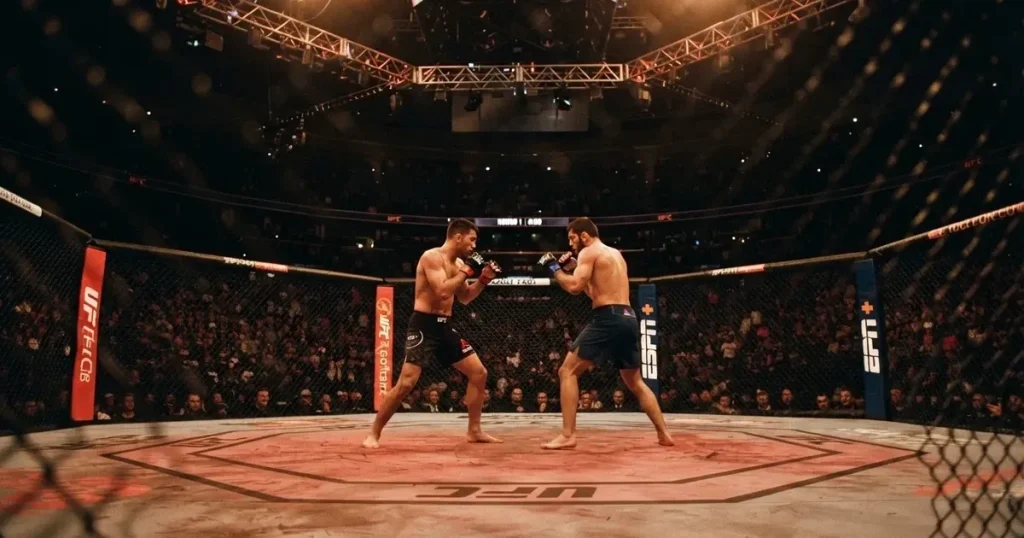
The shape of MMA betting in Great Britain has changed a lot more quietly than the sport itself. The Ultimate Fighting Championship now schedules events almost every weekend; regional shows on the circuit below it run on a near-weekly cadence; and the same licensed bookmakers that quote Premier League football also post a card for a UFC Fight Night. What has not changed is the regulatory frame around it: a bookmaker taking bets from customers in Great Britain needs a Gambling Commission licence, and the Commission’s public register is the only place that statement is tested. This page works through what MMA betting actually is in 2026, how the markets are priced, who is licensed to take a bet and which bookmakers a British punter can put an account with.
The data is current as of October 30, 2026 and was checked against the Gambling Commission’s public register.
Reading MMA Odds Before Putting a Bet On
Odds in Great Britain are written two ways. The traditional form is fractional — 5/1, 11/4, “evens” for 1/1 — and the form a betting app shows you is decimal — 6.00, 3.75, 2.00. The conversion is a/b → a ÷ b + 1, so 5/1 becomes 6.00 and 11/4 becomes 3.75. Decimal odds multiplied by your stake give the return if the bet wins: a £10 stake at 3.75 returns £37.50, made up of your £10 back and £27.50 profit. Odds-on selections — those shorter than evens, 4/6 say — show a decimal price below 2.00, and the profit is smaller than the stake.
That return is the first number a price tells you. The second is harder to see and more important: the bookmaker’s margin. Take a market with two possible outcomes priced at 1.90 and 1.90 in decimal. The “true” probability each fighter wins is 50% on a coin-flip, and the price that would return the stake exactly on a 50/50 event is 2.00. The bookmaker pays 1.90 on either side. The implied probability of one side winning at 1.90 is 1 ÷ 1.90, or roughly 52.6%, and the two sides together imply 105.3%. The 5.3% above 100% is the overround — what the bookmaker keeps, on average, of every pound bet on that market. The payout share is 100% minus that margin, so a market priced at 1.90/1.90 returns about 94.7 pence in winnings for every pound wagered across both outcomes. That 5–6% margin on a main-line two-way market is ordinary; the closer to 100% the implied probabilities sum, the thinner the bookmaker’s take and the better the price for the punter.
For MMA, the 1X2-style “win the fight” market is rarely a true 50/50. Heavy favourites will be priced at 1.20 or shorter, and underdogs at 5.00 or longer; on those prices the margin sits inside the favourite’s take and is harder to read by eye. Method-of-victory markets (knockout, submission, decision) split each fighter into three possible outcomes, so the book has six prices to balance, and the overround compounds. Round and over/under markets widen the book further. A punter who only ever looks at favourite prices never sees how much of the card is funding the bookmaker.
What Markets an MMA Card Actually Offers
The headline market on any MMA card is the moneyline — pick the fighter who wins the bout. Below it sit the markets the bookmaker builds to give the punter more ways in.
Method of victory is the most popular second market. The bet wins on knockout or technical knockout, on submission, or on the judges’ decision; some books split KO and TKO, and a few add a “draw” or “no contest” line. Over/under rounds offers a number — 1.5 rounds is the common line, sometimes 2.5 on five-round title fights — and the punter takes over or under that total. “Fight to go the distance” is a binary version: yes, the bout reaches the judges, or no, it ends inside the distance. “Inside the distance” combines KO, TKO and submission into one selection.
Round and method combinations drill further. Round 1 KO, Round 2 submission, decision on points — the selections get longer as the price gets bigger, and the margin the bookmaker builds into them gets larger as well. A common trap is the parlay or “acca” of method-of-victory bets, which looks like six short prices multiplied into something attractive and is in fact three short prices multiplied into something the bookmaker has overround-ed three times. Same-game multis on the same event are the most popular form of MMA bet in 2026; bet365’s Bet Builder+ combines markets from one event into a single selection, available pre-match and in-play.
Three markets deserve a second look because they are the ones the bookmaker’s house rules shape most heavily. “Fight goes to decision” depends on the official result under the Unified Rules of MMA, which each operator applies slightly differently in edge cases. “Draw” and “no contest” are selections whose settlement rules differ between books. And any market that involves a fight not happening — a withdrawal, a weight miss, a late venue change — is governed by the bookmaker’s own terms, not by a uniform industry rule. Reading the market’s settlement note before placing the bet is the single most useful habit a punter can build.
UFC and the Sport’s Own Structure
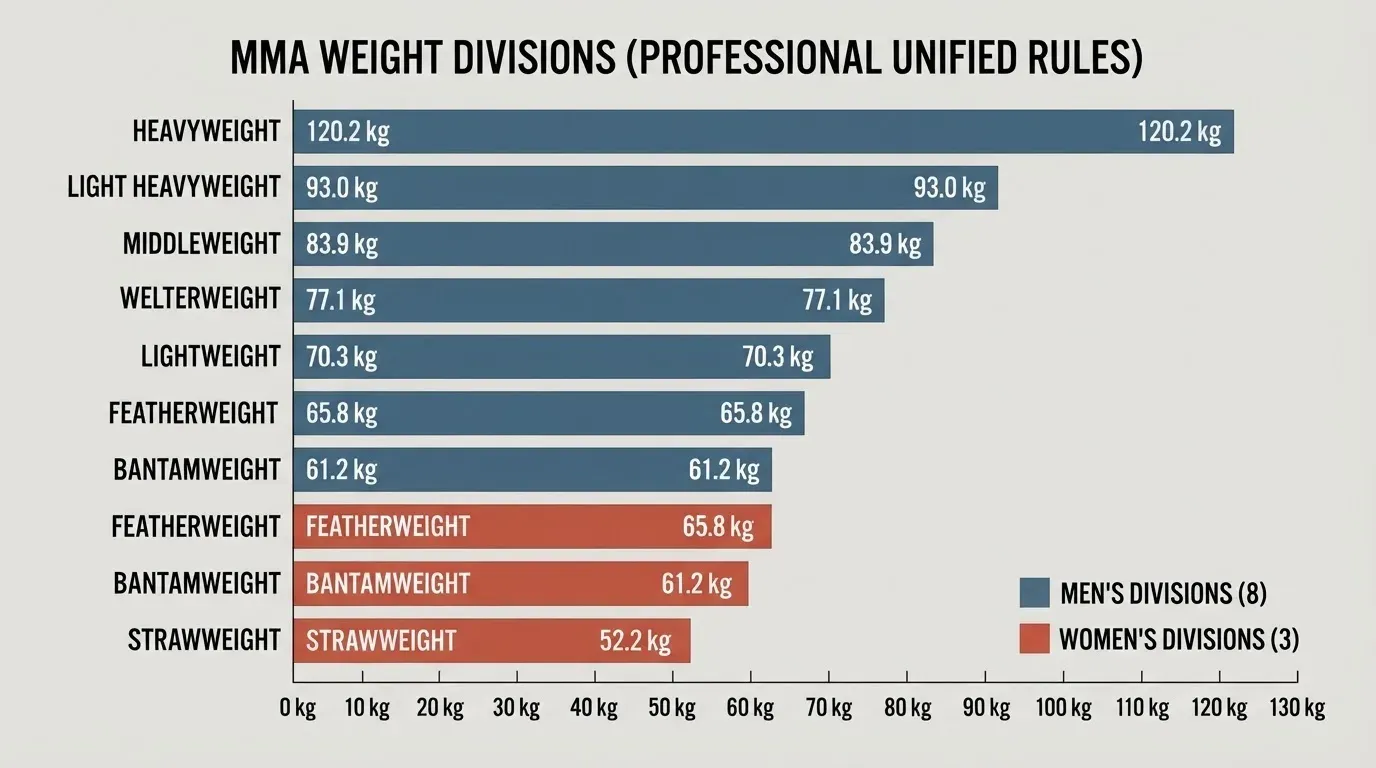
The Ultimate Fighting Championship was founded on 12 November 1993, when UFC 1 was held at McNichols Sports Arena in Denver, Colorado. The promotion runs 11 weight divisions — eight for men and three for women — and titles at each weight. Most UFC cards are built around a marquee title fight or a main event five-rounder, with the rest of the card settled over three five-minute rounds.
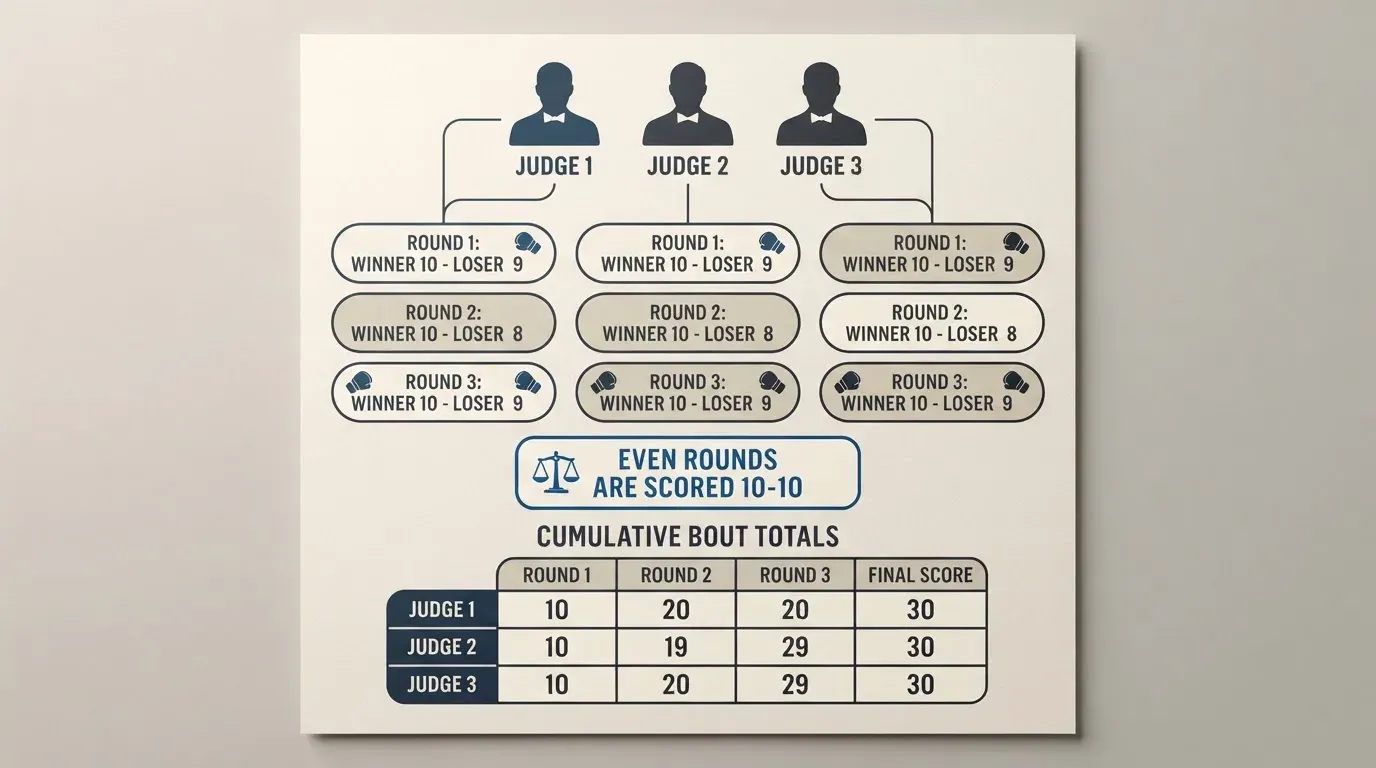
Under the Unified Rules each round lasts five minutes with a one-minute rest between rounds; non-title bouts go no more than three rounds, and title bouts can be sanctioned for five. Three judges score each round under the 10-point must system: the round winner gets 10 points, the loser 9 or fewer, and an even round is scored 10–10. A decision can be unanimous, majority or split, and a draw can also be unanimous, majority or split. A bout ends in disqualification if an intentional foul incapacitates a fighter, and in a no contest if an unintentional foul incapacitates a fighter. The rules in their current form are a referee-side standard; the bookmaker’s market rules refer to them but the operator’s own settlement note is what governs a bet.
Below the UFC sits Bellator, ONE Championship and the PFL — each with its own title pictures, weight classes and event cadence. Regional UK and European promotions also run cards that licensed British bookmakers quote, though with thinner markets and less in-play coverage. The shape of MMA betting for a GB punter in 2026 is: a UFC event almost every Saturday, a Bellator or PFL card in most fortnights, and a sprinkling of regional shows in between. The depth of markets follows that hierarchy. A UFC main event will have thirty-plus markets on the bigger books; a regional show might have ten.
Picking a Bookmaker in 2026
Ten licensed bookmakers take MMA bets from customers in Great Britain and form the basis of the comparison that follows. The list is the operator set the Gambling Commission’s public register names against a remote general betting standard (real events) licence; it is not a ranking and not a recommendation. The page judges each on its MMA offering, its welcome offer as its own terms state it, and the practical difference it makes to a punter putting on an MMA bet.
Several of the names that come up first in casual conversation — bet365, Paddy Power, Betfair, William Hill, Ladbrokes, Coral, Sky Bet, Betway — also take MMA bets and hold GB licences, but none of them appear in the comparison that follows, because this page’s reviewed set is the ten named below and one of them may be the better fit for a punter who only bets MMA occasionally. Where a punter’s account is already with one of those other brands, the welcome offer rules on a second account are the operator’s own concern.
The brands below are reviewed in the order they appear on this page. Each operator card opens on the same four things: who holds the licence, what the welcome offer is in the operator’s own words, what the MMA product looks like in 2026, and where the operator stands out or falls short for a punter whose main interest is MMA.
| Brand | Gambling Commission remote licence | Welcome offer in the operator’s own terms |
|---|---|---|
| Betfred | 039544-R-319290-010, held by Petfre (Gibraltar) Limited | Sports welcome offer as published in the Betfred Sports, Casino & Games app terms |
| Fitzdares | 000400-R-103839-030, held by Fitzdares Limited | Premium app covering racing, football, tennis, rugby, cricket, golf and American football, with cash out, accumulators and Lucky 15s |
| DragonBet | 064908-R-339041-003, held by DragonBet Ltd | App features Welsh football and rugby markets, racing, American football, in-play betting and bet builder markets |
| BetUK | 039198-R-319450-029, held by LeoVegas Gaming PLC | Four £10 free bets on qualifying deposit and bet, expiring within 7 days of issue |
| Spreadex | 008835-R-104580-022, held by Spreadex Limited | Combines fixed-odds and spread betting with one-click, auto and partial cash out, Bet Builder and live streaming |
| BetTom | 064959-R-339314-003, held by Bet Tom Limited | 50% back as a free bet up to £50, with a matching 50% back up to £50 as free slot funds |
| BetVictor | 039576-R-319370-028, held by BV Gaming Limited | Best Odds Guaranteed on UK and Irish horse racing, enhanced live race streaming and BetFinder |
| Unibet | 045322-R-324275-019, held by Platinum Gaming Limited | £40 in free bets on a £20 qualifying bet at minimum odds of 2.0, expiring within 7 days |
| Fitzwilliam Sports | 048760-R-335434-009, held by SBKI Limited | “High Stakes Welcome” subject to compliance criteria |
| Geoff Banks | 054095-R-330366-010, held by GB Sports Advisors Limited | Live in-play prices and ante-post prices on future events |
Betfred
The Betfred Sports, Casino & Games app is published by Done Brothers (Cash Betting) Ltd, and the remote licence is held by Petfre (Gibraltar) Limited under Gambling Commission account 39544. The app covers 21 sports plus over 2,000 casino-style games, and MMA sits inside the wider sportsbook rather than as its own tab. The MMA product on a UFC Fight Night is mainstream: full moneyline, method of victory, over/under rounds and same-game multi lines on the main card, with fewer markets on the prelims. Welcome offer is the standard sports package in the app’s own terms — Best Odds Guaranteed on horse racing, accumulator bonuses on football — and the MMA side does not get its own promotion. For a punter who wants a heavyweight mainstream bookmaker with a deep in-play product and is happy to bet MMA inside a wider sports account, Betfred is the workmanlike choice.
Fitzdares
The Fitzdares app offers cash out, accumulators, Lucky 15s, specials and antepost markets on horse racing, football, tennis, rugby, cricket, golf and American football, with in-play live odds. MMA is on the book but sits behind the racing and football verticals. The remote licence is held by Fitzdares Limited under account 400, and the operator positions itself as a premium bookmaker with a focus on the high-end punter. The welcome offer is not the headline — Fitzdares’ pull is the structure of the account. For a punter whose MMA interest is occasional and who wants a quieter account than the high-street brands, the choice lands here.
DragonBet
DragonBet’s app is published by dragonbet ltd and features Welsh football and rugby markets, racing, American football, in-play betting and bet builder markets. MMA is on the book with a regional flavour: smaller cards carry fewer markets than the UFC main events, and the in-play offering is lighter than the bigger books. The remote licence is held by DragonBet Ltd under account 64908. The welcome offer is the standard DragonBet package. For a punter who likes the regional bookmaker feel and wants MMA as part of a wider betting account with Welsh and Irish sport, DragonBet is a sensible fit; for a punter whose MMA betting is the whole reason to be on the app, the market depth is thin.
BetUK
BetUK’s sports welcome offer is four £10 free bets — two football accumulators of 4+ selections and two multiples of 2+ — for new customers who deposit £10 or more and place a sports bet within 7 days of registering, with opt-in required and the free bets valid for 7 days. The remote licence is held by LeoVegas Gaming PLC under account 39198. The BetUK app carries a full MMA product, with main-line markets on the UFC, Bellator and PFL events and the larger regional cards. The welcome is football-shaped, not MMA-shaped, and a punter whose betting interest is split will use two of the free bets on football and the other two on a multi that happens to involve an MMA card. The 7-day window is the part of the offer that bites — a punter who registers on a non-event weekend loses the value of the free bets.
Spreadex
Spreadex is regulated by the FCA for spread betting and by the Gambling Commission for fixed-odds betting, and it states that spread betting losses can exceed the deposit. The remote licence is held by Spreadex Limited under account 8835. The app combines fixed-odds and spread betting in one place, with one-click, auto and partial cash out, Bet Builder across fixed odds or spreads, and live streaming of UK and Irish horse racing, greyhounds, tennis, NFL and selected football. MMA on Spreadex is the fixed-odds side; the spread side is the firm’s heritage and runs separately. For a punter who wants fixed-odds MMA in the same app as spread betting on something else, the choice is obvious; for a punter who has never used spread betting, the value of the integrated account is smaller than it sounds.
BetTom
BetTom’s sports welcome offer is 50% back as a free bet of up to £50, with a matching 50% back up to £50 as free slot funds for casino play; full terms apply. The remote licence is held by Bet Tom Limited under account 64959. The MMA product is mainstream and the welcome offer is the headline. The 50%-back structure means a losing first bet of £50 gets the punter £25 in free bets, not the £50 they would have wanted to recover — the 50% is the floor on what the offer returns. For a punter happy to bet a small initial stake, the offer is reasonable; for a punter betting the maximum to chase the full £50, the casino free funds component is the part of the offer that may go unused.
BetVictor
BetVictor offers Best Odds Guaranteed on UK and Irish horse racing, enhanced live race streaming and a BetFinder feature for finding racing bets, alongside Smart Stats. The remote licence is held by BV Gaming Limited under account 39576. The MMA product is mainstream with a Smart Stats overlay on selections, and the welcome offer is the standard BetVictor sports package. For a punter who likes the Smart Stats angle on form and wants the same depth of MMA market as the bigger high-street books, BetVictor is a quieter alternative to the household names; for a punter who only bets MMA, the BOG and BetFinder features do not earn their keep.
Unibet
Unibet states it has operated since 1999, and its UK site is run by Platinum Gaming Limited, Gibraltar, under Gambling Commission account 45322. The sports welcome offer is £40 in free bets on a £20 qualifying bet at minimum odds of 2.0 (1/1), with free bets expiring within 7 days of issue, for new GB customers using a debit card or instant bank transfer. The MMA product on Unibet is deep: full moneyline, method of victory, over/under rounds, fight-to-go-distance and same-game multi lines on the main card, with in-play markets that are competitive with the bigger books. The 7-day window on the free bets is tight, and the minimum odds of 2.0 on the qualifying bet rule out the heavily-favoured short-priced MMA selections. For a punter happy to place the qualifier at 2.0 or longer and to use the free bets inside a week, Unibet is one of the stronger welcome offers for an MMA-led account.
Fitzwilliam Sports
Fitzwilliam Sports describes itself as a Dublin bookmaker with capped membership, and its welcome is a “High Stakes Welcome” subject to compliance criteria. The remote licence is held by SBKI Limited under account 48760. The app carries a mainstream MMA product, with main-line markets on the bigger cards. The capped-membership structure means the brand is not open to every applicant, and the welcome is shaped around the high-stakes punter rather than the casual MMA bettor. For a punter who values the smaller, capped bookmaker model and bets at the larger end, Fitzwilliam is one of the few MMA-friendly books that takes that kind of stake as standard; for the casual punter, the membership cap will close the door before the welcome offer matters.
Geoff Banks
Geoff Banks’ app is published by GB Sports advisors Ltd and offers live in-play prices and ante-post prices on future events. The remote licence is held by GB Sports Advisors Limited under account 54095. The MMA product is lighter than the bigger books, with the ante-post side carrying future-event prices rather than a deep card on the next event. For a punter who likes to bet on a fighter’s next bout weeks in advance and is happy to take a thinner in-play product, Geoff Banks is an option; for the punter who wants the most markets on a Saturday night card, the bigger books have the wider product.
The Legal Frame Around MMA Betting in Great Britain
The Gambling Commission is the regulator. It is a non-departmental public body sponsored by the Department for Culture, Media and Sport, and it licenses the whole commercial market under the Gambling Act 2005. The Act covers Great Britain — England, Scotland and Wales. Northern Ireland is outside the Act and has its own older law, so a GB licence is not a Northern Ireland licence. Since the Gambling (Licensing and Advertising) Act 2014 an operator whose remote facilities are used in Great Britain needs a Commission licence wherever it is based; a Curaçao, Maltese or Gibraltar licence is not a substitute. The relevant sections of the 2005 Act, as amended, are sections 33 and 36.
There is no statutory list of permitted sports or markets. The Commission issues licences by category — remote general betting standard (real events), remote general betting standard (virtual events), remote general betting limited, remote pool betting and remote betting intermediary — and the operator offers markets under its own rules and the Licence Conditions and Codes of Practice. The categories themselves are not a list of “sports you may bet on”; they are the categories of licence a bookmaker must hold. For MMA, the relevant category is remote general betting standard (real events), and every operator in the comparison above holds it.
Betting exchanges run under the betting intermediary licence; spread betting is split between the FCA for financial products and the Commission for non-financial spread bets. A brand that offers both fixed-odds and spread betting holds the relevant combination of licences. Spreadex is the clearest example in this comparison: FCA-regulated for the spread side, Commission-regulated for the fixed-odds side.
Identity verification is required before the first deposit. Since 7 May 2019 licensed operators have to verify name, address and date of birth before a customer can deposit or gamble, including with a free bet or bonus. A punter at a GB-licensed bookmaker cannot register, deposit and bet without a verified identity. There is no anonymous MMA betting at a licensed site.
Minimum age is 18. The Commission’s public register can be searched by business name, trading name, domain or account number and is the whole test of whether a brand holds a licence. The Commission’s enforcement is disruption, not blocking: cease-and-desist notices, search-engine referrals, work with registrars, hosts and payment providers; the Commission has been given, or is about to receive, court-order DNS blocking powers — never write that ISP blocking is in operation.
There is no statutory cap on stakes in sports betting. Operators set their own maximum stakes and may restrict customers. The punter pays no tax on betting winnings in Great Britain — general information, not tax advice; a professional gambler should ask HMRC or an adviser. General Betting Duty is the operator’s tax on gross profits, currently 15%; from 1 April 2027 a new remote betting rate of 25% applies within it, while remote bets on UK horse racing, bets on self-service betting terminals in licensed premises, pool betting and in-person betting stay at 15%. Whether operators pass duty on through odds is not established, and the player is never charged duty directly. The Commission’s statutory levy is a separate charge, not a tax.
What the Licence Buys the Punter
A GB licence is the basic protection. GAMSTOP is the national multi-operator online self-exclusion scheme and a mandatory licence condition for online operators since 31 March 2020. Periods are six months, one year, five years, or five years with auto-renewal, and after the minimum period the exclusion stays in place for a further seven years unless the customer asks GAMSTOP to remove it. Every operator in the comparison above is a GAMSTOP member. The self-exclusion applies across all online sites and apps, so a punter who has self-excluded cannot open a new account at any of the ten brands above with a different email and a new card.
A financial vulnerability check applies to licensed remote betting when a customer’s deposits minus withdrawals exceed £150 in a rolling 30 days, in force since 28 February 2025. It is a public-record check — for example, bankruptcy or county court judgments — not an income check and not a credit reference check. The £150 threshold is the trigger, not a ceiling: deposits above that level are still allowed, but the check runs. A punter who crosses the £150 line for the first time gets the check on the next deposit.
Deposit limits are the customer’s choice, not a state-set ceiling. Operators must offer a gross deposit limit on a fixed time frame; the first changes have applied since 31 October 2025, a second phase was postponed to 30 September 2026, and whether it is in force at the moment of reading is not established. A punter can set a daily, weekly or monthly limit and lower it immediately, with a raise subject to a cooling-off period. Operators also offer timeouts, reality checks and product-level blocking; the product blocks let a punter close off casino or slots while keeping sports betting open.
Financial risk assessments — the “affordability checks” of the press — were announced in a staged plan (Commission article of 7 July 2026), with no start date. A punter reading the page in 2026 should treat affordability checks as announced, staged and not in force, and should not be surprised if a deposit triggers a request for source-of-funds information at any level: the rules on anti-money-laundering checks sit alongside the affordability framework and have been operational for years.
For help, GamCare runs the National Gambling Helpline. GambleAware, the NHS gambling clinics and Gamblers Anonymous are the other main routes. Every operator in the comparison above links to safer-gambling information and to at least one of these services from a footer link in the app.
Crypto, E-Wallets and Other Payment Methods
There is no state-level rule against cryptocurrency deposits at licensed operators, and no state list of permitted payment methods. The Commission’s rules cover the customer’s identity, the source of funds where it is asked for, and the ban on credit cards for gambling (in force since 14 April 2020, LCCP condition 6.1.2), including credit-card-funded payments through an e-wallet. A punter using a debit card, an instant bank transfer or a properly-funded e-wallet is not affected by the credit-card ban. A punter funding a deposit with a credit card, directly or via an e-wallet top-up, is breaking the operator’s terms.
Whether a specific brand accepts cryptocurrency deposits is a question of the operator’s own terms, not a regulatory position. Several GB-licensed bookmakers have moved into crypto payments in 2026, several have not, and the question of which brand accepts what is settled in the brand’s deposit page. The licensed side of the market is moving more slowly than the offshore side on this point; a punter whose preference is to deposit in Bitcoin or another cryptocurrency and who wants the protection of a GB licence is best served by checking each brand’s payment page rather than by assuming the licence is enough.
E-wallets are accepted at most licensed bookmakers, with the e-wallet top-up itself outside the operator’s control. Bank-based payments — instant bank transfer, Open Banking, Faster Payments — are the fastest and cleanest route at most brands. Prepaid vouchers are accepted at some brands and not at others. A punter’s payment choice is mostly a question of what their bank allows and what the operator’s deposit page offers.
Bonuses, Free Bets and What They Actually Cost
A “free bet” is what most bookmakers call a stake the operator gives back as a free entry; the stake is not returned with a win. A £10 free bet at 3.75 does not return £37.50 — it returns £27.50 in profit, because the £10 stake is gone. The arithmetic behind that, on average, is the free bet’s value: the free-bet amount times the odds minus one, divided by the odds, times the payout share of the market. On a market with a 95% payout share (a 5% margin) and a free bet of £10 at 3.75, the value of the free bet is roughly £10 × 2.75 ÷ 3.75 × 0.95, or about £6.97. That is what the free bet is worth on average, not what it wins in any single bet.
Welcome offers in the comparison above are dominated by the “bet £X, get £Y in free bets” structure. BetUK’s four-£10-free-bets offer splits the bonus into four pieces and ties two of them to football accumulators; Unibet’s £40-in-free-bets offer requires a £20 qualifier at minimum odds of 2.0; BetTom’s 50%-back offer returns half the stake as a free bet, with a matching free-slot-funds component. The shape of the offer determines how easy it is to extract value. A punter who already bets football accas is the natural fit for BetUK’s offer; a punter happy to bet at 2.0 or longer is the natural fit for Unibet’s; a punter happy to bet a small initial stake and accept the casino free funds as lost is the natural fit for BetTom’s.
Wagering requirements on bonuses were capped at 10x by the Commission’s promotion rules in force since 19 January 2026: a £10 bonus with a 50x requirement would need £500 of bets to clear, and under the cap no more than £100 of bonus can be subject to wagering. Whether the cap applies to free bets with no wagering condition, and any cap on the money value of a bonus, are not established — the cap covers the multiplier and the bonus amount, not the free-bet stake-recovery rule. A punter who reads “10x wagering” in a bonus’s terms and walks away has the right idea; the cap is there for a reason.
Mixed-product promotions are banned under the same rules. An offer that requires gambling on two or more product types — betting, casino, bingo, lottery — for example “bet on football to get free spins”, is not allowed. The BetTom offer above has separate sports and casino components, each redeemable on its own; the offer is the punter’s choice to use one or both. A punter who sees a single offer that requires a sports bet to unlock a casino bonus in 2026 is looking at a promotion that is not compliant with the current rules.
The Commission’s advertising and bonus rules are enforced alongside the CAP Code (non-broadcast) and BCAP Code (broadcast) by the ASA. The “whistle-to-whistle” rule — no betting advertisements on TV from five minutes before a live sporting event to five minutes after it, before the 9pm watershed — is an industry code, not law, and excludes horse and greyhound racing. The Premier League clubs’ withdrawal of gambling sponsorship from the front of matchday shirts (from 2026/27; sleeves and hoardings remain) is voluntary, not law. The punchline for an MMA punter is that none of the welcome offers above come with a printed promo code in the first place; the offers are activated on registration, with opt-in or a qualifying bet doing the work.
Mobile Apps and In-Play Betting
Every bookmaker in the comparison above runs a mobile app on iOS and Android, and the MMA product is the same in the app as on the desktop site. The differences between apps are in the supporting features rather than the core market: bet builders, cash out, live streaming, in-play depth, acca insurance. The MMA bettor’s first decision is whether the bookmaker’s app is fast enough to place a bet in the closing seconds of a round; the second is whether the in-play markets are deep enough to be worth the speed.
In-play MMA is the growth area of 2026. Midnite’s site cites Gambling Commission licence 101839 and shows in-play events, an acca builder, popular accas and price boosts with maximum-stake limits. The in-play product is built around method of victory and fight-to-go-distance markets that move second by second as the fight unfolds. bet365’s app — outside the comparison set but the unofficial benchmark — offers Bet Builder+ combining markets from one event into a single bet, available pre-match and in-play, with Super Boosts, Winnings Boosts on Bet Builders and selected singles, and daily Bet Boosts. The bookmaker apps in the comparison above vary in how much of that in-play product they replicate; the bigger books (Betfred, BetVictor, Unibet) carry most of it, the regional books (DragonBet, Fitzdares) carry less, and the smaller books (Geoff Banks, BetTom) sit somewhere between.
Cash out is the single most useful in-play feature for an MMA bettor. A bet placed pre-fight on a fighter to win can be cashed out at any point during the fight, with the cash-out value reflecting the live price at the moment. Spreadex’s app combines fixed-odds and spread betting in one place, with one-click, auto and partial cash out, Bet Builder across fixed odds or spreads, and live streaming of UK and Irish horse racing, greyhounds, tennis, NFL and selected football — the partial cash out lets a punter bank a portion of the position and leave the rest running, which is the right tool for a fight whose momentum has shifted. Auto cash out, when it is offered, sets a cash-out trigger at a price the punter chooses; the bet closes itself if the price is hit.
Live streaming of MMA is the gap most apps have not closed. Bet365 streams selected UFC events under a separate subscription or as part of the broader account product, and the smaller books do not stream MMA at all. A punter who wants to watch the fight in the same app they are betting in is best served by one of the bigger mainstream books; a punter happy to watch on a streaming service and bet in a separate app has a wider choice.
Frequently Asked Questions
How does MMA betting work?
A punter picks a market — moneyline, method of victory, over/under rounds, fight to go the distance, or a same-game multi combining several — and places a stake at the price the bookmaker shows. If the bet wins, the stake is returned plus the profit; if it loses, the stake is gone. The bookmaker settles each market under its own rules, which refer to the Unified Rules of MMA for the in-fight questions (round times, scoring, ending the bout) but the operator’s settlement note is the document that governs a bet.
Where to bet on MMA fights with high odds?
“High odds” on a single fighter is the underdog side of the moneyline market, and it appears at every bookmaker in the comparison above. The catch is that the underdog price is the market’s view of the fighter’s chance, and the bookmaker’s margin sits on both sides of the line. The cleanest way to read “high odds” is not “longer price” but “shorter margin” — the book with the thinnest overround on a given market is the one giving the punter the most value on every selection. Comparing the same fighter’s price across two or three books before placing a bet is the practical answer.
Is it top value MMA bets for this weekend?
There is no published list of value MMA bets that a punter can rely on; the value on any given fight is whatever the punter’s own read of the price against their own probability assessment says it is. A bookmaker’s price, the implied probability, and the punter’s estimate of the true probability are the three numbers that determine value; the punter’s estimate is the only one the bookmaker has not seen. Reading the card, comparing prices across two or three books, and looking at the overround on the main markets is the practical answer.
How can it be checked that a bookmaker holds a Gambling Commission licence?
The Commission’s public register is searchable by business name, trading name, domain or account number, and it is the whole test of whether a brand holds a GB licence. Each operator card above carries the licence number; the number is the search key. The brand, the licence holder and the licence number all need to match. A brand that does not appear in the register, or appears under a different name, is not a GB-licensed operator. The register is updated continuously; the absence of a brand is the more useful test than the presence.
How is the return on a bet worked out from the stake and the odds?
In decimal odds the return is the stake multiplied by the odds: a £10 stake at 3.75 returns £37.50, made up of the £10 stake back and £27.50 profit. In fractional odds, 3/1 (or 4.00 in decimal) on the same £10 returns £40. The relationship is stake × odds = return, and profit = stake × (odds − 1). For a combination bet the odds of the legs multiply into one price: two legs at 2.00 and 3.00 become a combined price of 6.00, and the £10 stake returns £60.
What is the bookmaker’s margin and how can it be seen in the odds?
The margin is what the bookmaker keeps, on average, of every pound bet on a market. The way to see it is to convert each price to implied probability (1 ÷ decimal odds), add the implied probabilities, and subtract from 100%. On a market with two outcomes priced at 1.90 and 1.90 the implied probabilities add to 105.3%, and the 5.3% above 100% is the margin. A market whose implied probabilities sum to 102% carries a 2% margin and a thinner bookmaker take; one whose implied probabilities sum to 110% carries a 10% margin and a heavier take. The punter’s job is to look at the same market on two or three books and pick the one whose implied probabilities sum to the lowest number.
Combat & motorsport – oddsguaranteed
Content created by the «oddsguaranteed» team
