
Futsal betting odds: where they come from, what they cost, who offers them
 Available in US

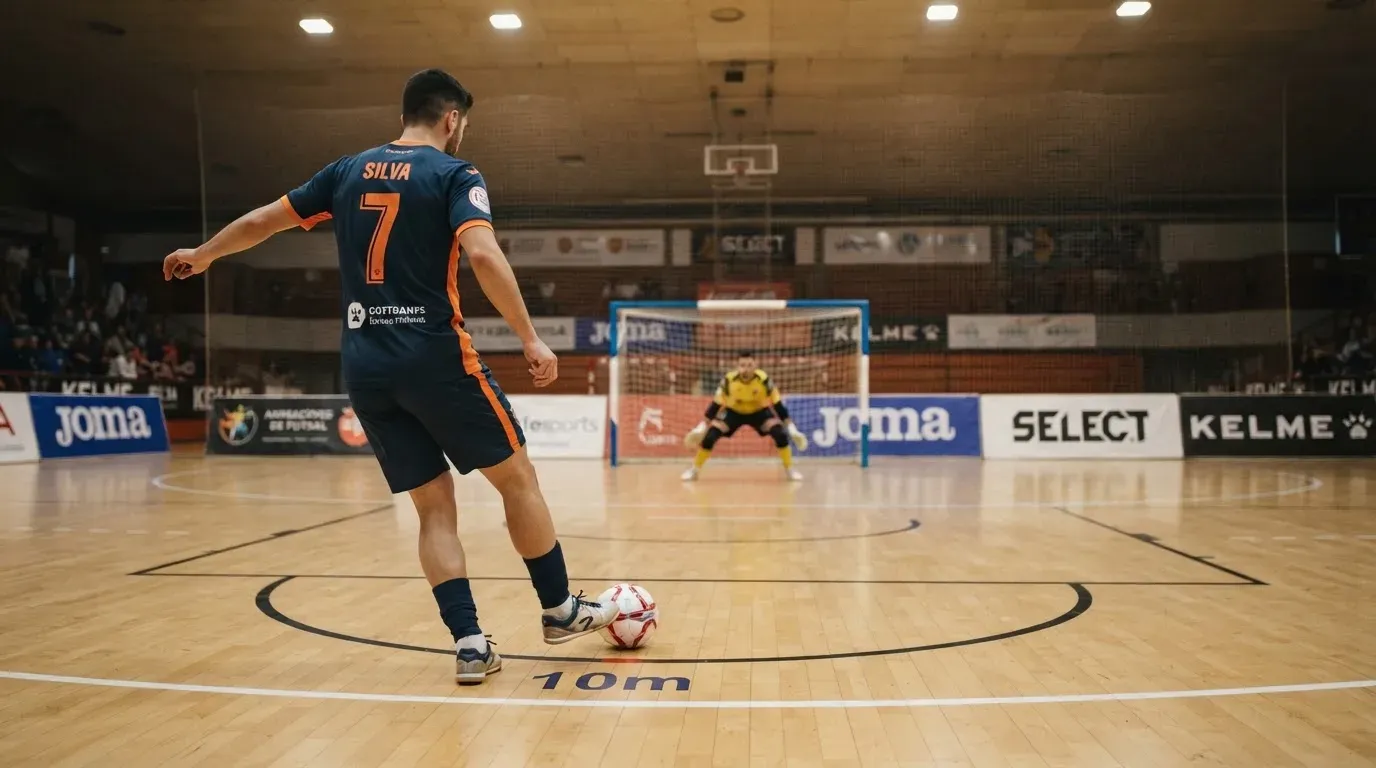
The clock stops at the second half. The pitch is forty metres long and twenty wide. From the sixth accumulated foul in a period the wall is not allowed, and the free kick is taken from ten metres out. Futsal is fast, technical, and in Great Britain it is bet on by a small but growing number of punters who follow the Brazilian, Spanish and Portuguese leagues, the UEFA Futsal Champions League, and the FIFA Futsal World Cup — the men’s tournament has run since 1989, and the inaugural FIFA Futsal Women’s World Cup took place in the Philippines in 2025. Prices on futsal are built the same way prices on football or basketball are built, and the arithmetic that governs them is what every punter pays in the long run.
This page is about how futsal betting odds work in 2026, what licensed bookmakers in Great Britain offer on the sport, and what the published price actually leaves on the table once the bookmaker’s margin is taken out. It closes with a ranking of ten Gambling Commission-licensed brands, each of which holds a remote general betting standard licence for real events and is a member of GAMSTOP. None is presented as the right answer; each is presented on the same set of fields, and the choice is yours.
Data current as of October 30, 2026 and checked against the Gambling Commission’s public register and each operator’s published terms.
What futsal betting actually is
The sport, briefly
Futsal is played between two teams of five — four runners and a keeper — on a hard court roughly the size of a basketball floor, with a size 4 ball that is smaller, heavier and bouncier than a football in the way that matters for control. A match is two twenty-minute periods of stopped-clock time, with one one-minute timeout per side per half and unlimited substitutions from a bench of up to nine. The clock pauses at dead-ball situations, which means the effective playing time is longer than the wall-clock count and the rhythm of in-play markets responds to that. The first FIFA-organised World Cup was held in 1989; the sport itself was created in Montevideo in 1930 by Juan Carlos Ceriani for YMCAs, and FIFA remains the highest governing body.

Where futsal fits in a betting catalogue
A bookmaker does not need to seek permission to list futsal. There is no statutory list of permitted sports or markets in Great Britain, so an operator lists it under the same licence category that covers football, basketball and any other real sporting event. The licence type is remote general betting standard (real events), and every brand reviewed here holds one. What the licence does not do is guarantee a deep book — a bookmaker may put up a handful of pre-match lines and leave the rest to the request-a-bet button.
In practice a licensed bookmaker’s futsal offering tends to fall into three tiers:
- Headline fixtures. UEFA Futsal Champions League matches, top-division Brazilian, Spanish and Portuguese league games, the men’s and women’s FIFA Futsal World Cups, and the continental championships run by UEFA. Match winner, totals, and a handful of player props.
- Secondary fixtures. Lower-division domestic league games, qualification rounds, and youth internationals. Often a moneyline only.
- Everything else. Markets assembled by the request-a-bet function on top of the listed lines, or hand-priced for the high-stakes accounts.
The headline tier is where pre-match and in-play prices are tight enough to compare. Below it, a punter is paying the operator’s pricing model for its trouble.
How the price is built
Every price is built around the bookmaker’s margin, the slice of every pound staked that the operator keeps on average. Take a clean two-way market priced at 1.90 / 1.90 in decimal odds — the kind of even-money line a close match would carry. The payout share, which is what comes back to punters in aggregate before the margin is taken, is calculated as 1 ÷ (1/1.90 + 1/1.90), which equals about 0.526, or 52.6%. The remaining 47.4% is the margin, the overround. In real markets the two sides are rarely priced identically, and one side will carry a slightly larger slice of the margin to balance the book the punter’s not yet seen.
That margin is the price of admission. A bookmaker quoting a 5% margin is keeping five pence in every pound staked across the lifetime of that market, on average. A bookmaker at 8% is keeping eight. The same fixture, the same outcome, the same stake — the wider margin costs the punter more for no benefit in matching the closed door. Futsal markets tend to carry a wider margin than the biggest football leagues because the book is thinner, and that is the trade-off for betting on a sport the catalogue does not centre.
The legal frame: Great Britain, in short
Who licences whom
The Gambling Commission, a non-departmental public body sponsored by the Department for Culture, Media and Sport, licenses every commercial bookmaker operating in Great Britain under the Gambling Act 2005. The 2005 Act covers England, Scotland and Wales; Northern Ireland sits outside it under older law. Since the Gambling (Licensing and Advertising) Act 2014 any operator whose remote facilities are used in Great Britain needs a Commission licence wherever it is based. A Curaçao, Maltese or Gibraltar licence is not a substitute for serving British customers, and offering facilities in Great Britain without the licence the Act requires is an offence under section 33 of the Gambling Act 2005.
There is no state monopoly and no cap on the number of licences. The full public register can be searched by business name, trading name, domain or account number, and it is the whole test of who holds one.
How to check a licence
Search the Commission’s public register for the business name, the trading name or the domain. A brand whose domain is registered against a holder of a remote general betting standard licence is licensed for real-event betting. A licence account number, of the form used in this page’s operator table, lets a punter confirm the licence on the register’s own scope.
Licensed operators use .com as well as .co.uk, so the domain alone proves nothing. The register entry proves everything.
Identity before the first pound
Since 7 May 2019 a licensed remote bookmaker must verify name, address and date of birth before a customer can deposit or gamble, and a free bet or bonus is no exception. There is no anonymous play at a licensed site. Source-of-funds questions at higher spend are normal under the money-laundering rules, and credit cards are banned for gambling in Great Britain, including credit-card-funded payments through an e-wallet.
Tax
The punter pays no tax on betting winnings in Great Britain. General Betting Duty is the operator’s tax on gross profits, currently 15%. From 1 April 2027 a new remote betting rate of 25% applies within it, while remote bets on UK horse racing, bets on self-self-service betting terminals in licensed premises, pool betting and in-person betting stay at 15%. Whether operators pass duty on through odds is not established, and the customer is never charged duty at the betting slip.
Offshore
A GB licence is compulsory at the point of consumption. A customer who bets on an unlicensed site loses the British protection layer: no GAMSTOP coverage, no Commission complaints route, no approved dispute-resolution body, no British consumer redress if funds are withheld, and no entitlement to the 10x bonus wagering cap or the financial vulnerability check. Honest framing: licensed means checks, limits, GAMSTOP, the bonus cap, but also verification before the first bet. Unlicensed means none of those protections and the chance of being unable to recover funds. Neither is the safe choice by default; only licensed operators offer the British safety net, and even that comes with its own friction.
Safer gambling tools a licensed bookmaker must offer
Every operator reviewed here is required by licence condition to provide a set of safer-gambling tools, and they are worth knowing about because they are the levers a punter pulls when the rest of the page stops working.
GAMSTOP. A national multi-operator online self-exclusion scheme and a mandatory licence condition for online operators since 31 March 2020. Exclusion periods are six months, one year, five years, or five years with auto-renewal. After the minimum period the exclusion stays in place for a further seven years unless the customer asks GAMSTOP to remove it. GAMSTOP covers online sites and apps; betting shops run a separate scheme. Every brand in this ranking is a GAMSTOP member.
Deposit limits. Operators must offer a gross deposit limit on a fixed time frame. The first changes applied from 31 October 2025, with a second phase postponed to 30 September 2026. A punter can set their own ceiling at any time, lower it immediately or raise it after a cooling-off period; the operator cannot raise it for them.
Financial vulnerability check. From 28 February 2025 a public-record check (for example bankruptcy or county court judgments) applies to licensed remote betting when a customer’s deposits minus withdrawals exceed £150 in a rolling 30 days. It is a public-record check, not an income check and not a credit reference check.
Financial risk assessment. The “affordability checks” of the press. Announced in a staged plan by the Commission on 7 July 2026, with no start date. Until that start date is published, the term should be treated as a future rule, not a live one.
Self-exclusion at the operator. Distinct from GAMSTOP and set up directly with the brand. Useful where the punter wants to step back from one bookmaker without affecting the others.
Time-out. A short break, usually twenty-four hours to six weeks, during which the account cannot deposit or bet but can withdraw.
Reality checks. Pop-up reminders of how long the session has been running and what has been staked.
Help lines. GamCare runs the National Gambling Helpline. GambleAware funds treatment and research. The NHS runs gambling clinics. Gamblers Anonymous runs peer-support meetings. None of these tools wins back what has been lost; they cap the next loss. Use them before the cap arrives.
Bonuses and free bets on futsal
What a bonus actually is
A welcome offer, a free bet, a price boost and a “risk-free” stake are not the same thing, and a punter who treats them as the same thing tends to clear the wrong one. A cash bonus is a sum added to the account, usually in return for a deposit and a stake, that is paid out as cash once the wagering requirement is met. A free bet is a one-shot stake paid back as winnings only — the free-bet stake is usually not returned on a win, so a £10 free bet at 4.00 returns £30 in profit, not £40. A “risk-free” bet refunded as a free bet is not a refund in money. A price boost is a one-off enhancement to a quoted price. An accumulator insurance returns stakes as free bets or cash if one leg of a qualifying multiple loses. A cashback returns a share of net losses over a period.
The promotion rules in force since 19 January 2026 cap wagering requirements on bonuses at 10x. A £10 bonus at 50x needed £500 of qualifying bets before the cap; under the cap no more than £100 of qualifying bets is required. Mixed-product promotions — an offer that requires gambling on two or more product types, for example “bet on football to get free spins” — are banned. Whether the cap applies to free bets with no wagering condition, and any cap on the money value of a bonus, are not established.
What a futsal bonus costs to clear
The cost of clearing a bonus is the required turnover multiplied by the margin of the markets on which it is wagered. Take a £30 free bet on a futsal match winner at a 6% margin: the punter must place £30 of qualifying bets on that market to clear it, and on average £1.80 of that £30 will be retained by the bookmaker. The free bet itself returns winnings only, so a winning £30 free bet at decimal odds of 3.00 returns £60 in profit, never £90. The marketing word “free” sits next to the arithmetic; the arithmetic is what actually happens.
The offers on this page
The brands reviewed here publish their own welcome terms, and the table below lists what each operator’s site or app states for its welcome, where it states one. The audit does not run a bonus code; promotional mechanics change, and the price a punter pays is the wagering requirement, the minimum price and the deadline as published at the moment of claim.
- Hollywoodbets. New players who deposit £10 or more by card get their stake back as a free bet of up to £30 on their first qualifying losing accumulator. The qualifying bet is a £10+ stake on an accumulator of three or more legs at minimum odds of 4/1 (5.00 decimal), settled within seven days; one free bet per customer.
- BoyleSports. £20 in free bets when a £10 bet is placed (£30 in free bets for a €10 bet for Irish customers).
- BetTom. 50% back as a free bet of up to £50, with a matching 50% back up to £50 as free slot funds for casino play; full terms apply.
- Copybet. Best Odds Guaranteed all day, every day on UK and Irish racing, and first past the post is paid on horse racing even if the winner is later disqualified. No headline futsal welcome offer is stated.
- NetBet. Daily Boosts, Profit Boosts and free bet offers, a Bet Builder with instant dynamic odds and sports stats for major leagues. No single futsal-specific welcome is stated.
- bet365. Super Boosts, Winnings Boosts on Bet Builders and selected singles, daily Bet Boosts. A welcome offer is published in the app and changes; the audit does not print it.
Each offer keeps the type research states. A cash bonus stays a cash bonus. A free bet stays a free bet. A “risk-free” stake refunded as a free bet is not a refund in money. A deposit-gated package stays deposit-gated. No promo code is printed on this page.
Live betting and cash out on futsal
Why live fits the sport
Futsal is built for in-play. The clock stops at dead-ball situations, which means a market that closes at the next goal in an outdoor football match closes at the next dead ball in futsal. The pattern of stoppages — a foul, a goal kick, a substitution — is itself a market signal, and a bookmaker’s in-play trader has to reprice the match every time the ball goes dead. The book on a tightly priced futsal game moves more often than the book on the equivalent football game, and the trader who keeps up is the trader whose prices a punter can trust.
Cash out
Cash out is the bookmaker’s offer to settle a bet before the event has finished, at a price derived from the current in-play market and the bet’s original stake. One-click, auto and partial cash out have become standard. Spreadex, for instance, combines fixed-odds and spread betting in one app with one-click, auto and partial cash out, and a Bet Builder that works across fixed odds or spreads. Where the in-play market is thin, the cash-out price is wider than the underlying market, because the bookmaker is offering a one-sided trade rather than a two-sided one. A punter who cashes out a winning position at a wide price has paid the in-play spread.
Live streaming
Live streaming of futsal is uncommon at licensed bookmakers; the bigger rights deals sit with football, horse racing, tennis and a handful of US leagues. Spreadex streams UK and Irish horse racing, greyhounds, tennis, NFL and selected football; bet365’s catalogue is similar. A punter who wants to watch the match they have bet on will often have to source the stream elsewhere and treat the betting app as the pricing layer.
Predictions, tips and what they are worth
Tips and tipsters
A futsal betting tip is a recommendation of a selection, a price and a stake, published by an account — usually on social media, sometimes behind a subscription wall. The tip is a forecast, not a fact. A punter who follows one is taking the tipster’s word for what is going to happen, and the tipster’s record, where it is published, is the only test of that word. Tipsters who publish a verifiable long-term record at a closing line or at a starting price are rarer than tipsters who publish a record at all.
A “sure bet” is a phrase the tipster uses to describe a bet they believe cannot lose. There is no such bet. Every price on a licensed bookmaker carries the margin, and the margin is the bookmaker’s edge; the punter pays it on every bet, regardless of how certain the tipster feels.
Stats software
Futsal stats software is a thin market compared to football software, and the datasets that drive a model are themselves narrow: shot counts, goals scored and conceded per period, fouls accumulated, and the count of times the clock stopped. A punter who builds a model from public data is competing against a bookmaker who has more data and faster traders. The model wins on the bets the bookmaker has mispriced, and loses on the bets the bookmaker has priced to the data. The expected value over a season is the edge on those mispricings, and the edge on a thin sport is usually narrower than the edge on football.
Bankroll
Bankroll management is the discipline that keeps a tipster’s variance from emptying a punter’s account. A common rule is to stake no more than one to five per cent of the bank on any single bet, with the stake varying by confidence. The rule’s value is that it survives a run of losing bets without busting the bank, and a run of losing bets is a certainty, not a possibility.
Bet types and how they settle
Singles and multiples
A single is one selection, one event, one outcome. A double is two. A treble is three. An accumulator — an “acca” — is four or more, with the odds of the legs multiplied into one price. A Trixie is four bets on three selections (three doubles and one treble). A Patent is seven bets on three selections (three singles, three doubles and one treble). A Yankee is eleven bets on four selections (six doubles, four trebles and one four-fold). A Lucky 15 is fifteen bets on four selections (four singles, six doubles, four trebles and one four-fold). A Canadian or Super Yankee is twenty-six bets on five selections. A Heinz is fifty-seven bets on six. A Goliath is two hundred and forty-seven bets on seven. The unit stake is multiplied by the number of bets; a £1 Lucky 15 costs £15.
The leg that loses the acca is the leg that costs the acca, and an acca of six legs priced at 1.20 each is the marketing cousin of a six-leg acca priced at 4.00 each. The shorter-odds acca wins more often and pays less; the longer-odds acca wins less often and pays more. The margin on a long-odds acca is the sum of the margins on the legs, and a bookmaker who quotes a six-leg acca at 1000/1 has priced each leg at a margin that compounds.
Each-way
An each-way bet is two bets of equal stake: one on the selection to win, one on the selection to place. The stake doubles, and the place terms vary by race and operator. Each-way betting on futsal is unusual; the bet is a horse-racing and greyhound-racing staple.
BTTS, totals, handicaps
Both teams to score is a yes/no market on whether each side scores at least once. Totals are over/under on the count of a given event in a match, usually goals. Handicaps are a way of giving the stronger side a deficit to overcome or the weaker side a head start; a -1 handicap on the favourites means the favourite must win by two or more for the bet to land. Futsal handicaps tend to be tighter than football handicaps because the goal count is lower.
Bet builder
A bet builder is a same-game multiple: a single bet combining markets from one event into one price. bet365’s Bet Builder+ combines markets from one event into a single bet and is available pre-match and in-play. Spreadex’s Bet Builder works across fixed odds or spreads. NetBet’s Bet Builder updates the odds as markets are added. The bookmaker’s margin on a bet builder is the sum of the margins on the constituent markets, often with a small premium for the construction of the multiple.
Cash out and Rule 4
Cash out is the operator’s right to settle a bet early at a price derived from the current market. Rule 4 is a bookmaker’s rule for deductions when a non-runner withdraws from an event — a horse-racing term, applied rarely outside racing. Ante-post is a bet placed before the final declarations are made, where the bet is lost if the selection does not take part.
Odds formats
Odds are quoted in fractional and decimal form in Great Britain. The conversion from fractional a/b to decimal is a ÷ b + 1. Five-to-one (5/1) is 6.00. Eleven-to-four (11/4) is 3.75. Evens (1/1) is 2.00. Odds-on is shorter than evens — 4/6, 1/2 — and the decimal price is below 2.00. The arithmetic in this page is in decimal form.
Sports and tournaments: the fixture list
The men
The men’s international calendar centres on the FIFA Futsal World Cup, held since 1989 and contested every four years. The continental championships sit beneath it: the UEFA Futsal Champions League for club sides, the UEFA Futsal Euro for national sides, the CONMEBOL Copa América de Futsal, the AFC Futsal Asian Cup, the CAF Futsal Africa Cup of Nations and the OFC Futsal Nations Cup. The Brazilian, Spanish, Portuguese, Russian and Iranian leagues carry most of the year-round volume, with Argentina, Italy and Thailand adding secondary fixtures.
The women
The inaugural FIFA Futsal Women’s World Cup took place in the Philippines in 2025, and the second edition sits four years later. Continental championships are younger; the UEFA Women’s Futsal EURO is the European flagship. The women’s game is a thinner market than the men’s, and the depth of any given licensed bookmaker’s women’s futsal offering is the most direct signal of how seriously the brand treats the sport.
What the calendar means for the catalogue
A licensed bookmaker’s futsal offering tracks the calendar. The headline weeks are the FIFA Futsal World Cup, the UEFA Futsal Euro, the Copa América de Futsal and the closing weeks of the UEFA Futsal Champions League. The Brazilian, Spanish and Portuguese league seasons carry the year-round volume, and a punter who follows a single league can find a bookmaker that prices it closely.
A punter who wants a specific fixture priced should check the operator’s Wettprogramm — the fixture list and the markets published against it — before placing a bet. The catalogue is built by the operator, and the operator’s view of a fixture is what a punter sees.
How the margin is read in the odds
The two-way market, again
A clean two-way market priced at 1.90 / 1.90 has a margin of about 47.4% on each side and a payout share of about 52.6% in aggregate. A 1.85 / 1.95 market has a margin of about 5.4% and a payout share of about 94.6%. The two numbers are the same market seen from two sides: the punter’s payout share is what comes back across all bets at the closing prices, and the bookmaker’s margin is what stays.
The margin is a band, not a point. A bookmaker can move the line between the moment the price is published and the moment the market closes, and the realised margin at settlement is whatever the closing prices were on every bet. An estimated margin is the margin at the moment the price is read.
Three-way markets
A three-way market — match winner with the draw priced separately — carries the same calculation across three outcomes. A 2.20 / 3.40 / 2.80 line has a payout share of 1 ÷ (1/2.20 + 1/3.40 + 1/2.80), about 91.1%, and a margin of about 8.9%. A tighter line at 2.10 / 3.30 / 2.70 has a margin closer to 6.8%. Futsal three-way markets are thin and the lines are wider than football equivalents.
What the margin pays for
The bookmaker’s margin pays for the operation: the trading desk, the licence fee, the customer service, the safer-gambling tools, the marketing, the affiliate commissions, and the compliance layer that verifies every customer before the first bet. The margin is also the bookmaker’s edge: on average the bookmaker wins at the margin, and the punter loses at it. The punter who beats the margin on a long enough run is the punter who has found a mispricing the bookmaker has not corrected.
Reading the margin in the app
A punter who wants to compare two bookmakers’ margins on the same fixture compares the implied probability of the price. The implied probability of a decimal price is 1 ÷ price. A price of 2.00 implies 50%. A price of 1.50 implies 66.7%. The sum of the implied probabilities across all outcomes is the overround. The overround minus 100% is the margin. A punter who adds the implied probabilities of a 1.85 / 1.95 two-way market arrives at about 105.4%; the margin is 5.4%.
The implied probability is the punter’s view of the price. It is not the punter’s view of the outcome. A price of 2.00 implies a 50% chance of landing, and the bookmaker’s view may be that the chance is 55%; the difference is the bookmaker’s edge on that market. A punter who believes the chance is higher than the implied probability has an edge; a punter who believes it is lower has paid for the privilege of being wrong.
The ten licensed brands, ranked
How the ranking is built
The ten brands below are listed on the Gambling Commission’s public register against a holder of a remote general betting standard (real events) licence. Each holds a separate licence account number that can be verified on the register. Each is a member of GAMSTOP. None is presented as the only licensed brand — the register lists hundreds — and none is presented as the best; the ranking reflects breadth of offering, depth of pricing, and the live-betting and bet-builder features a futsal punter is most likely to need. The score a punter assigns is theirs.
The brands are not presented in any order of recommendation. A punter looking for a deep bet builder looks at one cluster; a punter looking for a tight handicap line looks at another.
Brand comparison: licence and what the operator’s own terms state
| Brand | Licence holder | Licence account | Key feature from the operator’s terms |
|---|---|---|---|
| bet365 | Hillside (UK Sports) ENC | not stated in the published app entry | Official global betting partner of the UEFA Champions League; Bet Builder+ combining markets from one event pre-match and in-play; Super Boosts, Winnings Boosts on Bet Builders and selected singles; daily Bet Boosts |
| BetVictor | BV Gaming Limited | 39576 | Best Odds Guaranteed on UK and Irish horse racing; enhanced live race streaming; BetFinder for racing bets; Smart Stats |
| BoyleSports | Boylesports Enterprise | 39469 | £20 in free bets on a £10 qualifying bet (£30 in free bets on a €10 bet for Irish customers) |
| Copybet | Copybet UK Limited | 53774 | Best Odds Guaranteed all day, every day, on UK and Irish racing; first past the post paid on horse racing even if the winner is later disqualified |
| Spreadex | Spreadex Limited | 8835 | Fixed-odds and spread betting combined in one app; one-click, auto and partial cash out; Bet Builder across fixed odds or spreads; live streaming of UK and Irish horse racing, greyhounds, tennis, NFL and selected football |
| NetBet | Netbet Enterprises Limited | 39170 | Daily Boosts, Profit Boosts and free bet offers; Bet Builder with instant dynamic odds; sports stats for major leagues |
| Hollywoodbets | Hollywoodbets International UK Limited | 53028 | Stake returned as a free bet of up to £30 on the first qualifying losing accumulator (£10+ deposit, £10+ stake, 3+ legs, odds 4/1 or greater, settled within seven days) |
| Fitzwilliam Sports | SBKI Limited | 48760 | Dublin bookmaker with capped membership; High Stakes Welcome subject to compliance criteria; instant deposits, fast withdrawals, timeouts and deposit limits; links to GambleAware, GamStop and Gamblers Anonymous |
| DragonBet | DragonBet Ltd | 64908 | Welsh football and rugby markets; racing; American football; in-play betting; bet builder markets |
| BetTom | Bet Tom Limited | 64959 | 50% back as a free bet of up to £50 with a matching 50% back up to £50 as free slot funds; full terms apply |
The licence account number is the number a punter enters into the Commission’s public register to confirm the licence. The key feature column is the published point of difference from each operator’s own terms, not a recommendation.
What the table leaves out
The table does not list every market each operator carries on futsal, because the catalogue changes by fixture and by hour. It does not list every promotion, because promotions change weekly and a published list is stale before it is read. It does not list the deposit methods or the payout times, because the catalogue of payment options is the operator’s and the audit does not second-guess it. A punter who wants to know whether a brand carries a specific futsal market should check the operator’s published fixture list before placing a bet.
Where each brand fits
bet365. The headline brand of the licensed British market and the official global betting partner of the UEFA Champions League. The app is the most-downloaded sports betting app in the UK, the bet builder is the deepest in the catalogue, and the Super Boost and Winnings Boost stack makes a futsal acca worth the construction. A punter who wants a price on a deep market and a same-game acca finds it here. The trade-off is the brand’s reach: a punter who wants a niche market priced closely on a thin league may find the price wider than a specialist brand would quote.
BetVictor. A long-running licensed brand with Best Odds Guaranteed on UK and Irish racing and a racing-focused BetFinder. A punter who crosses sports — racing and futsal — finds the racing book the deeper of the two. The futsal offering is the headline of a solid book, not a specialty.
BoyleSports. A licensed brand with a stated welcome of £20 in free bets on a £10 qualifying bet. The Irish side of the operation runs at €30 in free bets on a €10 bet. A punter who values a stated welcome with a short wagering chain finds this one readable; a punter who wants the futsal book to lead the welcome looks elsewhere.
Copybet. Best Odds Guaranteed all day, every day, on UK and Irish racing, and first past the post is paid even if the winner is later disqualified. The racing terms are the strongest feature in the published terms; the futsal book is the headline of a solid multi-sport brand.
Spreadex. The only licensed brand in the ranking that combines fixed-odds and spread betting in one app, regulated by the FCA for spread betting and by the Gambling Commission for fixed-odds betting. Spread betting losses can exceed the deposit, and a punter who moves between the two products needs to read both sets of terms. The bet builder, the cash out and the live streaming make this the most feature-heavy brand in the ranking; the trade-off is that spread betting is a different risk class from fixed-odds, and a punter who has only bet fixed odds is taking on a different product by opening the spread tab.
NetBet. Daily Boosts, Profit Boosts and free bet offers, a Bet Builder with instant dynamic odds and sports stats for major leagues. A punter who values daily price enhancements finds this brand’s promo layer stacked; a punter who wants a deep futsal book on a quiet Tuesday may find the catalogue thinner than the headline.
Hollywoodbets. Stake returned as a free bet of up to £30 on the first qualifying losing accumulator at 4/1 (5.00 decimal) or greater, with three or more legs, settled within seven days. A punter whose first bet is a multi finds this a clean refund; a punter whose first bet is a single does not. The futsal offering is the headline of a multi-sport brand with a focus on racing and football.
Fitzwilliam Sports. A Dublin bookmaker with capped membership, instant deposits, fast withdrawals, timeouts, deposit limits and explicit links to GambleAware, GamStop and Gamblers Anonymous. The “High Stakes Welcome” is subject to compliance criteria, and a high-stakes punter should read the criteria before claiming. A punter who wants a brand with a Dublin base and a quieter membership finds this one; a punter who wants the deepest possible futsal catalogue looks elsewhere.
DragonBet. Welsh football and rugby markets, racing, American football, in-play betting and bet builder markets. The Welsh focus is the distinctive point; a punter who follows the Welsh leagues finds this brand the closest to home. The futsal offering sits inside a multi-sport brand with a regional edge.
BetTom. 50% back as a free bet of up to £50 with a matching 50% back up to £50 as free slot funds. A punter who uses both products finds the headline readable; a punter who bets on sport only is paying for the casino half. The futsal offering is the headline of a multi-product brand.
Reading the table for what it is
The table is a snapshot, not a recommendation. A snapshot ages. The licence account number is stable and the operator’s name is stable; the welcome offer, the key feature column and the catalogue are not. A punter who treats the table as the answer to “which brand is best” has read past the question. A punter who treats the table as a shortlist, narrows it on the feature that matters to them, and then checks the operator’s own terms for the bet they want to place, has used it.
The verdict, brand by brand
bet365 is the headline brand for a punter who wants the deepest catalogue and the most bet builder. The published offer stack is wider than any competitor in the ranking; the price a punter pays is the wider margin on the markets the book has not centred.
BetVictor is the brand for a punter who crosses racing and futsal and wants Best Odds Guaranteed on the racing book. The futsal book is solid; it is not the centre of the offering.
BoyleSports is the brand for a punter who values a stated welcome of £20 in free bets on a £10 qualifying bet. The wagering chain is short; the futsal book is the headline of a multi-sport operation.
Copybet is the brand for a punter who wants Best Odds Guaranteed all day on racing and a multi-sport catalogue. The racing terms are the strongest in the published entry.
Spreadex is the brand for a punter who wants fixed odds and spread betting in one app, with the bet builder and cash out to match. The trade-off is that spread betting is a different risk class from fixed odds, and a punter new to spread betting should read the FCA-regulated terms before opening the spread tab.
NetBet is the brand for a punter who values daily price enhancements and a bet builder with dynamic odds. The promo layer is the strongest in the published terms; the futsal catalogue on a quiet week is the trade-off.
Hollywoodbets is the brand for a punter whose first bet is a qualifying accumulator at 4/1 or greater with three or more legs. The refund terms are clean; a single-bet punter does not benefit.
Fitzwilliam Sports is the brand for a punter who wants a Dublin bookmaker with a quieter membership, fast withdrawals and explicit safer-gambling links. The “High Stakes Welcome” rewards a punter who meets the compliance criteria.
DragonBet is the brand for a punter who follows the Welsh leagues and wants a regional book. The futsal offering is the headline of a regional multi-sport brand.
BetTom is the brand for a punter who uses both the sports book and the casino and wants the headline match of free-bet and free-slot refunds. A sport-only punter pays for the casino half.
Where this leaves the punter
A licensed bookmaker’s futsal offering tracks the calendar. The Brazilian, Spanish and Portuguese leagues carry the year-round volume; the FIFA Futsal World Cup and the continental championships carry the headline weeks; the women’s game, with the inaugural FIFA Futsal Women’s World Cup in 2025, is a market a licensed bookmaker is still building. A punter who follows a single league finds a bookmaker that prices it closely; a punter who follows the sport across leagues finds ten licensed brands and a margin that widens as the catalogue thins.
The margin is what every price pays. The same fixture, the same outcome, the same stake — the wider margin costs the punter more for no benefit. A punter who compares margins on the same fixture across two licensed brands has read the arithmetic the marketing leaves aside. The bookmaker’s edge is the bookmaker’s edge; the punter’s edge is the bet the bookmaker has mispriced, and the mispricing is rarer on a thin sport than on a thick one.
The safer-gambling tools are the levers a punter pulls when the rest of the page stops working. GAMSTOP, deposit limits, time-outs, reality checks, the National Gambling Helpline at GamCare, the NHS gambling clinics, Gamblers Anonymous. They do not win back what has been lost. They cap the next loss. Use them before the cap arrives.
Frequently asked questions
How do you bet on a futsal league?
Pick a licensed bookmaker that prices the league, navigate to the futsal tab or the request-a-bet function, choose a fixture, and add a selection to the bet slip. Settle singles at the cash out price if the bookmaker’s live price is wider than the underlying market; leave accumulators to run unless a single leg has drifted far enough to justify the trade. The catalogue is built by the operator, and a fixture not on the published list is a fixture that has to be requested.
How is it checked that a bookmaker holds a Gambling Commission licence?
Search the Commission’s public register for the business name, the trading name, the domain or the licence account number. A match against a remote general betting standard (real events) licence is the whole test. The register lists the licence holder, the licence account, and the categories the licence covers. The domain proves nothing; the register entry proves everything.
How is the return on a bet worked out from the stake and the odds?
The return on a winning single is the stake multiplied by the decimal odds. The net profit is the stake multiplied by (decimal odds minus 1). A £10 single at 3.00 returns £30 (£20 net profit). On an accumulator the legs’ odds multiply into one price, and the calculation is the same against the combined price.
What is the bookmaker’s margin and how can it be seen in the odds?
The margin is the slice of every pound staked the bookmaker keeps on average, and it sits inside every quoted price. Take a two-way market at 1.90 / 1.90: the payout share is 1 ÷ (1/1.90 + 1/1.90), about 52.6%, and the margin is the remainder, about 47.4%. A market at 1.85 / 1.95 has a margin of about 5.4%. The implied probability of a price is 1 ÷ price; the sum of implied probabilities across all outcomes is the overround, and the margin is the overround minus 100%.
How do fractional odds such as 5/1 convert to decimal odds such as 6.00?
The conversion from fractional a/b to decimal is a ÷ b + 1. Five-to-one is 5 ÷ 1 + 1, or 6.00. Eleven-to-four is 11 ÷ 4 + 1, or 3.75. Evens (1/1) is 1 ÷ 1 + 1, or 2.00. The fraction’s numerator is the profit on a £1 stake; the decimal price is the return on a £1 stake. The two formats are the same market seen from two sides.
Which tools for controlling play does a licensed bookmaker have to offer?
A licensed remote bookmaker must offer GAMSTOP self-exclusion, time-outs, deposit limits and reality checks. From 28 February 2025 a public-record financial vulnerability check applies when deposits minus withdrawals exceed £150 in a rolling 30 days. A financial risk assessment has been announced in a staged plan with no start date. The full safer-gambling toolkit is the lever a punter pulls when the rest of the page stops working, and the help lines — GamCare’s National Gambling Helpline, GambleAware, the NHS gambling clinics, Gamblers Anonymous — sit alongside it.
Football – oddsguaranteed
Content created by the «oddsguaranteed» team
