
The Heinz bet, broken down: 6 selections, 57 bets, one decision
 Available in US
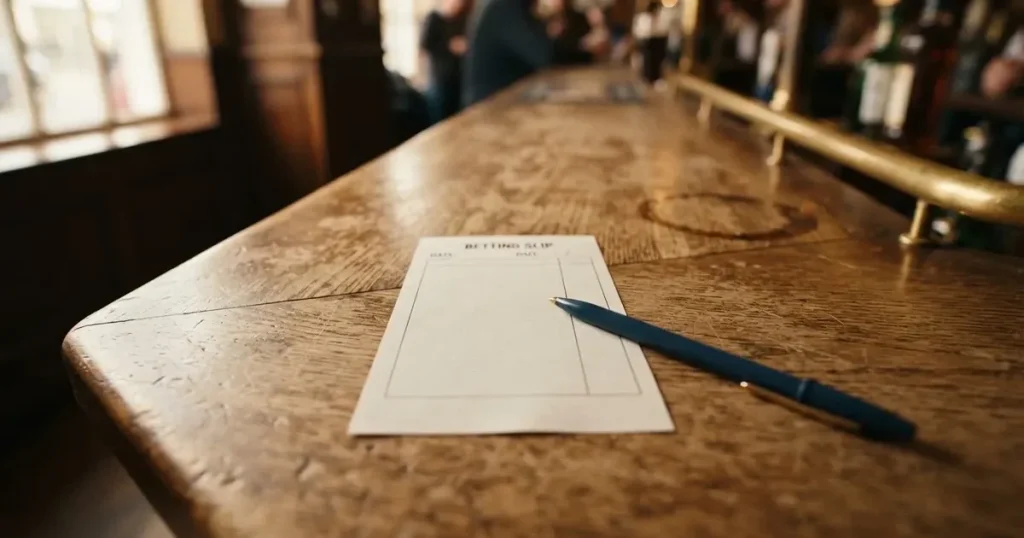
A Heinz is six selections, fifty-seven bets, and a single decision at the betting slip. The catch is that the structure is symmetrical — every combination of doubles, trebles, four-folds, five-folds and the single six-fold is included — and symmetry has a price. Twenty per cent of the unit stake sits on doubles alone, and only the six-fold pays out if every selection wins. Knowing what the structure actually costs, and where the bookmaker’s margin sits inside it, matters more than knowing how to fill the slip.
Current as of October 30, 2026 against the Gambling Commission’s public register.
How the Heinz shapes a betting day
The anatomy of a 57-bet slip
Place six selections — football results, horse races, anything priced — and the Heinz packages them automatically. Every combination of two selections becomes a double, every combination of three becomes a treble, and so on. With six selections there are fifteen possible doubles, twenty possible trebles, fifteen four-folds, six five-folds, and one six-fold; the count comes from the binomial coefficient, the same maths that counts combinations on a lottery ticket. There are no singles in the structure: a single winning leg settles only as part of a multiple it appears in.

The first practical consequence is how the stake multiplies. A £1 stake per line costs £57 total because the slip carries fifty-seven separate bets at the unit stake. Each line settles on its own merits: a winning double pays only its double price; the six-fold pays only its six-fold price. The structure is not one bet with one return — it is a portfolio of fifty-seven bets that share six selections.
Why this is the system people choose
The Heinz appeals to punters who want protection without picking a banker. A banker locks one selection at the front of the slip and treats the rest as risk; the Heinz treats all six as live legs and lets the multiples absorb early losses. Five winners still pays: the doubles and trebles using those five legs settle as wins, and the bigger multiples simply lose. Four winners pays the six doubles those four selections form. Even two strong winners pay their double.

The trade-off is cost. At £1 per line the punter risks £57. At £10 per line the punter risks £570. Whatever the unit stake, sixty per cent or more of that stake sits on multiples that will usually lose, because a bet only pays when the right number of legs win. The structure rewards broad coverage across a day of action and punishes the bettor who treats the six-fold as the real bet and the rest as formality.
When the bookmaker’s margin shows through
Every line carries the bookmaker’s overround, and so does every leg inside it. A double at 6/1 (7.00) on two priced 11/4 (3.75) outcomes is not 6/1 — the product 3.75 × 3.75 = 14.06, which is 110/6, not 6/1. The “boost” is not the bookmaker’s gift; it is the product of two independent margins arriving at one price. A Heinz of six legs compounds this effect six times across, in the worst case, every line on the slip. The margin is invisible on a single selection, harder to spot on a double, but visually obvious on a six-fold whose price is suspiciously generous against what each leg would have returned alone.
This is what a Heinz costs in expectation, not just in pounds. Because the structure multiplies the margin rather than averaging it, the punter’s expected loss across all fifty-seven bets is higher than it would be on a single accumulator of the same six legs at the same unit stake. The Heinz is sold as the safer cousin of the straight six-fold. The arithmetic says it is the costlier one.
How Heinz bets work and settle
The selections on a full-cover bet
Six selections on a Heinz must each be priced above the minimum most bookmakers enforce — typically evens (2.00) for sports, and 1/2 (1.50) for horse racing as a guide rather than a rule. There is no requirement that the picks belong to the same sport or the same event: one football result, one tennis match, three horse races and a darts final play together as easily as six football matches. Each selection settles on its own result, and the multiples combine whatever selections happen to win.
The structure is what the bookmakers call a full-cover bet: every multiple available for the chosen number of selections. Trixie (3 selections, 4 bets), Yankee (4, 11), Canadian or Super Yankee (5, 26), Heinz (6, 57), Super Heinz (7, 120) and Goliath (8, 247) form a family, each one a step up in stake and a step further from a single winning outcome. Picking within the family is a stake-budget decision before it is a betting decision.
Voids, non-runners and how the slip shrinks
A selection that becomes void — a non-runner in horse racing, a postponed match, a player withdrawal that voids the player market — does not kill the Heinz. The slip recalculates. A void treble becomes a double on the remaining legs; a void six-fold becomes a five-fold. The whole slip drops to the next-largest available multiple, and any combination that included the void leg simply drops the leg.
The catch is that withdrawals from the slip reduce the number of bets. A 57-bet Heinz with one void becomes a 26-bet Canadian on the remaining five. The punter does not lose more than the stake on the lines that disappear; those lines never settled and never paid. But the protection that came from combination coverage thins with each void — by the time a fifth of the slip has voided, what is left looks less like a Heinz and more like a clustered series of smaller bets on fewer selections.
Cash Out and the half-finished slip
Most bookmakers allow Cash Out on a Heinz while events are still running. The Cash Out figure is the bookmaker’s estimate of what the unsettled lines are worth at that moment, less their own margin on closing the position early. On a Heinz with five legs won and one in play, Cash Out offers a number that reflects the still-live six-fold and any five-folds that depend on the unfinished leg.
The Cash Out is rarely generous. It prices the bookmaker’s future risk on the unfinished event, not the punter’s. A punter waiting for the final leg because the six-fold is the prize will usually do better to let the bet settle; a punter covering a near-miss will usually find the Cash Out less than the implied value of the remaining combinations. The structure that looked like protection on the way in becomes the thing Cash Out shrinks the most.
The deeper family of full-cover bets
The Heinz sits in a row of names that explain each other. Trixie (3 picks, 4 bets), Patent (3, 7 — Trixie plus 3 singles), Lucky 15 (4, 15 — Yankee plus 4 singles), Yankee (4, 11), Canadian or Super Yankee (5, 26), Super Heinz (7, 120 — Heinz plus a six-fold), and Goliath (8, 247). Move up the row and the stake rises faster than the number of picks. A Goliath at £1 per line costs £247; at £10 the punter is risking £2,470 for a structure whose single eight-fold payout is the prize the rest of the slip hedges.
Choosing within the row is a stake-versus-coverage question. Six-fold payouts on every short selection in a day of action are rare. Doubles win often and pay modestly. The Heinz outsizes the doubles but undersizes the six-fold, which is why it is the most popular of the lot.
The 10 GB-licensed bookmakers reviewed
| Bookmaker | Licence account and holder | What the operator’s own terms say on Heinz bets |
|---|---|---|
| Midnite | Gambling Commission account 101839 (Midnite Limited) — remote general betting standard (real events) | Offers bet builder, popular accas and price boosts; Heinz slips settle on the same multiple grid as elsewhere |
| Smarkets | Gambling Commission account 39173 (Smarkets Malta Limited) — remote betting intermediary | Operates as a betting exchange; Heinz positions require backing each leg and pricing the multiples, with a 2% commission on settled exchange bets |
| 888sport | Gambling Commission account 39028 (888 UK Limited) — remote general betting standard (real events) | Runs Bet Builder and Cash Out; Heinz slips compatible with the same multiple grid and acca insurance where applicable |
| BoyleSports | Gambling Commission account 39469 (Boylesports Enterprise) — remote general betting standard (real events) | Acca insurance pays a maximum refund of £20 as a free bet (expires 7 days) on qualifying multiples; minimum stake £5, minimum odds 1/2 |
| William Hill | Gambling Commission account 39225 (WHG International Limited) — remote general betting standard (real events) | Best Odds Guaranteed on UK and Irish racing from 8 AM on the day; Heinz settle as multiples, with ante-post and SP handled by the operator’s rules |
| LiveScore Bet | Gambling Commission account 56859 (LiveScore Betting and Gaming Gibraltar Limited) — remote general betting standard (real events) | Bet Builder allows up to 10 selections across result, both teams to score, corners, goals and player markets |
| Betboro | Gambling Commission account 44181 (Webmedia Development N.V.) — remote general betting standard (real events) | Offers in-play markets and cash-out on football, racing and tennis with boosted odds on selected singles from £10 stakes |
| Spreadex | Gambling Commission account 8835 (Spreadex Limited) — remote general betting standard (real events); regulated by the FCA for spread betting | Fixed-odds Heinz settles on standard multiple rules; spread betting losses can exceed the deposit on the spread side |
| Lottoland | Gambling Commission account 38991 (EU Lotto Limited) — remote general betting standard (real events) | Combines lottery, scratchcards and sports betting; Heinz slips settle against the same multiple grid as a sports book |
| Paddy Power | Gambling Commission account 39439 (PPB Counterparty Services Limited) — remote general betting standard (real events) | Bet Builder+, Popular Bet Builders, Super Sub substitution and expanded Win More markets support full-cover multiples |
Every brand in this table holds a current Gambling Commission remote betting licence against the named account. The full test of a licence is the Commission’s public register, searchable by business name, trading name, domain or account number.
Midnite — built around accas and price boosts
Midnite’s site foregrounds in-play events, an acca builder, popular accas and price boosts with stated maximum-stake limits. A Heinz lands naturally on an acca-focused slip builder, and price boosts can lift the price of individual legs inside the structure. The Heinz settles against the same multiple grid as elsewhere, but the price on each leg is a live variable that responds to money put on the selection.
The Heinz is a reasonable fit where the punter’s six picks are the kind of short-priced favourites and accumulator legs Midnite tends to price tightly. The price boost is the differentiator that turns a tight margin into an attractive line, and the acca builder lets the punter assemble the six picks from one event should they choose. Midnite’s welcome structure — £25 in free bets and 50 free spins after a £5 qualifying bet at evens or greater — is opt-in and has its own terms that the punter checks separately.
Smarkets — the exchange angle on a Heinz structure
Smarkets runs as a betting exchange, not a traditional bookmaker. The Heinz on Smarkets is not a single package priced by the house; it is a series of positions the punter takes on each leg. A punter who wants the equivalent of a Heinz backs each leg separately and lays off the multiples they do not want, paying the 2% exchange commission on settled positions. New customers have, in the past, taken 60 days at 0% commission after a first deposit.
The exchange angle suits a punter who treats the Heinz as a tool rather than a product. Backing the six legs without sizing the multiples lets the punter keep only the lines they want and discard the rest. It does not suit a punter who likes the single slip one click of a button puts together. The exchange model is commission-charged rather than margin-charged, and the difference matters at high turnover.
888sport — Cash Out and Bet Builder around the slip
888sport runs pre-match and in-play betting, Cash Out, Bet Builder, racing streams, BetFinder form tools, a live bet feed and daily boosted odds. The Heinz sits comfortably in the pre-match environment, where Boosted Odds price-ups matter most, and Cash Out keeps the slip manageable when one or two legs look like losers.
Cash Out is the headline feature. On a five-leg Heinz with the sixth leg in play, Cash Out offers a number based on the still-live lines and the missing leg’s implied probability. The Heinz is one of the slip types where Cash Out closes at a thinner margin than the equivalent accumulator; the smaller line count on the slip (multiples are still multiples) makes the pricing more competitive.
BoyleSports — acca insurance on qualifying multiples
BoyleSports’ Acca Insurance is opt-in and pays a maximum refund of £20 as a free bet that expires 7 days after issue. The refund triggers if one leg of a qualifying multiple loses and the rest win; the minimum stake is £5, minimum odds on each leg 1/2 (1.50), and bets must be placed and settled on the same day.
A Heinz qualifies as a multiple for acca insurance. The catch is that one losing leg on a six-selection structure is the difference between a winning slip and a worthless one more often than a punter expects. The £20 ceiling on the free-bet refund caps the value precisely on the smallest Heinz units where the insurance matters most. A punter staking £10 a line on a full Heinz (£570 total) gets back £20, not £570, on the losing-leg refund. The insurance softens the blow but does not replace the stake.
William Hill — Best Odds Guaranteed across the Heinz
William Hill pays Best Odds Guaranteed on UK and Irish horse racing from 8 AM on the day of the race, on both single and multiple bets. The rule does not apply to ante-post bets, the tote or pari-mutuel pools — only to fixed-odds betting on the day.
On a racing-heavy Heinz, BOG lifts the price on each leg to its SP if SP is bigger than the price taken. The boost applies to multiples as well as singles, and on a six-leg Heinz of morning prices the gap between morning price and SP on each leg flows into the multiple prices. The catch is that BOG only adds value if a leg drifts; if a leg shortens, the price stays at what the punter took. The Heinz punter who backs four favourites and two outsiders gets the bigger boost on the outsiders, exactly where the margin-of-safety matters.
LiveScore Bet — ten-leg Bet Builder
LiveScore Bet’s Bet Builder allows up to ten selections within one event and covers match result, both teams to score, corners, total goals, player scoring and card markets. The Heinz layout is not a Bet Builder product — Bet Builder is one event, Heinz is six — but the Bet Builder gives the punter a route into the Heinz through multiple Bet Builders from different events.
The flexibility matters because the Heinz punter usually picks from different sports. LiveScore Bet’s flow is to build a Bet Builder for one match, another for a second, and so on, and the slip accepts them as selections. A LiveScore Bet Heinz is best assembled by the punter who already uses Bet Builders and wants the same leg granularity across the slip.
Betboro — boosted odds and in-play cash-out
Betboro offers in-play markets and cash-out on football, racing and tennis, with boosted odds on selected singles from £10 stakes and the usual responsible gambling tools. The Heinz settles against the standard multiple grid. Cash Out on a Heinz during in-play handles the half-finished slip with the in-play markets’ pricing, which is the operator’s margin rather than a guaranteed value.
The boosted odds on selected singles are the practical lever. A Heinz leg priced at a boosted single price holds that boost across every multiple it appears in — doubles, trebles, four-folds, five-folds and the six-fold. A punter who builds the Heinz around boosted singles squeezes more from the structure than one who builds around random short-prices.
Spreadex — fixed odds on one side, spread betting on the other
Spreadex is regulated by the Financial Conduct Authority for spread betting and by the Gambling Commission for fixed-odds betting. Fixed-odds Heinz slips follow the standard multiple grid, and any offer the operator publishes applies on the fixed-odds side only. The spread-betting side carries a separate risk: losses can exceed the deposit on the spread position. The two products live on the same account but carry different rules.
A punter drawn to Spreadex for an offer on fixed-odds Heinz should treat the spread product as a separate book. The structure of the Heinz applies only to fixed-odds multiples. Spread bets are priced and settled on a different basis, and the punter who accidentally places a spread position instead of a fixed-odds leg is on a different margin model entirely.
Lottoland — sports book alongside the lottery
Lottoland’s UK app combines casino, lottery betting, sports betting and scratchcards under one licence. The Heinz sits on the sports book with the standard multiple grid. The differentiator is the broader product range — a punter drawn to Lottoland for the lottery or scratchcard product can move to sports without changing operator.
The Heinz settle the same way they do elsewhere. The punter’s choice of Lottoland is usually about the operator’s other products, not its sports book. The Heinz punter who stays for the broader catalogue pays for it in sports-book depth: the racing markets and the acca insurance may be thinner than a specialist sports book. Lottoland is a fit for the Heinz punter who values the wider offering; it is not a fit for the punter chasing the deepest racing book.
Paddy Power — Bet Builder+ and Super Sub
Paddy Power runs Bet Builder+, Popular Bet Builders, Super Sub, expanded Win More markets and player and acca statistics. Super Sub is the differentiator: if a selected player is substituted, the bet rolls over to the replacement. On a Heinz that includes player markets, Super Sub keeps the line alive when the player leaves the pitch early.
The Heinz on Paddy Power is well served by the Bet Builder flow. Each leg can be a single match’s Bet Builder, and the six-fold payout benefits from popular Bet Builder lines. The win-more and acca insurance markets are depth features that suit a punter who already bets multiples and wants a wider range.
What betting in Great Britain legally looks like
The licence test on the Gambling Commission’s register
A bookmaker taking bets from customers in Great Britain needs a Gambling Commission licence, regardless of where the operator is based. The 2005 Act covers England, Scotland and Wales; Northern Ireland sits outside the Act and runs on older legislation, so the wording is “GB-licensed” or “Great Britain licence”, never “UK licence”. The Commission’s public register is searchable by business name, trading name, domain and account number, and the register entry is what proves a licence.
A licence is a category, not a permission slip for every product. The full-cover betting structures — Trixie, Yankee, Heinz, Super Heinz, Goliath — sit on a remote general betting standard licence for real events. A betting exchange such as Smarkets sits on a remote betting intermediary licence. A financial spread book needs FCA approval for the financial product and a Gambling Commission licence for the fixed-odds betting. Each licence has its own conditions and codes of practice.
Operators use .com and .co.uk interchangeably, and the domain alone proves nothing. The check is the Commission’s register, not the URL bar. Where a brand’s home page cites an account number, the punter searches the register for that number rather than for the brand name; the register is the legal authority.
Verification and the absence of anonymous play
Licensed operators in Great Britain verify every customer’s name, address and date of birth before the first deposit. The verification has been a licence condition since 7 May 2019 and covers all gambling activity, including the wagering of a free bet or bonus. There is no anonymous play at a GB-licensed site. Source-of-funds questions are part of normal practice at higher spend.
A customer who cannot or will not complete verification cannot place a bet. Offshore sites without the licence offer no such check, which is part of why their odds look looser: they pay no British duty and check nothing. The trade the British customer is making at a GB-licensed bookmaker is duty, identity check, and the protection framework that surrounds both — in exchange for the right to complain and the assurance that funds are segregated and protected.
What may and may not be bet on
There is no statutory list of permitted bets or markets in Great Britain. An operator holds a licence for a category and offers markets under its own rules and the LCCP conditions. In-play betting is offered and is governed by the operator’s licence conditions; nothing in statute restricts in-play markets to specific sports. Esports sit alongside real events for licence purposes. Virtual events are a separate licence category. Politics, TV shows and novelty markets appear on GB bookmakers where the operator decides to price them.
Bets on the outcome of a single sporting event — the match result, the race winner, the over/under — sit inside the general betting licence. Pool betting on horse or dog racing is a separate licence and a separate duty. Bets on the outcome of a financial product — rolling spot, future contract, index — are financial spread betting and sit outside the Gambling Commission’s product range; the FCA regulates the financial side and the Commission regulates the fixed-odds side of an operator that offers both. A punter who understands which licence covers each product spends less time chasing markets the operator will not price.
The offshore alternative
A Curaçao, Maltese or Gibraltar licence is not a substitute for a GB licence when the customer is in Great Britain. Since the Gambling (Licensing and Advertising) Act 2014, a remote operator whose facilities are used in Great Britain needs a Commission licence wherever it is based, under sections 33 and 36 of the 2005 Act as amended. Providing gambling facilities in Great Britain without the required licence is an offence under section 33 of the Act.
The customer who bets on an unlicensed offshore site does not commit an offence under that section, but loses the protections that follow from the licence. No GAMSTOP coverage, no Commission complaints route, no approved dispute-resolution body, no British consumer redress if funds are withheld, no 10x bonus cap, no £150 vulnerability check. Enforcement against the unlicensed operator is disruption, not blocking: cease-and-desist notices, work with registrars, hosts and payment providers, search-engine referrals, and court-order DNS blocking powers recently granted or about to be granted to the Commission. The honest framing is that licensed means checks, limits and protection — and unlicensed means none of those.
Responsible gambling around a 57-bet slip
What every Heinz punter controls
The Heinz punter’s protection toolkit is the same as any other punter’s, with one twist. A Heinz at £10 per line is a £570 commitment, which is a stake a punt budget should know about before the slip is confirmed. The number of bets and the unit stake are the two knobs the punter turns; everything else is the operator’s.
Setting a deposit limit before the first deposit is the cleanest move. The operator must offer a deposit limit on a fixed time frame under the Commission’s Remote Technical Standards, and the punter chooses the limit. Where the punter’s slips are dense — a weekly Heinz, an accumulator, a few singles — the deposit limit should reflect the weekly commitment, not just an average monthly spend. The punter who plans for the slip they place rather than the slip they think they’ll place is the punter whose budget holds.
A reality check during a long session is the other routine move. The operator prompts the punter on a fixed cadence with a statement of time spent and money deposited and lost. Punters who treat reality checks as a planning tool rather than an interruption will tighten the slip before the slip tightens them.
What the operator checks
The bookmaker checks the punter’s identity before the first deposit — name, address, date of birth. The financial vulnerability check, in force since 30 August 2024 under LCCP condition 3.4.4, triggers when a customer’s deposits minus withdrawals exceed £150 in a rolling 30 days (since 28 February 2025). It is a public-record check (bankruptcy or county court judgments), not an income check. Financial risk assessments — the so-called affordability checks of the press — have been announced in a Commission article of 7 July 2026 with a staged plan and no start date as of writing.
The punter’s experience of those checks is a question on a payment, a follow-up on a source of funds, or a temporary pause on deposits while the check runs. The punter who answers the questions has the question go away; the punter who does not loses the account. The check is not optional, and its scope widens at higher spend. The Heinz punter laying down large unit stakes will meet the checks sooner than a recreational punter betting singles.
What self-exclusion looks like
GAMSTOP is the national multi-operator online self-exclusion scheme and a mandatory licence condition for online operators since 31 March 2020. A punter registers with GAMSTOP once and is excluded from every GB-licensed online operator for six months, one year, five years, or five years with auto-renewal. After the minimum period the exclusion stays in place for a further seven years unless the punter asks GAMSTOP to remove it.
The exclusion covers online sites and apps. Betting shops are covered by a separate service and have their own enrolment. The punter who has registered with GAMSTOP cannot open a new account at a GB-licensed operator during the exclusion period, and accounts they hold are closed. The Heinz punter who feels their multiple-bet activity slipping has a one-call route into the exclusion; the operator’s duty is to honour it.
Where to get help
GamCare runs the National Gambling Helpline. GambleAware funds treatment and support across Great Britain. The NHS runs gambling clinics in most regions. Gamblers Anonymous runs peer-support meetings. The Heinz punter in trouble does not need to find the right organisation on their own — GamCare’s helpline routes the caller into the right service. Help is free, confidential and independent of the operator, and the operator’s safer-gambling pages all link to the same set of services.
Bonuses, free bets and Heinz-compatible offers
How offers apply to multiple-bet slips
Offers at GB-licensed bookmakers apply to multiple-bet slips by their own terms, not by the structure alone. A £5 free bet that pays a stake-not-returned free bet on the winning leg returns the winning price less the free-bet stake. On a Heinz, where fifty-seven bets share six selections, the free bet applies to a single line by default — the punter chooses which line. Some operators offer a free-bet package that distributes across multiples; the punter reads the offer’s specific terms to know which.
Promotion rules in force since 19 January 2026 cap wagering requirements on bonuses at 10x (a £10 bonus at 50x wagering needed £500 of qualifying bets; under the cap no more than £100). Mixed-product offers — one that requires gambling on two product types such as betting plus casino — are banned. Free bets with no wagering condition are not clearly covered by the cap, and any cap on the bonus’s money value is not established; the punter reads the offer’s specific terms.
The punter’s question is whether the offer rewards the slip or the bettor. A bonus that pays on a qualifying bet with low wagering and a free-bet refund is closer to a real value than a matched-deposit package with a 10x turnover on bonus plus deposit. On a Heinz, the cost of clearing a bonus is the cost of fifty-seven bets over the bonus’s wagering volume; the punter who clears a bonus on a Heinz tends to pay more in margin than the punter who clears it on singles, because of the multiplied margin in the multiple grid.
What acca insurance and free-bet refunds look like
Acca insurance is the closest fit for a Heinz. BoyleSports offers acca insurance of up to £20 as a free bet (expires 7 days) on qualifying multiples, with the £5 minimum stake, 1/2 minimum odds and same-day-settlement requirement. The payout triggers when one leg loses and the rest win. On a six-selection Heinz with five winners, the insurance pays up to £20 as a free bet; the rest of the stake on the slip is lost.
Best Odds Guaranteed, where the operator offers it, applies to the day’s racing and lifts the price on each leg to its SP if the SP is higher than the price the punter took. On a racing-heavy Heinz, BOG can move the doubles and trebles meaningfully. The punter who took morning prices and watched favourites drift benefits; the punter whose prices shortened receives nothing. BOG is asymmetric in the punter’s favour, and the racing Heinz is the place to take it.
The free-bet value when the stake is not returned
A free bet whose stake is not paid back on a win is worth its free-bet amount times the odds-minus-one divided by the odds — a discount relative to the same bet at the punter’s own money. At odds of 5/1 (6.00) a £10 free bet is worth £10 × 5/6 = £8.33 before margin. At odds of evens (2.00) the £10 free bet is worth £10 × 1/2 = £5. The free bet rewards longer prices, and the Heinz punter with a six-fold at long odds has the most value to extract from a stake-not-returned free bet.
The free bet’s price consideration runs in the same direction. Higher-priced legs make the free bet worth more in money; lower-priced legs make it worth less. The Heinz punter who uses a stake-not-returned free bet on a short-priced six-fold leaves a third of the free bet’s value on the table. The punter who uses it on a long-priced six-fold keeps most of it.
The anatomy of a worked payout
Take three illustrative selections priced 1/2 (1.50), evens (2.00) and 6/4 (2.50). A straight accumulator at £10 returns the product 1.50 × 2.00 × 2.50 = 7.50, times the stake: £10 × 7.50 = £75, with a £65 profit. The same three selections as a treble on a full-cover bet at £2 per line returns the same £75 figure on the treble line; the rest of the multiple grid (3 doubles and 1 single, on a Lucky 15) settles separately.
The Heinz structure does not have an exact equivalent for three picks; the family starts at four. The relevant comparison is what the six-fold returns against what the same stake unit across fifty-seven lines returns on average. The band of expected outcomes is wide: a punter hitting nothing returns only the net loss of the stake; a punter hitting one double returns the double; the punter hitting all six returns the six-fold at the product of all six prices — which is the headline number the punter is chasing when they place the Heinz in the first place.
The illustration is exactly that — an illustration, not a quoted price. Live prices on a Heinz slip are different on every event, on every market and on every bookmaker. The arithmetic shows how payouts work: the formula composes for a single leg, then compounds across the multiples. A winning bet returns the stake times the price; a Heinz is a portfolio of winning bets at different compounds of the same six legs, and each line pays its own price from the bookmaker’s settlement.
Frequently Asked Questions
What is a Heinz bet?
A Heinz is a full-cover bet on six selections, comprising 57 separate multiple bets. These include 15 doubles, 20 trebles, 15 four-folds, 6 five-folds, and 1 six-fold. It covers all combinations of your chosen selections, meaning you need at least two winners to secure a return on your original stake.
How many bets are in a Heinz?
A standard Heinz bet consists of exactly 57 individual wagers. Because this is a full-cover bet, it accounts for every possible combination of your six selections, excluding single bets. Each of these 57 lines is independent, so your final return is the sum of every individual winning multiple you land.
Can I place a Heinz bet on any sport?
Yes, you can include selections from any sport or event, provided the bookmaker offers the market. You might combine horse racing, football, tennis, and more on a single Heinz slip. The structure remains the same regardless of the sport, and each leg settles independently based on its own result.
What happens if one selection is void?
If a selection is void, such as a non-runner in horse racing, that leg is removed from the calculations. The bet effectively shrinks to the next smallest multiple. A treble becomes a double, and so on. You do not lose the stake for the lines that disappear; they simply cease to exist.
Does a Heinz bet include any singles?
No, a Heinz bet does not include single bets. It is a full-cover structure consisting only of multiple bets: doubles, trebles, four-folds, five-folds, and one six-fold accumulator. Because there are no singles, you must correctly predict at least two outcomes to generate any return from your Heinz bet slip.
Bet types & in-play – oddsguaranteed
Content created by the «oddsguaranteed» team
