
What online cricket betting looks like at licensed UK bookmakers in 2026
 Available in US

Cricket sits in an unusual place among British sportsbooks. It is a minority sport by punters, the calendar runs through summer and into the southern-hemisphere winter, and the longest format lasts five days without anyone reaching a result. Yet every Gambling Commission-licensed bookmaker with a serious sportsbook prices it, and several smaller brands treat it as a featured market. The choice for a UK punter is therefore not whether cricket is bettable; it is which bookmaker, which market and which reading of the price to back.
This comparison covers ten UK-licensed operators, the licence number and licensee behind each one, the markets they list, and the welcome offers and free-bet structures those brands attach to cricket. It walks through the three international formats because the format shapes the market — a Test match does not have a meaningful over/under line on the first innings in the same way a T20 does — and through the maths behind a price, including the margin that sits inside every decimal odds line. The angle throughout is choice: which path through the licensed market suits a particular kind of punter, and which terms to read before staking.
Verified against the Gambling Commission’s public register on October 30, 2026.
Cricket at the fixture list: the calendar UK bookmakers price and how big the 2026 schedule really is
Cricket in 2026 has more live international cricket than the casual reader may realise. The International Cricket Council governs the sport through twelve full-member nations with Test status, and the World Test Championship — running in a league-style cycle since its inaugural season in 2019 — keeps the longer format stocked with bilateral series and a championship decider at the end of each cycle. Alongside Tests, the One Day International calendar runs bilateral series through the year, and the Twenty20 calendar is built around domestic franchise leagues (the Indian Premier League, the Big Bash, the Caribbean Premier League, the Hundred in England, plus South Africa’s league and Pakistan’s PSL) and ICC events.
The 2026 international calendar is anchored by two flagship events. The 2026 ICC Men’s T20 World Cup was co-hosted by India and Sri Lanka from 7 February to 8 March 2026, with twenty teams in the draw; India beat New Zealand by 96 runs in the final. The women’s T20 World Cup in 2026 runs as a separate tournament cycle under the ICC. The Hundred returns for its annual English window in the late summer, and the County Championship schedule runs through the domestic English summer with Vitality Blast T20 cricket sitting on top.
What this means for a licensed UK bookmaker pricing cricket in 2026 is volume across formats and time zones. There is Test cricket from Australia and England in the UK summer, white-ball cricket through the calendar, and franchise T20 running almost without a break between April and October. A bookmaker serious about cricket carries matches from all three formats, with most of its in-play turnover concentrated on the shorter formats where pricing changes ball by ball.
The choice for a punter is not whether to take cricket betting seriously; it is how to read a calendar that does not stop. A bettor who watches the IPL in spring has a different in-play experience to one who watches England’s Test summer, and the licensed brands in this shortlist tier their cricket markets accordingly. Two of them (Fitzdares and Midnite) carry cricket explicitly in the app description; others carry it as a standard sportsbook line, which is typical for a Gambling Commission-licensed general betting operator.
Ten licensed UK bookmakers for cricket and how the shortlist is shaped
Ten bookmakers sit behind the rest of this comparison. Each holds a remote operating licence from the Gambling Commission for general betting on real events, and each carries some form of cricket market — match winner, top batter, top bowler, innings runs, totals, methods of dismissal and (in some cases) outright tournament betting on the major ICC events and franchise leagues. None of them is “the only” licensed brand; the Commission’s public register lists many more. The ten here are the ones that satisfy three filters common to a UK punter’s first cut: a current remote licence on the Commission’s register, an identifiable presence on the high street or online, and a cricket market that the operator itself publishes rather than just listing on demand.
The order is not a ranking. Some readers will want the deepest cricket market, others the most flexible welcome offer, others the simplest mobile experience. Each review below states what the operator’s own terms and the Commission’s register entry show, what welcome offer or free-bet structure is on the table, and which kind of punter the brand fits.
Names below appear with the operator’s own domain registered to a UK or EU parent company; the public register is searchable by domain, business name or account number and is the whole test of whether a brand is licensed. Where two well-known brands share a parent — Coral and Ladbrokes under LC International, Paddy Power and Betfair under the Flutter group — that structure shows in the licence holder line of each review, because the licence is what counts on the register, not the trading name on the punter’s screen.
The shortlist covers a wide spread of operator types: a premium-positioning bookmaker (Fitzdares), a smaller in-play specialist (Geoff Banks), a long-established racing-heavy brand bringing its tooling to cricket (BetVictor), a sports broadcaster’s betting spin-out (DAZN Bet), the largest UK high-street heritage bookmaker (William Hill), a boosts-and-free-bets sportsbook (NetBet), the Coral mainstream offering, a newer UK app with acca tooling (Midnite), a phone-led bookmaker where punters can ring a trader (Star Sports), and a marketing-led Irish-UK brand with a deep sportsbook (Paddy Power). Each fits a different kind of punter.
Cricket fundamentals: the formats and the markets they generate
A cricket side has eleven players. Three formats sit on the international calendar, and a UK punter needs each of them to read the market because the format shapes which bets make sense. Understanding the format is the prerequisite for understanding why a bookmaker offers a given line.
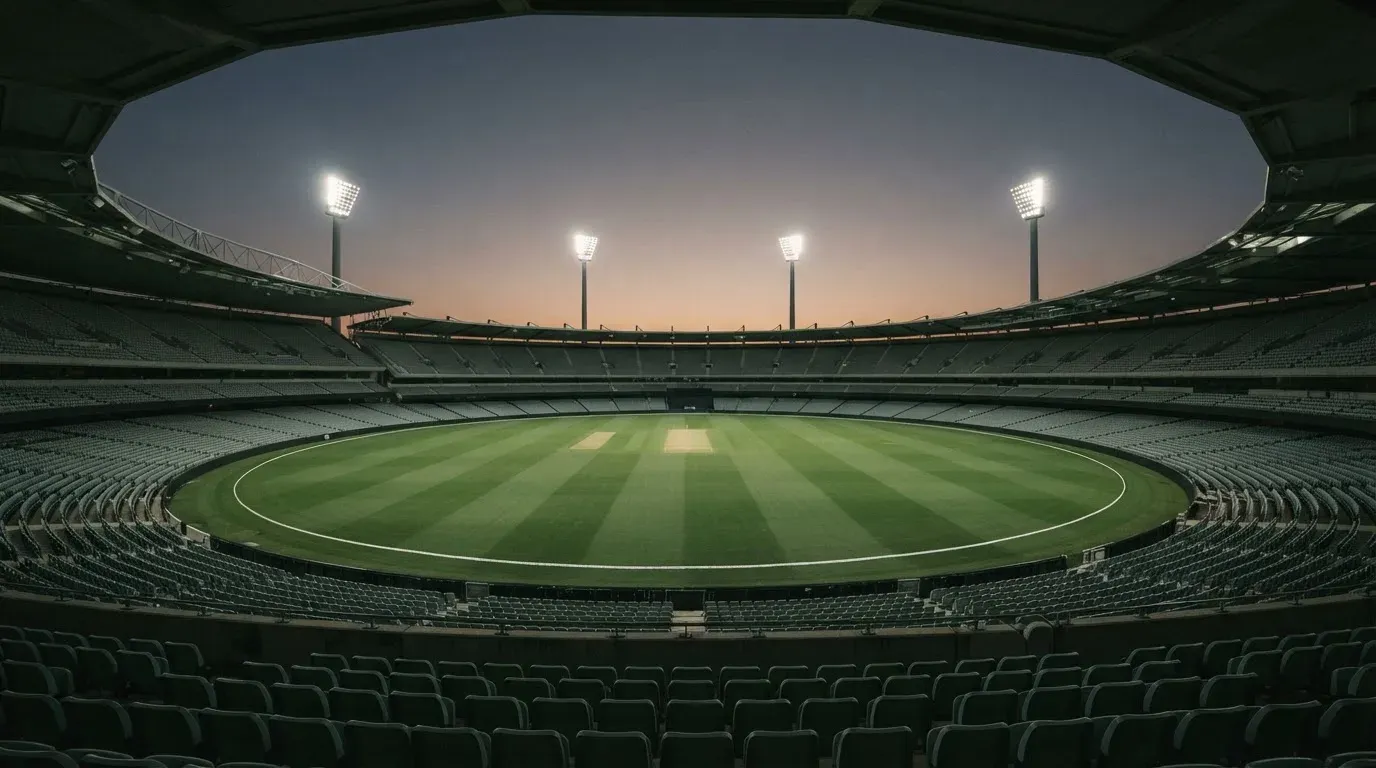
A Test match lasts up to five days, with each team batting a maximum of two innings — so up to four innings overall. Ninety overs are scheduled per day, and a match the side batting last cannot realistically chase down is a draw, not a loss. That single fact shapes the longest-format market: a Test book typically offers match odds on three outcomes (home win, draw, away win), not two, and a draw price at somewhere between 3.5 and 6.0 decimal depending on how lopsided the tie looks to the traders. Top batter and top bowler markets sit on each innings; session runs markets run off the day’s play.
A One Day International gives each side a fixed 50 overs to bat. The chasing side wins if it passes the target inside those overs; if scores are level when the chasing side is bowled out or runs out of overs the match is a tie. In rain-affected ODIs the Duckworth-Lewis-Stern method sets a revised target, and if too few overs are bowled (typically fewer than 20) the match is a no result and most markets are void. The 50-over format suits straight win/loss bookmaking and totals markets — over/under runs at the innings break, top batter, method of dismissal — because the boundary of the match is clearly defined by the 50th over.
Twenty20 gives each side a maximum of 20 overs (120 legal deliveries), with each bowler restricted to a maximum of four overs. A tied T20 match is decided by a super over, so the punter settles at full odds rather than seeing their stake returned. Twenty20 is the format around which the in-play market is densest: the bookmaker is repricing every few balls during a passage of play, and markets such as next over runs, fall of next wicket and batter to score the most runs over a span become realistic propositions.
Domestically, the Hundred uses fifteen six-ball overs per side, with each bowler limited to a fraction of the total; UK bookmakers treat it under their standard T20 lines. Vitality Blast uses the standard T20 format. Franchise leagues such as the IPL and PSL use the same format with the same market structure. The punter’s takeaway is straightforward: when the offer says “match winner” or “top batter” on a T20 fixture, the bookmaker is working with a defined overs limit and a known playing-field; when the offer is on a Test, the draw is part of the price.
The choice between formats is a choice between market types. A punter who likes long-form cricket needs a book that prices three outcomes for the match and offers a session market; one who likes T20 needs a book that prices in-play aggressively and offers a variety of batter props. Few books do both equally well.
Cricket betting under a Gambling Commission licence and the statute that frames the market
Betting on cricket in Great Britain is regulated under the Gambling Act 2005, which covers England, Scotland and Wales. Northern Ireland sits outside the Act under older legislation. Since the Gambling (Licensing and Advertising) Act 2014 an operator whose remote facilities are used in Great Britain must hold a Commission licence wherever it is incorporated — a Curaçao, Maltese or Gibraltar licence does not substitute. There is no statutory cap on the number of licences, no state monopoly and no state list of permitted sports or markets. A bookmaker serves customers in Great Britain if the customer can place a bet there; the licence tests that question.
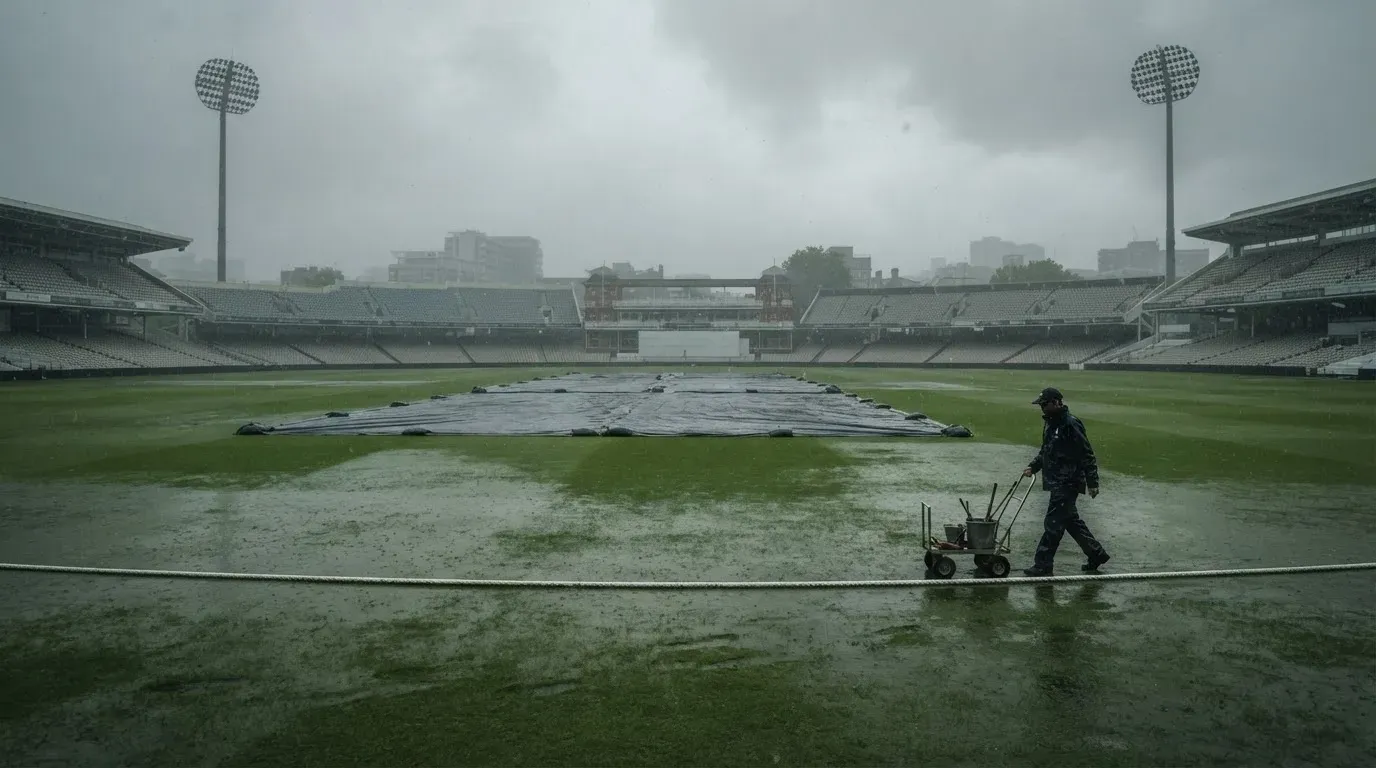
The Commission’s public register is the test of whether a brand is licensed. It is searchable by business name, trading name, account number or domain, and lists each licensee with the categories of remote activity they hold. Remote general betting standard (real events) is the category that covers an online sportsbook taking bets on real sporting fixtures; remote general betting standard (virtual events) covers randomly generated fixtures such as virtual horse racing; remote betting intermediary covers betting exchanges; remote pool betting covers tote-style products; remote general betting limited covers a restricted permit. The categories on an entry tell the punter what the brand is licensed to do, not just whether it is licensed.
The minimum age to bet is 18. Identity verification — name, address and date of birth — happens before a customer can deposit or gamble with a licensed operator, including when a free bet or bonus is involved. Credit cards have been banned for gambling in Great Britain since 14 April 2020, and that ban extends to credit-card-funded payments through an e-wallet, so a punter cannot route a credit-card deposit through Skrill or Neteller to a UK-licensed site. Debit cards and bank-based payments are not covered by that ban.
The wider consumer-protection frame is built from a stack of rules. The Licence Conditions and Codes of Practice (LCCP) lay down social-responsibility duties. A financial vulnerability check applies to licensed remote betting when a customer’s deposits minus withdrawals exceed £150 in a rolling 30 days; that check looks at public records such as bankruptcy or county court judgments, not income or credit history. Financial risk assessments — the affordability checks widely discussed in the press — sit in an announced, staged plan without a published start date. Operators must offer a gross deposit limit on a fixed time frame under the Remote Technical Standards, with a first phase live since 31 October 2025 and a second phase postponed to 30 September 2026; whether that second phase is live in practice is not pinned in this comparison.
Betting winnings in Great Britain are not taxed at the customer level (general information, not tax advice; a professional gambler should ask HMRC or a tax adviser). General Betting Duty is the operator’s tax on gross profits, currently 15% under the regime, with a new remote betting rate of 25% from 1 April 2027 — UK horse racing, self-service betting terminals, pool betting and in-person betting stay at 15% on the published policy paper. Whether operators pass duty on through odds is not established; that is a question about pricing rather than the law.
A licensed operator sits inside this frame. Unlicensed brands run on their own house rules: no GAMSTOP coverage, no Commission complaints route, no approved dispute-resolution body, no British consumer redress if funds are withheld, no duty to follow the bonus cap or the £150 vulnerability check. Enforcement against unlicensed operators is disruption-led — cease-and-desist notices, search-engine referrals, work with registrars and payment providers — and the Commission is pursuing court-order DNS blocking powers, not blanket ISP filtering. The framing for the punter is straightforward: licensed means the protections above, unlicensed means none of them. Neither label is “the safe choice” by default.
The licensed landscape for cricket in 2026, from the register at the date this comparison runs, looks like the table below. The licence-holder column matters because several trading names share a parent — Ladbrokes and Coral, for example — so the punter should check the entry behind each brand they bet with.
| Brand | Gambling Commission remote licence number and licence holder | What the operator’s own terms state on cricket and adjacent offers |
|---|---|---|
| Fitzdares | 000400-R-103839-030 — Fitzdares Limited | Cash out, accumulators, Lucky 15s, specials and ante-post markets; cricket listed in the app’s sport menu |
| Geoff Banks | 054095-R-330366-010 — GB Sports Advisors Limited | Live in-play prices and ante-post markets on future events, with the app published under GB Sports Advisors |
| BetVictor | 039576-R-319370-028 — BV Gaming Limited | Best Odds Guaranteed on UK and Irish horse racing; BetFinder and Smart Stats tools across the sportsbook |
| DAZN Bet | 048756-R-327274-019 — DZBT Limited | Deposits from £5 via debit card, Apple Pay, Paysafecard, Trustly and Skrill, from £20 via PayPal; no processing fees |
| William Hill | 039225-R-319373-015 — WHG (International) Limited | Best Odds Guaranteed on UK and Irish horse racing from 8am on race day, on singles and multiples |
| NetBet | 039170-R-319343-032 — Netbet Enterprises Limited | Daily Boosts, Profit Boosts and free bet offers, with a Bet Builder carrying instant dynamic odds |
| Coral | 054743-R-330863-014 — LC International Limited | Welcome offer £40 in free bets for a £20+ qualifying sports bet at minimum odds 2.0; free bets expire 7 days after issue |
| Midnite | 101839-R-342850-001 — Midnite Limited | In-play events, acca builder, popular accas and price boosts with maximum-stake limits; welcome offer £5 at EVS returns £25 free bets and 50 free spins |
| Star Sports | 009177-R-104555-019 — Star Racing Limited | Telephone trading on 08000 521 321 to open an account, place a bet or resolve an account query, plus email support |
| Paddy Power | 039439-R-319330-013 — PPB Counterparty Services Limited | The sportsbook covers football, horse racing, boxing, rugby, tennis, golf, darts, snooker and F1 |
The choice for a punter reading this table is not “which is the best.” Each licence number is a complete answer to the legality question. The interesting comparison is the second column: BetVictor and William Hill’s BOG sits on horse racing and does not extend to cricket as a matter of the offer, Midnite’s welcome offer is sized smaller than Coral’s, DAZN Bet’s deposit floor is the lowest of the ten. These differences do the work the licence line cannot.
Safer gambling tools at UK-licensed cricket bookmakers
Every brand in this shortlist sits inside the British safer-gambling frame. GAMSTOP — the national multi-operator online self-exclusion scheme — is a mandatory licence condition for online operators, so a punter who self-excludes through GAMSTOP blocks themselves from every one of the ten brands here, not just one. Self-exclusion periods run six months, one year, five years, or five years with auto-renewal; after the minimum period the exclusion stays in place for a further seven years unless the punter asks GAMSTOP to remove it. The scheme covers online sites and apps; betting shops use a separate service.
The other practical tools sit with each operator. Deposit limits — daily, weekly or monthly ceilings set by the punter — are a remote-technical-standards requirement and every licensed bookmaker offers them. Time-outs, reality checks and product-blockers (the ability to lock off casino or slots while keeping the sportsbook active) are typically available in the safer-gambling menu. Some operators publish a deposit-limit wizard during sign-up rather than waiting for the punter to find it. Product-blockers are not guaranteed at every brand; the punter who wants one checks the safer-gambling menu after sign-up.
The financial vulnerability check matters because cricket is a sport where small-stake in-play betting can rack up volume quickly. When a customer’s deposits minus withdrawals exceed £150 in a rolling 30 days, the operator runs a public-record check — bankruptcy, county court judgments, the Registers of Scotland and Northern Ireland equivalents — and may follow up with questions or impose a deposit limit while the check is open. That check is not a credit reference; it does not affect the customer’s credit score and does not look at income. It is a check designed to flag a punter who is spending more than they can credibly afford.
Help outside the operator sits with GamCare (which runs the National Gambling Helpline), GambleAware, the NHS gambling clinics and Gamblers Anonymous. Some brands in this shortlist surface those links more prominently than others — Fitzwilliam Sports, for instance, links to GambleAware, GamStop and Gamblers Anonymous from its footer — but the underlying services are independent of which operator the punter uses. The choice here is whether to set limits on the day of sign-up, when a punter is in the right frame of mind to do so, or after a bad run, when it’s harder.
The practical takeaway for a cricket punter is that the safer-gambling frame is built into the licence, so there is no “extra cost” of using a licensed brand versus an unlicensed one when it comes to consumer protection; the cost is that identity verification happens before the first deposit and again when cumulative spend rises, which adds a few minutes of friction to opening and topping up an account.
Welcome offers and cricket free bets — and the arithmetic behind the marketing
Welcome offers for cricket sit in two camps: free bets after a qualifying bet (Coral, Midnite are the clearest examples), and refund-style structures where a losing first bet is paid back as a free bet or bonus. Across both, the marketing language makes a generous offer sound unconditional. It is rarely so. Coral’s headline offer — get £40 in free bets when you bet £20 — demands a deposit and a sports bet of £20 or more at minimum odds of 2.0 (1/1), with the £40 in free bets issued within seven days and expiring seven days after issue. Midnite’s sports welcome offer asks for £5 on pre-match odds of 2.0 (EVS) or greater within fourteen days of sign-up, returning £25 in free bets plus 50 free spins valid for seven days. Both are real offers with real terms.
The promotion rules in force from 19 January 2026 cap wagering requirements on bonuses at 10x — a £10 bonus at 50x wagering needs £500 of bets to clear, but under the cap that ceiling is £100. Mixed-product promotions that require gambling on two or more product types — a “bet on football to get free spins” structure — are banned. Whether the cap extends to free bets with no wagering condition, and any cap on the monetary value of a bonus, are not pinned in the published rule set; a brand that says “no wagering” is making a market-level claim the punter verifies in the offer terms.
The free-bet structure itself is where the marketing language most needs reading. A free bet whose stake is not paid back with a win — the standard structure at UK licensed brands — settles only the profit at the price. A £10 free bet at 4.0 returns £30 in profit and £0 of the original stake; it is a real £30 win, not a £40 win. Treat that as the baseline, not as the headline. A “risk-free” bet refunded as a free bet is not a refund in money at the same price; it is a free bet on the next selection. Neither is a bad offer; both read differently once the maths is plain.
The arithmetic to value a free bet whose stake is not returned is straightforward: take the free-bet amount, multiply by (odds minus one), divide by odds, then apply the payout share of the market that price sits in. A £10 free bet at 4.0 on a cricket match winner priced into a market with a 95% payout share is worth £10 × 3.0 ÷ 4.0 × 0.95 ≈ £7.13 on average over many bets at that price. Higher prices widen the value per bet but settle less often, so the average balances out across the offer. The conclusion here is what the offer is worth on average — it never describes what any single bet wins.
A bonus cleared through required turnover is a different calculation. The required turnover is the bonus base multiplied by the wagering factor (the base being the bonus alone or the bonus plus the deposit, depending on the offer’s wording), and the number of bets is that turnover divided by the stake per bet, with only bets at or above the minimum price counting. Expected cost over the clearing period is the turnover multiplied by the margin of the market the punter is clearing it on. The expected cost is an average over many bets, not a guaranteed loss on one attempt.
The choice between operators on welcome offers is rarely about the headline number. Coral’s £40 in free bets for a £20 qualifying bet is more free-bet value than Midnite’s £25 for £5, but the £20 qualifying bet demands more bankroll and a minimum odds line. A punter with a small budget may prefer Midnite’s structure; a punter who would have bet on cricket anyway may prefer Coral’s. The marketing sounds generous on both; the choice is which constraint fits the punter’s actual habits.
Cricket betting apps, the App Store descriptions and the mobile browser alternative
Most cricket betting in 2026 happens on a phone. The app stores list each UK-licensed brand with a published description, and the differences between them are mostly cosmetic — the same brand on Android and iOS, the same betting markets in either — but the descriptions show what each operator chooses to feature, which usually aligns with what each operator does best. Midnite’s app description leads with in-play events, acca builder and price boosts; BetVictor’s leads with Best Odds Guaranteed on racing and the BetFinder tool; DAZN Bet’s sets out deposit floors; Geoff Banks’ foregrounds live in-play and ante-post. Each choice narrows in on the brand’s most marketable feature for a punter scrolling the store.
A mobile browser gives the punter the same markets without the app download, and three trade-offs come with that choice. First, the app usually exposes in-play markets and cash-out more quickly because the data connection is persistent; the browser depends on the punter keeping the tab open and the session alive. Second, the app can deliver push notifications — useful for in-play price moves and offer alerts, less useful when they become marketing spam. Third, the app is a separate download for every brand, so a punter holding accounts at three or four operators ends up with that many apps. Mobile browsers sidestep the clutter; apps shorten the in-play loop. The choice is which trade-off the punter accepts.
The verification flow on first sign-up happens on whichever channel the punter opens the account with. A debit-card deposit, a date-of-birth check, an address check and (often) a soft credit check for fraud-prevention purposes take a few minutes inside the app or on the mobile site. After that first sign-up, the punter can deposit and bet from either channel against the same balance.
For in-play cricket specifically, the app is the more practical channel. Twenty20 matches move quickly, odds change every delivery, and a punt in-play means timing matters. The browser version usually lags a beat behind the app during a busy passage of play. A punter who treats cricket as a TV-and-bet sport during an English summer probably wants the app open; a punter who picks one or two bets a day and never bets in-play does not need it.
The choice between operators on the app channel is mostly about which one matches the punter’s cricket habits. A punter who watches the Hundred live and wants a fast in-play book is well-served by Midnite, NetBet or Paddy Power’s app. A punter who bets mostly on outright tournament markets around the ICC events and on Test series is well-served by any of the ten brands here. The app that works best is the one that fits how the punter actually bets, not the one with the most downloads.
In-play cricket, live betting and cash out as a tool not a strategy
In-play betting on cricket is, in 2026, where most of the punter’s cricket turnover sits. The shorter the format, the more aggressive the in-play market. Twenty20 games produce a near-continuous stream of price changes from over to over, and Test matches settle around sessions and key wickets even though the underlying fixture runs for five days. Every UK-licensed brand in this shortlist offers in-play cricket; the differences are the depth of the secondary markets (next batter to be dismissed, runs off the next over, method of dismissal) and how quickly the price updates during play.
Cash out turns an unsettled bet into a settled position at a price the bookmaker offers at that moment. It is not free — the price the book offers includes its margin — and the offered price moves against the punter in the same way an exchange price does when the punter asks to lock in a position. A punter who uses cash out as a default for every in-play position will leave the book’s margin on top of the original price; the second decimal the offered price moves through is the price of using the tool. A punter who uses cash out selectively — to bank a profit on a strong position rather than to cut a loss — gets more from it. Treat cash out as a tool with a cost, not a strategy.
Cash out availability differs across brands. Fitzdares lists cash out among its app features; Paddy Power has long offered cash out across its main markets; Midnite exposes acca cash out alongside its single-position cash out, and price boosts on the operator’s site carry maximum-stake limits. NetBet’s app description highlights a Bet Builder with instant dynamic odds but does not name cash out among the headline features; the punter checks the live positions menu inside the app or on the mobile site to confirm whether cash out is on for the relevant market. Other brands in the shortlist fall somewhere on the same spectrum.
Live streaming is a separate, adjacent question. Some of these brands stream specific events — horse racing and greyhound streaming is well established, some football coverage sits behind a qualifying bet — but live cricket streaming is typically a rights-and-licence area that bookmakers engage with selectively, and most live cricket that a punter watches arrives through broadcast channels rather than bookmaker streams. The choice for a punter who wants to bet while watching the match is not whether the book streams it; it is whether the in-play prices update fast enough that the punter can act on what they see on TV.
Live betting tips — the websites and tipsters that publish “live cricket betting tips” — are not a different product from a pre-match tipster and are covered in the same section on strategy and prediction. Treat them as marketing for affiliate offers; the underlying advice does not change because the bet is in-play.
The choice across operators on in-play is the depth and speed of the in-play book, the aggressiveness of cash-out pricing and whether the acca builder and price-boost features extend to cricket or sit on football. A punter who treats T20 as their main bet needs a fast book and broad in-play markets; a punter who sticks to outright tournament betting barely needs either.
Cricket betting tips, predictions and what they can and can’t tell a punter
Cricket betting is more popular among punters than almost any other sport, and a deep ecosystem of tipsters, prediction sites and tip aggregators has grown around that interest. The honest framing is that a tip is one informed opinion about a probability, expressed as a price; it is not a forecast of certainty. No tipster, free or paid, removes the bookmaker’s margin that sits inside every decimal price line a punter backs.
What tips can do is steer a punter towards markets they had not considered. A tipster running a cricket model will often highlight a batter-prop or a session market that the average punter does not think to price; reading the model gives the punter a starting point rather than a finish line. The punter who reads several models against each other learns to spot prices that are out of line with their own view, and that is a real edge over betting blind.
What tips cannot do is prove that the tipster’s probability is right. Tips published online come with no audit trail; the punter who follows them has no way to verify a hit rate independently, and tipsters cherry-pick their wins. Where the tip is offered as part of a paid subscription, the punter is paying for an opinion, not for a track record the operator stands behind. The right frame is to read a tip the way a finance reader reads a sell-side note: as a starting point that the reader checks against their own view, not as an instruction to bet.
The component habits behind a profitable cricket punter are unglamorous. Specialising in one format — picking Tests or T20s, not both at random — gives the punter a deeper feel for the price lines over time. Keeping a written record of stakes and odds, settled and unsettled, lets the punter see whether they are beating the margin in the long run or just feeling lucky. Rejecting short-priced favourites on a market with a 5% margin is an open secret: a 1.20 favourite at 6.43% margin-priced on a coin-toss framework has a long-run edge built against the punter, not for them. Staking only what is affordable — and keeping that decision outside the moment of placing the bet — is the safer-gambling frame applied inside the punter’s own book.
The choice the punter makes on tips is how much of their own judgement to outsource. A punter who treats every tip as a suggestion to evaluate pays a small subscription fee for some starting points. A punter who treats every tip as an instruction loses money they cannot recover. The frame above does not guarantee outcomes; it improves the punter’s bankroll management, which is the part of betting the punter controls.
Cricket bet types, odds and the margin that lives inside the price
A cricket bookmaker’s markets split into a handful of families, each priced differently and built for a different reason. Understanding which family a bet belongs to is half the work of understanding whether the price is good.
Match winner markets price the outright result of the fixture. In a T20 or ODI the market has two outcomes (each side), in a Test it has three (home win, draw, away win). Top batter and top bowler markets price individual player performances, typically on each innings for Tests or on the match for shorter formats. Totals — over/under runs on the innings, on the match, on a session — price a numerical line. Method-of-dismissal markets and fall-of-wicket markets price specific cricket events. Outright tournament markets price the winner of an ICC event or a franchise league. Each family has its own margin profile; a margin on a match-winner line does not transfer to a totals line, and a margin on a Test match does not transfer to a T20 match-winner line.
The arithmetic of decimal odds is straightforward. The gross return on a winning bet is the stake multiplied by the odds; the profit is the gross return less the stake. A £10 stake at 3.0 returns £30 gross and £20 profit; a £10 stake at 1.50 returns £15 gross and £5 profit. Combination bets multiply the prices: a double at 2.0 and 3.0 is a 6.0 line, with the full stake returned only if both legs win. An each-way bet places two equal stakes — one on the win, one on the place — so the stake doubles and the settle runs separately on each leg.
The margin is the harder idea and the one that punter most needs. In a two-way market priced at 1.90 and 1.90 — a clean illustration, not a quoted price — the implied probability of each outcome is 1 ÷ 1.90, around 52.63%. The two implied probabilities add to 105.26%; that excess is the bookmaker’s margin, here about 5.26% of every unit staked. Equivalently, the payout share is 1 ÷ 1.0526 ≈ 95.0%, so the margin is 1 − payout share ≈ 5%. A more competitive market with a 2% margin would price at 1.97 and 1.97; a thin market with an 8% margin would price at around 1.96 and 1.96. Real cricket match-winner markets often sit closer to the 4–8% margin band depending on the fixture and the operator; the illustrative 5% figure above is the cleanest version of the same idea, not a quoted price.
The conclusion the maths supports — and nothing beyond it — is the answer to “what does the bookmaker keep of every unit bet on this market.” That is the gloss the formula yields, and it is the only claim the conclusion should make. A margin does not describe how likely a single bet is to win. A margin does not predict a single outcome. It is the long-run cost the punter pays to bet, all else equal.
To see the margin in a real odds line, sum the implied probabilities across all outcomes. For a T20 match winner priced at 1.85 and 2.05, implied probabilities are 54.05% and 48.78%, summing to 102.83%; the overround is 2.83%, implying a margin of approximately 2.8%. The punter who compares a handful of operators across the same fixture will see a spread — BetVictor at 1.85/2.05 (margin 2.83%) versus a less aggressive book at 1.80/2.10 (margin 4.34%) — and the spread is the margin difference. A smaller margin is not always a better bet; it depends on whether the punter’s own probability estimate differs from the implied one. But the margin is the price of being wrong that the punter pays in the long run, and it is the part of the price that cannot be beaten.
The choice across operators on price is not “which is cheapest.” A bookmaker offering margin A on match winners, margin B on totals and margin C on batter props has a different profile to one offering margin X on all three. The punter who bets predominantly on one family looks at the margin on that family. The punter who bets across several families looks at the operator’s overall price competitiveness. The maths above helps the punter make that comparison without trusting the marketing.
Fitzdares — premium bookmaker with cricket in the sportsbook
Fitzdares sits under Gambling Commission remote licence 000400-R-103839-030 (Commission account 400) in the name of Fitzdares Limited. The Commission’s register lists the categories as remote general betting standard on real events. The Fitzdares app, published under the brand, lists cash out, accumulators, Lucky 15s, specials and ante-post markets, with in-play live odds and a sport menu that includes cricket alongside horse racing, football, tennis, rugby, golf and American football.
The cricket product at Fitzdares sits inside a premium positioning rather than a mass-market one. The brand’s interface leans into ante-post markets on long-odds events, specials on the marquee fixtures, and accumulator combinations that often pull from more than one sport. A punter who likes a cricket-themed Lucky 15 during an Ashes series, or who wants an outright bet on the next T20 World Cup well in advance of the squad announcements, finds the Fitzdares markets organised for that kind of bet.
The choice Fitzdares fits is the punter who likes specials and ante-post markets rather than the punter who wants the deepest in-play T20 book on the high street. Cash out availability gives the in-play punt a safety valve, but the brand’s strength is the long-odds end of the book. For a punt on Test series winner or tournament top batter, Fitzdares is a reasonable fit; for a punt bet-by-ball on a Vitality Blast game, the punter may prefer a brand that focuses its in-play engineering more aggressively on cricket.
Geoff Banks — in-play and ante-post focus from a smaller operator
Geoff Banks’ book sits under Gambling Commission remote licence 054095-R-330366-010 (Commission account 54095) in the name of GB Sports Advisors Limited. The Commission’s register confirms remote general betting standard on real events. The Geoff Banks app, published by GB Sports Advisors Ltd, foregrounds live in-play prices and ante-post prices on future events, framing the brand around markets that are not yet on the high street.
Geoff Banks is a smaller operator in this shortlist, and that brings both a narrower market list (when a fixture isn’t in the Geoff Banks sportsbook the punter takes the bet elsewhere) and a closer feel to the trading desk. The Ante-post focus means a punter can take a price on a major tournament or a long-odds cricket outcome well in advance, which suits a punter who plans weeks ahead rather than one who fires off bets the night before a match.
The choice Geoff Banks suits is the punter who likes the feel of a smaller book and the ante-post markets that come with it. The punter who wants one app for everything across twenty sports may prefer a larger brand. The punter who wants to take a position on the next T20 World Cup top scorer six months out from the event finds Geoff Banks’ ante-post book a reasonable fit.
BetVictor — long-standing brand bringing horse-racing tooling to cricket
BetVictor sits under Gambling Commission remote licence 039576-R-319370-028 (Commission account 39576) in the name of BV Gaming Limited. This entry covers remote general betting standard on real events. The BetVictor app surfaces Best Odds Guaranteed on UK and Irish horse racing, enhanced live race streaming and a BetFinder feature for finding racing bets, alongside Smart Stats across the sportsbook.
The brand’s pitch to a cricket punter is the tooling rather than the headline cricket market. Smart Stats sits on top of major sports and gives the punter a deeper look at team and player data before staking; BetFinder-style navigation across the cricket section speeds up punt selection. Where BetVictor is a natural fit is on outright cricket markets and longer-form series — Test series winner, World Cup outright, top batter across a series — where the punt comes with research rather than in-play churn.
The choice BetVictor suits is the punter who uses research tools as part of the bet. Best Odds Guaranteed sits on racing and does not extend to cricket in the published terms, so the punter who wants BOG on their cricket bet is looking at the wrong offer; the punter who wants a deep sportsbook with statistical research tools is in the right place.
DAZN Bet — app-first sportsbook with low deposit floors
DAZN Bet sits under Gambling Commission remote licence 048756-R-327274-019 (Commission account 48756) in the name of DZBT Limited. This authorisation permits remote general betting standard on real events. DAZN Bet’s deposit floor is £5 via debit card, Apple Pay, Paysafecard, Trustly and Skrill, with PayPal deposits starting at £20 and no processing fees on any of those methods.
The spin-out from a sports broadcaster means DAZN Bet’s appeal is partly the broadcast adjacency — a punter watching a DAZN-streamed sport can bet into a DAZN-operated book — and partly the low deposit floor. The £5 minimum makes the brand accessible to a punter with a small budget, and the absence of processing fees on the deposit side is the kind of quiet practicality that matters when a punter is topping up several times a month.
Cricket is not the headline sport on this brand; the brand’s strength is the broadcast integration and the low deposit barrier, both of which matter to a new punter testing the waters. The choice DAZN Bet fits is the punter who values a low deposit floor and a clean deposit-flow, and who may already use DAZN for sport. For a punter whose main concern is the deepest cricket market, a more cricket-focused brand is a better fit.
William Hill — high-street heritage turned digital
William Hill sits under Gambling Commission remote licence 039225-R-319373-015 (Commission account 39225) in the name of WHG (International) Limited. The register records remote general betting standard on real events. William Hill’s Best Odds Guaranteed sits on UK and Irish horse racing from 8am on the day of the race, on both singles and multiples; the offer does not extend to ante-post, tote or pari-mutuel bets.
William Hill is the largest UK high-street heritage bookmaker, and the digital product carries that heritage forward: a deep sportsbook, broad market coverage including cricket, and a serious in-play book on the shorter formats. The punter who has walked into a William Hill shop and recognises the brand treats the digital product as a continuation. The on-course racing adjacency shows through BOG and through the racing section’s depth, both of which lean on a sportsbook built around horse racing first.
The choice William Hill suits is the punter who values a brand with a long track record and a familiar interface. The BOG offer does not extend to cricket in its published terms, so a cricket-specific betting shopper reads past that line; the punter who wants the biggest brand on the high street with a deep sportsbook and a strong racing adjacency has found a fit. For a punt on a T20 World Cup final, William Hill will price it; the punter’s question is whether the price is competitive on this fixture against the rest of the shortlist.
NetBet — boosts, free bets and a Bet Builder across the sportsbook
NetBet sits under Gambling Commission remote licence 039170-R-319343-032 (Commission account 39170) in the name of Netbet Enterprises Limited. The official record allows remote general betting standard on real events. NetBet’s app description highlights Daily Boosts, Profit Boosts and free bet offers, alongside a Bet Builder with instant dynamic odds and sports stats for major leagues.
The NetBet pitch to a punter is the ongoing promotional layer. Daily Boosts and Profit Boosts are price-bump offers on selected markets, free bet offers rotate through the week, and the Bet Builder gives the punter a same-game multi with a price that updates as legs are added or removed. The cricket product sits inside that package: a punter who likes to combine batter props or build a same-game acca on a T20 fixture finds the Bet Builder engineering aimed in their direction.
The choice NetBet suits is the punter who likes the active promotional layer and wants a Bet Builder that responds quickly. The punter who wants the absolute lowest margin on a cricket match-winner line is checking the price first and the offer second; the punter who treats offers as part of how they bet finds NetBet engineered for them. Cricket-specific depth is in the operator’s standard sportsbook; the Bet Builder may or may not extend to every cricket market depending on the fixture, and the punter verifies that in the app before staking.
Coral — mainstream welcome offer and a familiar sportsbook layout
Coral sits under Gambling Commission remote licence 054743-R-330863-014 (Commission account 54743) in the name of LC International Limited. The entry permits remote general betting standard on real events, plus remote betting intermediary (the exchange category). LC International also holds the Ladbrokes licence, which is why the Ladbrokes and Coral brands sit under one licence holder on the register; the punter’s screen shows two trading names and one parent.
Coral’s sports welcome offer is the headline get-£40-in-free-bets-when-you-bet-£20 structure: a deposit plus a qualifying sports bet of £20 or more at minimum odds of 2.0 (1/1), with £40 in free bets issued within seven days and expiring seven days after issue, for new GB customers who opt in. That is more free-bet value than several of the other welcome offers on this shortlist, at the price of a higher qualifying stake and a minimum-odds threshold the punter’s selection must clear.
The choice Coral suits is the punter with a £20 bankroll behind the welcome offer, who is happy to find a cricket selection at 2.0 or longer, and who values the larger free-bet chunk once it’s in the account. The free-bet expiry — seven days from issue — is short enough that the punter needs to use the offer in the same week it lands. For a punter who treats cricket as a single-sport focus, the layout is familiar from a long line of UK high-street sportsbooks; the cricket section sits inside the same sportsbook other brands use, with the standard match winner, top batter, top bowler and innings markets.
Midnite — newer UK brand with price boosts and acca tooling
Midnite sits under Gambling Commission remote licence 101839-R-342850-001 (Commission account 101839) in the name of Midnite Limited. The official record authorises remote general betting standard on real events. Midnite’s site and app foreground in-play events, an acca builder, popular accas and price boosts with maximum-stake limits, alongside a sports welcome offer: new customers betting £5 or more on pre-match odds of 2.0 (EVS) or greater within fourteen days of sign-up receive £25 in free bets and 50 free spins, valid for seven days.
The Midnite pitch is the modern app wrapper around a standard sportsbook. Price boosts on selected selections carry the maximum-stake limits that any boosted offer carries (a boost at a low stake ceiling is often a marketing headline rather than a meaningful value play); the acca builder lets the punter combine a T20 fixture with other cricket or non-cricket selections. The welcome offer is smaller than Coral’s in headline terms (£25 vs £40) but the qualifying stake is also smaller (£5 vs £20) and the qualifying odds are the same (2.0).
The choice Midnite suits is the punter with a small budget who wants a modern app, who likes acca-building and price boosts, and who is happy to take the smaller welcome offer for the lower entry stake. The in-play section is engineered for fast in-play turnover on the shorter formats; the punter who treats T20 as their main bet is in Midnite’s wheelhouse.
Star Sports — phone-led service for punters who like to talk to a trader
Star Sports sits under Gambling Commission remote licence 009177-R-104555-019 (Commission account 9177) in the name of Star Racing Limited. The entry permits remote general betting standard on real events. The Star Sports app surfaces a telephone-trading desk on 08000 521 321: punters can ring to open an account, place a bet or resolve a query, with email support at [email protected] alongside.
Star Sports sits in the smaller end of this shortlist, with a heritage closer to on-course racing than to the mass-market online sportsbook. The phone-trading desk is a genuine differentiator for a punter who prefers to talk through a bet before staking — a price request, an ante-post negotiation, a settlement query — and who is happy to make a phone call rather than navigate an app. That mode of betting still has a place in 2026, both for the punter who prefers it and for markets where the phone desk can negotiate a price on a bigger stake.
The choice Star Sports suits is the punter who values the trader relationship and the phone channel over the slickest app. Cricket sits inside the standard sportsbook at Star Sports; the punter who wants a richer in-play T20 book or a deep acca builder is looking at the rest of the shortlist, while the punter who wants to ring a trader to back a horse or place a price on a Test series winner finds the right fit at Star Sports.
Paddy Power — Irish-UK marketing heavyweight with a deep sportsbook
Paddy Power sits under Gambling Commission remote licence 039439-R-319330-013 (Commission account 39439) in the name of PPB Counterparty Services Limited. The register lists remote general betting standard on real events. The Paddy Power Sports Betting app, published by Paddy Power PLC, foregrounds a sportsbook covering football, horse racing, boxing, rugby, tennis, golf, darts, snooker and F1.
Paddy Power brings the heaviest marketing weight in UK and Irish betting, with promotional offers and price-boost style mechanics frequent across the sportsbook. The brand’s edge for a cricket punter is the depth of the in-play book and the volume of promotional offer cadence around major events — World Cup windows, Ashes series, marquee IPL fixtures. The operator’s terms offer price boosts with stake limits similar to other operators; the same caveat about boosted offers at low stake ceilings applies. The PPB Counterparty Services Limited licence holder is part of the Flutter group, with Betfair sitting under a related structure; that does not change how a Paddy Power punter bets but explains why Betfair’s exchange sits in the same family.
The choice Paddy Power suits is the punter who likes a high-promotional sportsbook with strong in-play engineering and who is happy to take the offers or pass on them. Cricket is part of the broader sportsbook rather than a featured sport; the punter who treats cricket as a single focus and one sport among many finds the brand’s deep sportsbook and active promotional layer a reasonable fit, while the punter who wants cricket-specific tooling may prefer Midnite or BetVictor’s app-first experience.
Frequently asked questions
What’s the simplest way to start cricket betting at a licensed UK bookmaker?
Pick a Gambling Commission-licensed brand, complete identity verification on sign-up, deposit by debit card or a bank-based method (credit cards are banned for gambling in Great Britain), and stake a small amount on the match-winner market — the simplest cricket bet. Decimal odds below 2.0 mean the favourite; above 2.0 mean the outsider.
What should a bettor check before signing up with a cricket bookmaker?
Confirm a Gambling Commission remote licence on the public register, then read the welcome offer’s qualifying bet and minimum odds, the free-bet expiry and any wagering rule. Check whether the operator’s market depth for Tests, ODIs and T20s covers the tournaments the bettor follows, and whether payment methods include debit card and a bank-based option.
Is there a cricket betting strategy that wins consistently?
No strategy removes the bookmaker’s margin, which is built into every price. Specialising in one format, keeping a written record of stakes and odds, rejecting short-priced favourites that return less than the margin over many bets, and staking only what is affordable are habits that improve bankroll management. They do not guarantee outcomes.
How can it be verified that a bookmaker holds a Gambling Commission licence?
Search the Gambling Commission’s public register by business name, trading name, account number or domain. An entry listing a remote general betting standard licence for Great Britain passes the test; absent or unverified entries do not. The category line tells the reader whether the licence covers sports betting, exchange activity or a limited permit.
How is a settled cricket bet’s return calculated from the stake and the odds?
At decimal odds, gross return equals stake multiplied by the odds. Profit is the gross return less the stake. To convert a fractional price a/b to decimals, divide a by b then add one — 5/1 becomes 6.00, evens (1/1) becomes 2.00. Each-way doubles the outlay with separate settle on the win and place parts.
Rugby, cricket & Gaelic – oddsguaranteed
Content created by the «oddsguaranteed» team
