
Volleyball betting tips 2026 — building a price, not a prediction
 Available in US

Anyone searching for volleyball betting tips is usually after a pick. This page takes a different line. It treats the tip as the output of a process — form, statistics, line-ups, the market’s own odds — and walks that process out loud, so the reader can judge what is behind any prediction they read, on any site, in any chat group. The same five ideas do most of the work: a value bet is a price above the true probability once the bookmaker’s margin is stripped out, a betting tip is only ever an estimate, bankroll discipline is what keeps the estimate from ruining the bettor, no tip is ever certain, and betting is no income. Everything else on the page sits under those.
Data current as of October 30, 2026, verified against the Gambling Commission’s public register of remote operating licences.
The sport the bet is on
Volleyball is one of the more peculiar sports to bet on because the structure of a match is so tight that price moves hinge on small things — a rotation, a serving run, a substituted libero — rather than the long swings of a football match. A side has six players on the court at any moment, and the match is the best of five sets. Sets one to four go to 25 points, with a side needing a two-point lead to take the set; the deciding fifth set is to 15, with the same two-point rule. Substitutions are tightly rationed, and a coaching decision in the second technical timeout of a tight set can shift a price within a rally.
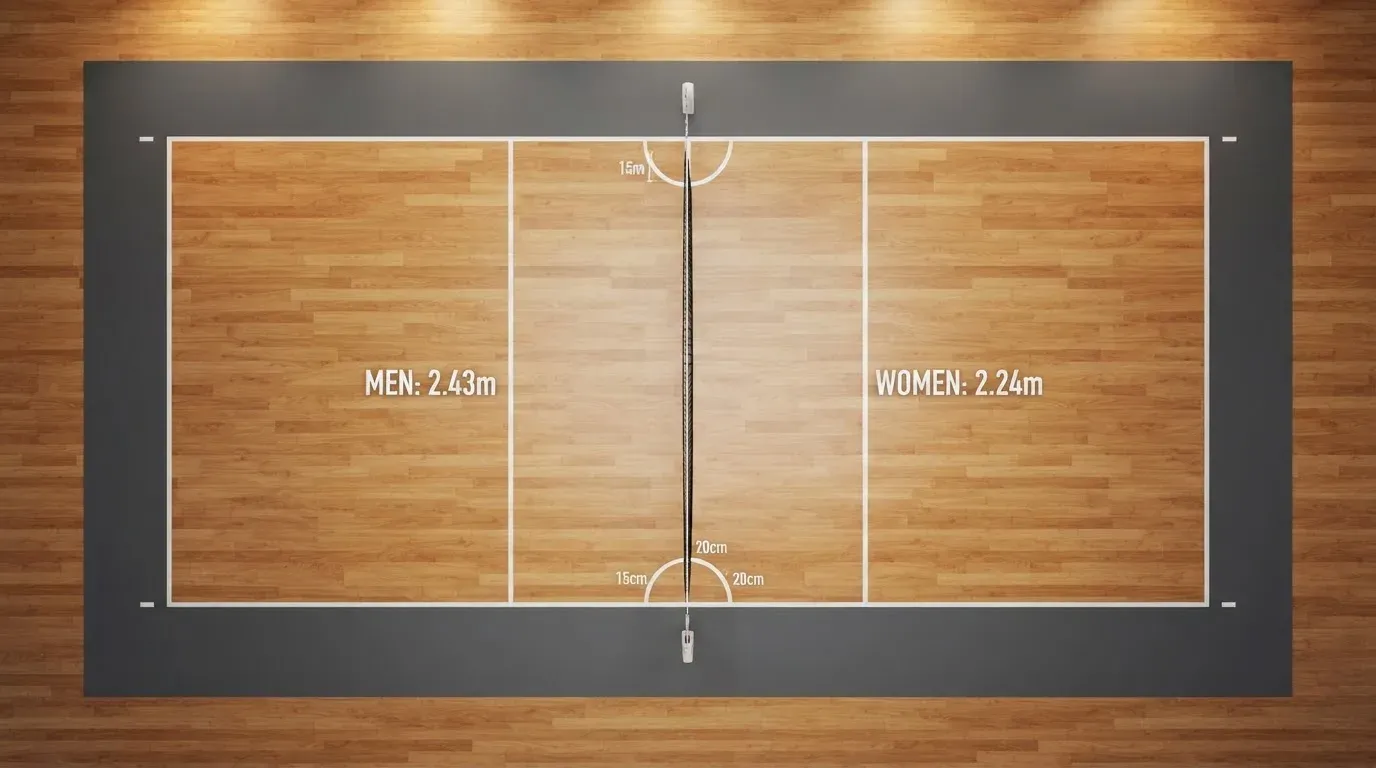
The court itself is small. Nine metres by 18, divided by a net that sits at 2.43 metres for men and 2.24 metres for women. Beach volleyball, played two-a-side on a sand court, has a different shape and a different rhythm: wind, sun and the wider gaps on the court turn the in-play price into a more volatile read. The data and the markets that follow are about the indoor game unless stated.
Volleyball has been on the Summer Olympic programme since the Tokyo games in 1964; beach volleyball was added at Atlanta in 1996. The FIVB — the Fédération Internationale de Volleyball — runs the international calendar underneath the IOC, and most of the league and federation competitions the UK bookmakers actually price sit beneath one of the continental confederations (CEV for Europe, NORCECA for North and Central America and the Caribbean, AVC for Asia and Oceania, CAVB for Africa, CSV for South America) and their domestic federations. Knowing which confederation and which domestic league a fixture belongs to is part of how a serious bettor separates the well-priced match from the thin one — because coverage and liquidity vary sharply across them, and a thin market is a market whose price has been set with less information behind it.
The ranking at a glance
The other ten sections of this page work through what the bets cost, where the law sits, what an offer really pays and how a live price behaves. First, the shortlist of bookmakers the page reviews for the reader who wants volleyball on a UK-licensed site in 2026. Each one is a Gambling Commission licensee for remote general betting standard (real events), and each one is paired with what its own terms say about the key the page covers. The set is a starting point, not a verdict.

| Operator | Gambling Commission remote licence | What the operator’s own terms say about volleyball betting |
|---|---|---|
| Hollywoodbets | 053028-R-330019-013 (account 53028), held by Hollywoodbets International UK Limited | Welcome offer is a stake-back as a free bet on a first losing accumulator of 3+ legs at minimum odds of 4/1; settled within 7 days |
| Unibet | 045322-R-324275-019 (account 45322), held by Platinum Gaming Limited | Welcome offer is £40 in free bets for a £20 qualifying bet at minimum odds of 2.0 (1/1); free bets expire within 7 days |
| Betfred | 039544-R-319290-010 (account 39544), held by Petfre (Gibraltar) Limited | App lists Bet Builder, Sub Switch, Racing Post data, Extra Places, live casino and bingo |
| Kalooki Sportsbook | 057730-R-333396-005 (account 57730), held by Kalooki Sportsbook Limited | Terms name instant bank-transfer withdrawals, Best Odds Guaranteed on UK and Irish racing, in-play betting, daily boosts |
| QuinnBet | 061011-R-335683-004 (account 61011), held by QuinnBet (Gibraltar) Limited | Free bets valid for 7 days from credit, usable on any market at minimum odds of 1/2 (1.5), maximum odds of 50/1 |
| BetMGM | 039198-R-319450-029 (account 39198), held by LeoVegas Gaming PLC | Welcome offer is four £10 free bets (two football accas of 4+ legs, two sports multiples of 2+), valid for 7 days |
| Spreadex | 008835-R-104580-022 (account 8835), held by Spreadex Limited | New customer offer is £60 in free bets for a £10 fixed-odds bet, usable across fixed odds and spread betting; qualifying bet within 28 days |
| Swifty Sports | 058957-R-334734-006 (account 58957), held by Swifty Global (UK) Ltd | Lists Best Odds Guaranteed, Cash Out, daily price boosts, live streaming and in-play betting |
| BetVictor | 039576-R-319370-028 (account 39576), held by BV Gaming Limited | Lists Best Odds Guaranteed on UK and Irish racing, enhanced live race streaming, BetFinder and Smart Stats |
| Fafabet | 057385-R-333191-006 (account 57385), held by Taichi Tech Limited | Pays Best Odds Guaranteed on UK and Irish racing from 9am on race days if the starting price exceeds the original price |
The table is a layout, not a recommendation. Three things are worth pulling out before the operator write-ups below. First, every entry above carries a Gambling Commission account number; that is the line a reader takes to the Commission’s public register to confirm a brand is licensed today, because licences change and the register is the only test that holds. Second, the welcome offers the table names are described from each operator’s own published terms on the day the page was checked, and each one expires within a week or so — the kind of short shelf life a reader should respect before assuming any quoted offer still stands. Third, the right-hand column is what the operator chooses to say about the key the page covers; where it is silent — none of the cards above publishes a “volleyball-specific” clause on its homepage — that silence is itself a fact, and it is the reason the operator reviews below read what they read.
What the bookmaker’s margin actually is
The number a bookmaker publishes as a price is not a probability. It is a probability with a margin tucked inside it — the slice the book keeps, on average, of every pound staked on a market. Strip the margin out and you get the bookmaker’s own view of the underlying chance. Compare that view to your own and the difference is value, or the absence of it.
The arithmetic is mechanical. Take a two-way market priced at 1.90 against 1.90 (decimal odds; in fractions, 9/10 against). The “true” probabilities the prices imply are 1 ÷ 1.90 = 0.5263, on each side, which sums to 1.0526. That extra 5.26 % is the bookmaker’s margin — the overround. It is the cut the book takes for arranging the bet, and it lives inside every price it quotes. The payout share to bettors is the inverse: 1 ÷ 1.0526, roughly 95 % of stakes back on a perfectly balanced book. On volleyball, where margins are thin by sport standards, two-way match winner markets typically come in around 5 % to 8 % overround; set handicap and totals markets run a touch higher; the small-card live markets during a single set can run higher still, because the price has had less information behind it.
Why it matters: a tip that looks good against the headline price may look ordinary once it is compared to the “fair” price with the margin removed. A reader who only reads the published odds is comparing their estimate to a probability that is already biased against them.
Where the UK law sits around it
The Gambling Commission regulates commercial gambling in Great Britain under the Gambling Act 2005, with the framework updated since by the Gambling (Licensing and Advertising) Act 2014. Since 2014 any operator whose remote facilities are used in Great Britain needs a Commission licence wherever the operator is based — a Curaçao, Maltese or Gibraltar licence is not a substitute. The point of consumption rule is what made the offshore loophole disappear; what remains is enforcement, which is disruption rather than blocking, and a set of consumer rights that exist only because the licence does.
Northern Ireland sits outside the Gambling Act 2005 and has its own older regime; for the rest of the UK, “GB-licensed” is the phrase that matters. The Commission’s public register is the test of who holds a licence: searchable by business name, trading name, domain or account number, and it is the only place a reader should check before trusting any brand. Licensed operators use .com alongside .co.uk, so a domain alone proves nothing.
The minimum age for betting with a licensed operator is 18, and identity is verified before the first deposit or bet — including with a free bet or a bonus, and not only when real money is on the line. Credit cards have been banned for gambling in Great Britain since 14 April 2020, including credit-card-funded payments through an e-wallet; debit cards and bank-based payments are not covered by the ban. There is no statutory cap on stakes in sports betting; operators set their own maximum stakes and may restrict customers.
What “licensed” buys the bettor
A licence is not a badge; it is a bundle of duties. Three of them sit close to a bettor’s daily use:
GAMSTOP, the national multi-operator online self-exclusion scheme, has been a mandatory licence condition for online operators since 31 March 2020. A self-exclusion is for six months, one year, five years, or five years with auto-renewal, and after the minimum period the exclusion stays in place for a further seven years unless the customer asks GAMSTOP to remove it. It covers online sites and apps; betting shops run a separate offline service.
Financial vulnerability checks, under LCCP condition 3.4.4 in force since 30 August 2024, apply to licensed remote betting when a customer’s deposits minus withdrawals exceed £150 in a rolling 30 days (since 28 February 2025). The check is a public-record check (bankruptcy, county court judgments), not an income check and not a credit reference check. Wider financial risk assessments — the “affordability checks” the press has covered — were announced by the Commission on 7 July 2026 in a staged plan with no start date.
Deposit limits, under RTS 12, require operators to offer a gross deposit limit on a fixed time frame. The first phase applied from 31 October 2025; a second phase was postponed to 30 September 2026, and whether that phase is live today is not established by the page. Limits are the customer’s choice — there is no state-set deposit or loss ceiling.
A player who uses a GB-licensed operator gets GAMSTOP coverage, the Commission’s complaints route, an approved alternative dispute resolution body, and the protection of the bonus rules that follow. A player who uses an unlicensed offshore brand gets none of those, and a real risk that funds are withheld without British consumer recourse.
The bonus rules that bite
The Commission and the CAP/BCAP codes govern how offers are marketed. Two rules affect the value a reader actually receives from a “free bet” or a “bonus”:
Wagering requirements on bonuses are capped at 10x since 19 January 2026. A £10 bonus with a 50x wagering requirement used to demand £500 of qualifying bets; under the cap, no more than £100 of qualifying bets can be required to clear that bonus. The cap applies to bonuses with a wagering condition. Whether it applies to free bets with no wagering condition, and any cap on the money value of a bonus, are not established.
Mixed-product promotions are banned. An offer that ties two product types together — “bet on football to get free spins”, “deposit for bingo to get a sports free bet” — is not permitted.
The advertising rules around bonuses are not about whether the offer exists but how it is shown: marketing must be socially responsible, must not strongly appeal to under-18s, and no one who is or seems to be under 25 may feature in the advertisement in a gambling role. The rule concerns who may appear, not who may bet.
The tax line that matters to the punter
Betting winnings are not taxed on the customer in Great Britain. The bookmaker pays General Betting Duty, currently 15 % on gross profits, on the bets it takes. From 1 April 2027 a new remote betting rate of 25 % applies within that duty, while remote bets on UK horse racing, self-service betting terminal bets, pool betting and in-person betting stay at 15 % (HM Government policy paper of 26 November 2025). Until 1 April 2027 the remote rate stays at 15 %. Whether operators pass duty through in their prices is not established, and the page does not write that the player is charged duty. A professional gambler should ask HMRC or an adviser; for the reader of this page the headline is that a winning bet pays back what the price says, with no further tax to set against it.
Responsible gambling and the lines a reader should hold
Betting is entertainment that costs money. Saying so is not a disclaimer, it is the framing that keeps the rest of this page honest. Three lines a reader should hold:
A budget is set before the first bet, and a stop-loss is set at the same time. The stop-loss is the point at which the betting session is over regardless of the result. Both numbers are written down. A bettor who does not have those numbers is the reader most likely to lose more than they came to.
A tip is a hypothesis, not a fact. A prediction that comes with conviction is the same prediction as one that comes with caveats — the conviction is in the marketing, not in the underlying numbers. The arithmetic that produced the tip is the test, not the confidence of the writer.
A break is taken when the bet stops being fun. GamCare runs the National Gambling Helpline; GambleAware signposts treatment; the NHS gambling clinics work with problem gamblers in person; Gamblers Anonymous runs peer support in most cities. GAMSTOP is the multi-operator block at the inside points it sits behind. Each one is free, confidential and quicker to reach than the next bad bet.
Help in plain English:
| Service | What it does | How to reach it |
|---|---|---|
| GamCare | National Gambling Helpline, advice and counselling | 0808 8020 133 (free, 24/7) and live chat on gamcare.org.uk |
| GambleAware | Independent information and signposting to treatment | gambleaware.org |
| NHS gambling clinics | Specialist NHS treatment for gambling harm | Referral via a GP or self-referral through the NHS |
| Gamblers Anonymous | Peer-support meetings across the UK | gamblersanonymous.org.uk |
| GAMSTOP | Multi-operator online self-exclusion (six months to five years) | gamstop.co.uk |
A reader who is in two minds about whether the line has slipped is the reader who should make the call. The Helpline is free, and the conversation is confidential.
Crypto, anonymity and where UK rules leave each
Cryptocurrency betting has a particular appeal on paper: deposits and withdrawals clear in minutes, no card statement shows the name of the bookmaker, and the wallet sits outside the banking system. None of those qualities change the legal frame a UK bettor lives inside.
A licensed GB operator must verify identity before the first deposit, with a free bet or bonus covered by the same rule. That means a GB-licensed site is not anonymous to the operator — name, address and date of birth are confirmed before any gambling is allowed. A crypto-funded deposit at a licensed site is still a deposit by a verified customer, and the AML rules the operator works under still apply. A bitcoin wallet is not a passport.
An unlicensed offshore brand that takes bitcoin accepts deposits without verifying the bettor’s identity, and that is part of what it sells. It is also what removes the protections the previous section named: no GAMSTOP, no Commission complaints route, no British dispute resolution, no application of the 10x bonus cap, no application of the £150 vulnerability check, and a real risk that winnings are not paid.
The honest summary: crypto at a GB-licensed site is a payment method with a different settlement time, and the rules on identity, age and bonus caps still apply. Crypto at an unlicensed offshore brand is the opposite of every protection this page has described, and the speed of the payment does not undo that.
Bonuses and free bets — what an offer is really worth
A welcome offer looks like free money. It is rarely that. Three numbers do most of the work:
The qualifying bet. To unlock the free bets or the bonus, the customer places an initial bet at or above a minimum stake, often £10 or £20, at minimum odds (commonly 1/2, 1/1 or 4/5 in fractions, or 1.5, 2.0 or 1.8 in decimals). The minimum odds condition screens out near-certain bets that would not give the bookmaker any new information about the customer. A reader who ignores it finds the free bets never credit.
The free bet or bonus itself. A free bet is a stake the operator gives, with the winnings paid but the stake usually not returned. A bonus is a cash amount credited to the balance after qualifying, with conditions on how it converts to withdrawable cash. They are different products. A “risk-free” offer that refunds a losing stake as a free bet is a free bet by another name: the customer is still out the stake, and the free bet has its own conditions.
The conditions. The turnover requirement (how many times the bonus must be staked before it converts), the minimum odds on each qualifying bet, the deadline (often 7 days from credit), the cap on winnings from a free bet, the list of eligible markets (Trixies, Patents and Yankees are excluded by some books), and the list of payment methods that qualify (e-wallets are sometimes excluded from the welcome offer). Each one is a place the offer’s headline value can shrink.
The wagering cap since 19 January 2026 caps turnover requirements at 10x. A £10 bonus with a 50x wagering requirement needed £500 of qualifying bets. Under the cap, no more than £100 of qualifying bets can be required to clear that bonus. The cap applies to bonuses with a wagering condition; whether it applies to free bets with no wagering condition is not established.
Worked scenarios
Scenario A — Hollywoodbets’ first-bet stake-back: deposit and place a first accumulator of 3+ legs, minimum odds of 4/1, stake £10. If the bet loses, the stake is returned as a free bet of up to £30; one free bet per customer, settled within 7 days. The reader who backs an outsider at 4/1 knows roughly a fifth of those bets win — the rest pay back the £30 free bet, whose value then depends on how it is used.
Scenario B — Unibet’s £40 in free bets for a £20 qualifying bet: deposit and place a sports bet of £20 or more at minimum odds of 2.0 (1/1), via debit card or instant bank transfer. £40 in free bets credit on settlement of the qualifying bet, expiring within 7 days of issue. The qualifying bet at 1/1 is roughly a 50/50 proposition; the free bets are the headline, and the clock starts the moment they credit.
Scenario C — Spreadex’s £60 in free bets for a £10 fixed-odds bet: deposit and place a £10 fixed-odds bet, qualifying bet placed within 28 days of opening the account. The £60 in free bets is usable across fixed odds and spread betting. Spread betting is a different product and is regulated by the FCA, not the Commission — the section on spread betting below covers what that means.
Scenario D — BetMGM’s four £10 free bets: deposit £10 or more and place a sports bet within 7 days; receive four £10 free bets — two football accumulators of 4+ selections and two sports multiples of 2+ — each valid for 7 days, minimum odds apply, opt-in required. The structure hands the reader four separate expiries to track.
The pattern across all four: the headline is the free bet value; the test is whether the qualifying bet, the minimum odds, the expiry and the eligible markets line up with what the reader actually bets on.
Free bet value, arithmetically
The value of a free bet whose stake is not returned is a function of the price it is used at and the margin on that market. Take a £10 free bet at decimal odds of 4.00 on a market with a 95 % payout share. The expected value is £10 × (4.00 − 1) ÷ 4.00 × 0.95, which comes to £7.13. That is the average worth of the free bet across many uses at that price on a market of that margin; any single use can pay more or pay nothing. A free bet used at longer odds is worth more on average, used at shorter odds is worth less; a free bet used on a market with a higher margin is worth less than the same free bet on a market with a tighter margin. The reader who treats the headline number as cash is the reader who gets caught by the conditions.
Live betting and cash out on volleyball
Volleyball is a sport built for in-play. The match is short — a sweep of a four-set match is around 90 minutes — the points come fast, and the momentum inside a set is visible enough that a market that prices the next set, the next 10 points or the next set winner reacts quickly to a serving run.
The mechanics are familiar: the price for the next set opens at the start of the set and updates through it; cash out lets the customer close the bet before the set is over, at a price the bookmaker sets at that moment. Cash out is the bookmaker’s option, not the customer’s right — the price is the operator’s, and it can be withdrawn on any market at any time. A reader who plans to cash out a winning in-play position needs to know the price is offered when they look at it, not at the moment they wanted it.
Live streaming of volleyball is not universal. Where a bookmaker offers it, it is usually for top-tier competitions: the national leagues of the bigger European countries, the CEV Champions League, and selected FIVB tournaments. The lower the league, the less likely live pictures are. For most matches, the in-play page is numbers, not video.
What to read in an in-play price
Three things to read off the in-play screen, in this order:
The score. The score of the set tells the reader which side has the momentum and which side is serving — the serving side wins roughly two-thirds of the points in elite volleyball, because the side-out is harder than the side-in. A 16–12 lead on serve is not the same position as a 16–12 lead on reception.
The timeout. Each set has two technical timeouts, at the first side to reach 8 points and at the first to reach 16. The coach’s substitutions and the team’s reaction are the visible signals that a price has not yet caught up with.
The rotation cycle. Six positions, six rotations; the opposite hitter and the outside hitter move through the front row in turn. A price that has not priced a setter sub is a price with a hole in it.
Cash out on a volleyball in-play bet
The cash out value is a price the operator sets, and it sits inside the operator’s margin the same way the pre-match price did. A cash out offered at 1.50 on a position that was 2.20 at placement is not the operator paying out at the true probability — it is the operator paying out at a probability that includes the next few rallies of margin. The reader who cashes out regularly is the reader who pays the in-play margin again and again.
A second-order point: a bet that is cashed out early does not credit any free bet refund, does not count towards a turnover requirement on a casino bonus, and usually does not trigger any “acca insurance” leg. A reader who uses cash out as a routine exit is selling away the value of the offer they claimed to use.
How a prediction is built
A prediction is the output of a process. The process is the same whether the bettor does it once a week or once a season, and the same five inputs do most of the work. None of them is a tip and none of them is certain.
Form. Recent results matter more than results from earlier in the season, because volleyball squads rotate heavily and a team in February is often a different team from the team in November. The last five matches are the standard read; the last ten are a longer view.
Statistics. Kill efficiency, block count, ace-to-error ratio, reception percentage and dig efficiency are the headline advanced stats. Each is published by the bigger federations and by specialist volleyball statistics services. A team with a kill efficiency above 0.300 and an ace-to-error ratio above 1.5 is in good form; the same numbers across both sides predict the match result with reasonable accuracy on a settled market.
Line-ups. Volleyball is substitution-heavy but starting-line heavy: the starting six sets the tone and the bench closes the gap. A team that has rested two starters the night before a midweek fixture is a different team from the one that played the weekend before. Line-ups are published by the bigger federations an hour or two before first serve; the smaller leagues publish them closer to the match, or not at all.
The market’s own odds. The price the bookmaker publishes is the consensus view of a panel of bettors, with margin inside it. Where the bettor’s own estimate differs from the published price by more than the margin, there is a value bet. Where it differs by less, there is none. The arithmetic is the section on the margin, applied to the specific match.
The conditions. Where is the match being played? Is it a home tie or away? Indoor volleyball removes weather as a factor, but travel does not — a team flying in from a different continent has a known adjustment period that the home side does not. What is at stake? A group-stage match at the end of a tournament is not the same match as a knockout tie; rotations widen and the price drifts.
The mistake the tips make
Most published tips are right about the match, and wrong about the value. A team at 1.40 to win a match they win 80 % of the time is a team the bookmaker has already priced to win 71 % of the time. There is no value in backing the favourite at 1.40. The reader who follows the tip without checking the price has backed the right team at the wrong number.
The corollary is the trap on the other side: a tip that the favourite wins is a tip the reader can place at the price the bookmaker quotes, which is the price the bookmaker has set with a margin in it. A value bet requires the bettor’s estimate of the probability to be above the bookmaker’s, by more than the margin.
Bankroll discipline
Bankroll discipline is the part of the page that decides whether the bettor is in the game a year from now. Three rules:
The stake is a fixed percentage of the bankroll, often between 1 % and 5 %, regardless of how confident the tip feels. A 3 % stake on a £200 bankroll is £6. Confidence is not a multiplier on the stake.
The stake is reduced, not raised, after a loss. A 1 % stake after a losing run is the right discipline; a 5 % stake after a losing run is a chase.
The tip is logged, with the price at which it was placed, the stake and the result. A tipster who does not log cannot know whether their process is working. Logging is the difference between a hobby and a study.
Why no tip is ever certain
A tip is an estimate of a probability. The estimate is built from form, statistics, line-ups, the market’s own odds and the conditions. Each input is a model; each model has error. The combined error is what the bettor is betting against, and the bookmaker’s margin sits on top of it. A prediction that comes with “this is a certainty” is a prediction that has been written by someone who has not done the arithmetic.
The page does not name winners. The page does not print picks. The page describes the process the reader runs when they want to make their own.
The bet types and how they settle
Volleyball markets are narrower than football markets but a handful of bet types cover most of what a UK bookmaker prices.
Match winner (two-way)
Two-way match winner is the most common market: side A or side B. The match is the best of five sets; the side that wins three sets wins the match. The two-way price is the one most likely to be displayed prominently. A two-way market with a tighter margin than the three-way equivalent is a market the reader should prefer for singles, because more of each pound staked comes back on average.
Set winner and set score
Set winner markets name the winner of an individual set, often a specific set in a match. Set score markets name the exact score of a set — 25–20, 25–22, 26–24, with the tie-break 15–x score for the deciding set. Set score markets carry more variance than set winner markets; the price reflects it.
Set handicap and totals
Set handicap markets give one side a head start of one or two sets; the handicap settles against the actual match result. Totals markets name a total number of sets and ask whether the match finishes over or under it — a four-set match finishes at four; a five-set match finishes at five.
Player props
Player prop markets on volleyball are thinner than on football. Where they exist, they tend to name the top scorer for a side, the top scorer for a match or a head-to-head match-up between two hitters on opposite sides. The data behind them is the kill efficiency and the ace count for the named players, and a price on a player who is not in the starting line-up is a price that should be left alone.
Accumulators and bet builders
Accumulators (called “accas” in British usage) multiply the prices of two or more selections into one price. A three-leg acca at 1.50, 1.80 and 2.00 pays 5.40, and the stake is lost if any one leg loses. Bet builders, sometimes called same-game multis, are accumulators inside a single match. The appeal of an acca is the high price for a small stake; the cost is that the margin inside each leg multiplies with each leg, and the payout share to the bettor on a four-leg acca can fall under 70 %.
Spread betting
Spread betting is the outlier. The bettor does not back a winner; they buy or sell a “spread” on a number, and the result is multiplied by how far the actual number lands from the spread. Spreadex runs financial spread betting regulated by the FCA and sports spread betting regulated by the Gambling Commission; losses on a spread bet can exceed the deposit, and the FCA’s rules on financial spread betting apply separately to the financial side of the offer. A reader considering a spread bet should read the FCA’s risk warning before placing one.
Each-way and betting exchanges
Each-way bets are two equal-stake bets — one on the win, one on the place. Each-way betting is more common on horse racing than on volleyball, but a few bookmakers offer each-way on outright tournament markets. Betting exchanges run on a betting intermediary licence — Betfair and Smarkets are the well-known examples — and let the bettor both back and lay a selection. A betting exchange charges commission on net winnings rather than building margin into the price, so the headline price is closer to the true probability.
The bookmakers, reviewed
Each review below names the operator, the licence and the test that matters for a UK bettor looking at volleyball in 2026. The closing line on each one is the page’s own judgement, not a recommendation; a brand the reader finds does not suit is information, not a verdict to argue with.
Hollywoodbets
The licence is Gambling Commission remote licence 053028-R-330019-013 (account 53028), held by Hollywoodbets International UK Limited. The welcome offer is a stake-back as a free bet on a first losing accumulator of 3+ legs at minimum odds of 4/1, with a stake of £10 or more by card; one free bet per customer, settled within 7 days. The operator publishes acca-builder and price-boost features on its app, with maximum-stake limits on boosted prices. Volleyball coverage sits inside the in-play programme and the outrights; the depth of the market depends on the tournament.
The verdict: Hollywoodbets is a reasonable fit for the reader who backs accumulators as a routine and wants a stake-back as a safety net on the first one. The minimum odds of 4/1 on a 3+ leg acca is a filter the reader should set against before placing the qualifying bet, and the 7-day settlement window is a tight clock to keep on the bet.
Unibet
The licence is Gambling Commission remote licence 045322-R-324275-019 (account 45322), held by Platinum Gaming Limited. Unibet states it has operated since 1999; the UK site is unibet.co.uk. The welcome offer is £40 in free bets for a £20 qualifying bet at minimum odds of 2.0 (1/1), via debit card or instant bank transfer, with the free bets expiring within 7 days of issue. Safer-gambling tools on the UK site include deposit limits, a Player Profile test, product restrictions and self-exclusion; live chat support and links to BeGambleAware, GamCare, GAMSTOP, Gambling Therapy and the BGC are published.
The verdict: Unibet is a fit for the reader who wants a deeper safer-gambling toolset and a longer-standing operator under a major European group. The qualifying bet’s 1/1 minimum screens out low-priced favourites, and the 7-day free-bet expiry is the kind of clock a reader should set a reminder for before, not after, the bet is placed.
Betfred
The licence is Gambling Commission remote licence 039544-R-319290-010 (account 39544), held by Petfre (Gibraltar) Limited. The app lists Bet Builder, Sub Switch, Racing Post data, Extra Places, live casino and bingo. Betfred’s volleyball programme sits inside the standard sport book; the Sub Switch feature, named for substitutes, was originally a football tool but has been extended to other sports. The welcome offer varies by promotion; the headline feature is the breadth of the in-app product rather than the welcome bonus.
The verdict: Betfred is a fit for the reader who wants a multi-product bookmaker with a familiar high-street name and a Bet Builder on the app. Volleyball is one sport among many on the app, and the volleyball depth at Betfred is mid-table against the specialist sportsbooks — the reader looking for the deepest volleyball menu should look elsewhere.
Kalooki Sportsbook
The licence is Gambling Commission remote licence 057730-R-333396-005 (account 57730), held by Kalooki Sportsbook Limited (company number 12938274). The operator is a GAMSTOP member and states instant withdrawals by bank transfer within minutes; the home page names Best Odds Guaranteed on UK and Irish horse racing, in-play betting, daily boosts and extra place races. The sportsbook is newer than the bigger brands; the volleyball menu reflects that — fewer outrights, tighter in-play coverage outside the top European leagues.
The verdict: Kalooki is a fit for the reader who values withdrawal speed over menu depth and is happy to keep volleyball bets on the main match-winner and set markets. A reader who wants the deepest volleyball in-play menu should pair Kalooki with one of the specialist books on the comparison.
QuinnBet
The licence is Gambling Commission remote licence 061011-R-335683-004 (account 61011), held by QuinnBet (Gibraltar) Limited. The free bet terms name a 7-day validity from credit, eligibility on any market at minimum odds of 1/2 (1.5), a maximum odds of 50/1, and exclusion of Trixies, Patents and Yankees. The minimum-odds floor is unusually low, which makes the free bet usable on short-priced favourites; the 50/1 maximum odds caps any high-conviction plays. The market exclusions are the same exclusions the bigger books publish; the fact that they are published at all is the test.
The verdict: QuinnBet is a fit for the reader who wants the free bet to be usable on the kind of short-priced selection they actually bet on, with the published exclusions visible. The 50/1 ceiling on the qualifying bet’s odds limits how the reader can use the offer, and the Trixies, Patents and Yankees exclusion cuts across any system-bet habit.
BetMGM
The licence is Gambling Commission remote licence 039198-R-319450-029 (account 39198), held by LeoVegas Gaming PLC. The welcome offer for new UK customers who deposit £10 or more and place a sports bet within 7 days is four £10 free bets — two football accumulators of 4+ selections and two sports multiples of 2+ — valid for 7 days, minimum odds apply and opt-in is required. The structure hands the reader four expiries to track rather than one. The operator’s brand is shared with the casino product, and the same player account covers both.
The verdict: BetMGM is a fit for the reader who likes accumulator betting and wants a structured welcome offer across four separate bets. The four-expiry structure is the part the reader should plan for, because the four free bets expire on four different clocks and a missed expiry is a missed free bet.
Spreadex
The licence is Gambling Commission remote licence 008835-R-104580-022 (account 8835), held by Spreadex Limited. Spreadex is regulated by the FCA for spread betting and by the Gambling Commission for fixed-odds betting, and the operator’s own homepage states that spread betting losses can exceed the deposit. The new customer offer is £60 in free bets for a £10 fixed-odds bet, with the free bets usable across fixed odds and spread betting; the qualifying bet must be placed within 28 days of opening the account. The 28-day window on the qualifying bet is the longest of the comparison.
The verdict: Spreadex is a fit for the reader who wants the choice between a fixed-odds bet and a spread bet on the same site and is willing to read the FCA risk warning before the spread side. The 28-day qualifying window is a relaxed clock on the welcome offer, which suits the reader who likes to take their time before placing a first bet.
Swifty Sports
The licence is Gambling Commission remote licence 058957-R-334734-006 (account 58957), held by Swifty Global (UK) Ltd. The app lists Best Odds Guaranteed, Cash Out on markets including horse racing and football, daily price boosts, live streaming and in-play betting, with Bet Builder listed as coming soon. The sportsbook is among the newer GB-licensed operators; the in-app feature set on launch is competitive with the longer-established names.
The verdict: Swifty Sports is a fit for the reader who values the app feature set on a newer licence and is comfortable with the in-play product maturing. The “coming soon” tag on Bet Builder is the part the reader should check before planning a same-game multi.
BetVictor
The licence is Gambling Commission remote licence 039576-R-319370-028 (account 39576), held by BV Gaming Limited. The app lists Best Odds Guaranteed on UK and Irish horse racing, enhanced live race streaming, a BetFinder feature for finding racing bets, and Smart Stats. BetVictor’s sporting product is broader than the racing features suggest, and the volleyball menu sits inside the standard sports book. The Smart Stats tool is a statistics overlay designed for racing, with the extension to other sports variable.
The verdict: BetVictor is a fit for the reader who values a longer-established bookmaker under a UK-facing holding company. The racing-led feature set is the part of the offer most heavily marketed; the volleyball depth sits within the same operator and is mid-table against the specialist sportsbooks.
Fafabet
The licence is Gambling Commission remote licence 057385-R-333191-006 (account 57385), held by Taichi Tech Limited. The operator pays Best Odds Guaranteed on UK and Irish horse racing from 9am on race days — if the starting price is bigger than the original price, the bigger odds are paid. The sportsbook is on the newer side of the GB-licensed market; the volleyball menu reflects that. The published BOG terms are the headline feature, alongside the standard sports book.
The verdict: Fafabet is a fit for the reader who bets on UK and Irish racing as well as volleyball and wants the BOG safety net on the racing side. The volleyball depth is narrower than the bigger books on the comparison; a reader who puts most of their volume on volleyball should pair Fafabet with a deeper specialist.
Where a reader’s own checks still have to run
Three things the operator’s own page cannot tell a reader, and which the reader has to check on the day:
The line-up. The bookmaker’s price is set hours before first serve; the published line-up updates an hour or two before. A bet placed before the line-up is a bet placed on the team the bookmaker priced, not on the team that takes the court.
The minimum and maximum stake on the selection. Some price boosts cap the stake; some outright markets cap the payout; some bookmakers restrict accounts at higher stakes. The cap is in the bet slip, not on the homepage.
The settlement rules for a voided set. A set that does not finish is voided by some bookmakers, by others it stands at the score at the point of stoppage, by others it carries over to a re-arranged set. The rule matters on a long tournament where a knockout tie is suspended.
Staking as the page’s own calculation
The bookmaker’s margin is the slice of every pound staked the book keeps, on average, from a market. It is the overround inside the prices: a market with two outcomes at 1.90 against 1.90 has implied probabilities that sum to 1.0526; the overround is 5.26 %, which makes the bookmaker margin 5.0 %, and the payout share to bettors is 1 ÷ 1.0526, around 95 %. A market with tighter prices has a smaller margin and pays out more on average; a market with wider prices has a larger margin and pays out less. Comparing margins across bookmakers is comparing the slice each one takes.
Read as a band rather than a single figure: the margin on a two-way volleyball match-winner market typically sits between 5 % and 8 %, depending on the tournament and the depth of the bookmaker’s price. A two-way market with a margin of 5 % returns around 95 % of stakes on average; one with a margin of 8 % returns around 93 %. The difference between the two is the difference between a price that takes 5p in the pound from each pound staked and a price that takes 8p. A reader who compares prices across bookmakers is comparing the slice each one takes, not the slice each one pays out.
Plug in the page’s own number: a £10 stake at 1.90 returns £19 if it wins (stake × odds), a net profit of £9 (stake × (odds − 1)). Across many bets at that price on a market of that margin, the £10 stake loses about 50p on average for every £10 staked — the 5.0 % margin is the bookmaker’s expected cut. That is the cost of placing the bet, expressed as a slice of stake.
What the data is and is not
The figures and operator claims on this page are drawn from the operators’ own published terms and from public sources, verified against the Gambling Commission’s public register of remote operating licences. Each licence number above is the entry the reader takes to the register to confirm the brand holds a current licence; licences change and the register is the only test that holds.
A reader who finds a fact on the page has moved it into the open, which is the point. A reader who uses the page to know which questions to ask the bookmaker has used it better than a reader who uses it as a substitute for asking.
Frequently asked questions
How do you bet on volleyball?
A bet on volleyball is a wager on the outcome of a match, a set, a handicap, a total or a player stat, placed with a licensed bookmaker at a published price. The bettor picks the market, names the stake and confirms the price in the bet slip; if the selection wins at the end of the event, the stake is paid back plus winnings at the published price. In Great Britain the bookmaker must hold a Gambling Commission remote licence, the bettor must be aged 18 or over and identity is verified before the first deposit. Volleyball is a sport with a tight rhythm — six-a-side, best of five, two-point lead — so in-play markets react quickly to serving runs.
Is betting on volleyball legal in the UK?
Betting on volleyball is legal in Great Britain with a Gambling Commission-licensed operator. Since the Gambling (Licensing and Advertising) Act 2014, any operator whose remote facilities are used in Great Britain needs a Commission licence wherever it is based. The minimum age is 18 and credit cards are banned for gambling. Northern Ireland has its own regime outside the Gambling Act 2005. A reader who uses an unlicensed offshore brand loses the protections a licence provides: no GAMSTOP, no Commission complaints route, no British dispute resolution.
What is a value bet and why is no tip ever certain?
A value bet is a selection whose published price is higher than the true probability of it winning, once the bookmaker’s margin is stripped out. If the bettor’s own estimate of the probability is 60 % and the price implies 50 %, the bet has value; if it implies 65 %, it does not. No tip is ever certain because the inputs to any estimate carry error: form, statistics, line-ups, the conditions and the market’s own odds are all models, and every model can be wrong. A tip that comes with “this is a certainty” is a tip that has not been costed.
What is the bookmaker’s margin and how does it show in the odds?
The bookmaker’s margin is the slice of every pound staked the book keeps, on average, from a market. It is the overround inside the prices: a market with two outcomes at 1.90 against 1.90 has implied probabilities that sum to 1.0526; the overround is 5.26 %, which makes the bookmaker margin 5.0 %, and the payout share to bettors is 1 ÷ 1.0526, around 95 %. A market with tighter prices has a smaller margin and pays out more on average; a market with wider prices has a larger margin and pays out less. Comparing margins across bookmakers is comparing the slice each one takes.
How is the return on a bet worked out from the stake and the odds?
For a single bet at decimal odds, the return is the stake multiplied by the odds, and the net profit is the stake multiplied by (odds − 1). A £10 stake at 2.50 returns £25 if it wins, a net profit of £15. For an accumulator the odds of the legs multiply into one price; a three-leg acca at 1.50, 1.80 and 2.00 has a combined price of 5.40, and a £10 stake returns £54 if all three legs win. The expected return across many bets at that price is the payout share of the market, which is 1 minus the bookmaker’s margin.
US & other team sports – oddsguaranteed
Content created by the «oddsguaranteed» team
