
Over Under Betting: How Totals Actually Work, and Who Offers Them Well
 Available in US
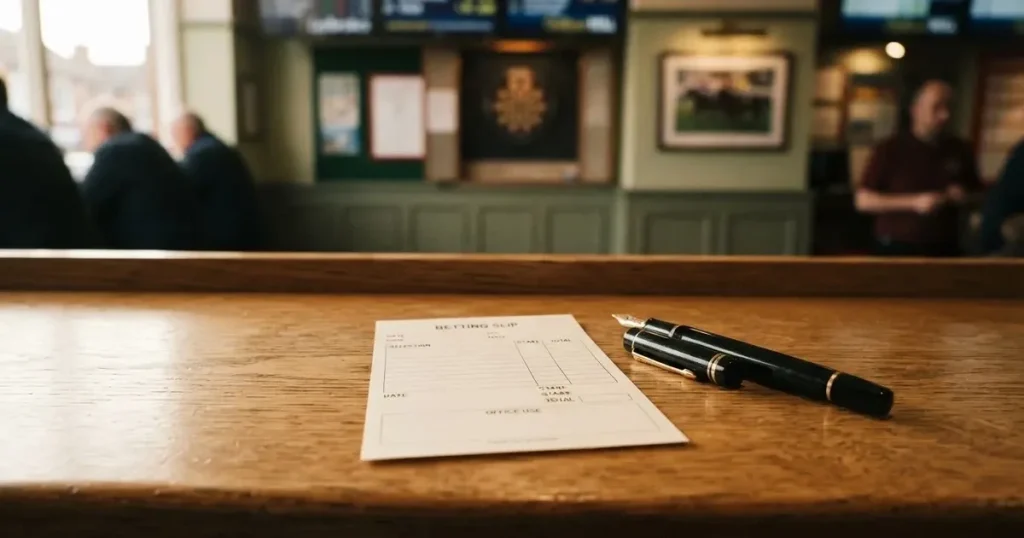
Over under betting is the wager where the bookmaker sets a number for a match statistic — the combined score of both teams is the classic, but goals, points, games, sets, corners, cards and a dozen other countables all get a line — and the punter backs whether the real figure finishes above it or below it. The “line” is the number the book posts; “over” wins if the stat ends higher, “under” wins if it ends lower, and a tie on the line itself is a “push”, which means the book refunds every stake. The wider point of this page is consequence: what that mechanism does to a stake once the margin and the rulebook are sitting beside it, and where the published odds and the small print stop being separable.
The licence register, the odds and the market descriptions here were verified against the Gambling Commission’s public register and the operators’ own terms as of October 30, 2026.
The Landscape of Over Under Markets
A market is a contest with two or three possible outcomes, each priced. The bookmaker’s margin (sometimes called the overround) is the percentage of every pound staked that the house keeps on average; it is built into the prices, it is never itemised on the bet slip, and it is the reason no price is ever “fair” in the actuarial sense. For a single two-way over/under line at even money on both sides — decimal odds 1.90 on the over and 1.90 on the under, fractional 9/10 each way — the arithmetic is straightforward. The payout share is 1 ÷ (1/1.90 + 1/1.90), which works out to roughly 95 %. The margin is 1 − 0.95, which works out to roughly 5 %. Spread that across the many lines a book publishes, and the average bettor loses about five pence of every pound they turn over on totals, before any other term of the offer starts working.

That 5 % is an example, not a quoted price. Real margins on real football lines drift lower at the busiest fixtures and higher on the back-end markets the house cares about less — an obscure corner count, an early-week NBA alternate line — so a punter who only bets the headline match total pays closer to the floor, and a punter who chases the long tail pays closer to the ceiling. The point of doing the arithmetic once is to fix the idea: the margin is the cost of placing a bet with anyone, it does not vanish when the line moves, and the rest of this page is the list of things that change its size.
The other qualifier worth pinning down at the outset is the difference between an over/under line and a handicap. A handicap moves one side of the contest before the bet is graded: Team A minus one goal, Team B plus one, the adjusted score is what counts. An over/under line is untouched by who is winning. A 2-1 win and a 3-0 win both sit above a 2.5 line; both sit below a 3.5 line. The shape of the bet is the same — pick over, pick under, push if it lands on the line — but the statistic being judged is different, and the markets attract different bettors because the inputs to each judgment are different.
A last piece of framing before the subject sharpens. The “total” is the word most professionals reach for when they mean an over/under line, and the words are used interchangeably on UK betting slips. “Match goals over 2.5”, “total points over 219.5”, “total games over 38.5” — those are all over/under markets. They look like a thousand separate offerings, but they are one mechanism repeated across every countable statistic in a fixture list. What changes between them is the number the book has to set, the speed at which information arrives, and the audience who has an opinion.
Statutory Background: What Great Britain Actually Permits
Betting on over/under lines in Great Britain is governed by the Gambling Act 2005 and the Gambling (Licensing and Advertising) Act 2014. The Gambling Commission — the non-departmental public body that regulates the commercial market on behalf of the Department for Culture, Media and Sport — issues the licences and keeps the public register that lists every holder. Since the 2014 Act, an operator whose remote facilities are used in Great Britain needs a Commission licence even if it is based in Gibraltar, Malta, Curaçao or anywhere else. A foreign licence is not a substitute. Northern Ireland sits outside the 2005 Act under its own older law, so a “GB licence” regulates Great Britain and nothing else — the distinction matters for cross-border promotions and for jurisdiction-specific complaints.

There is no statutory list of permitted markets. A bookmaker holds a licence for a category — the relevant one for a football total is the remote general betting standard (real events) licence — and offers markets under its own rules and the Commission’s Licence Conditions and Codes of Practice. The headline consequence: a book can list over/under on corners in a Conference North fixture, on fantasy points in a one-off esports event, or on the number of aces in a first-round tennis match, and the law does not stop it. The control sits with the operator and the licence conditions, not with a list of allowed bet types. That is also why no punter should assume a market is missing because it is unusual — it may be absent for commercial reasons rather than legal ones.
The age and identity floor is uniform. Minimum age is 18; since 7 May 2019, name, address and date of birth are verified before a customer can deposit or place a bet, including a free bet or bonus. There is no anonymous play at a licensed site. Credit cards have been banned for gambling in Great Britain since 14 April 2020 — that includes credit-card-funded payments through an e-wallet, while debit cards and bank-based payments are not affected. The player pays no tax on betting winnings; the operator pays General Betting Duty, currently 15 % of gross profits on most remote bets, with a remote rate of 25 % taking effect for non-UK-horse-racing remote bets from 1 April 2027 under an HM Government policy paper of 26 November 2025. None of those figures is passed through to the punter in any way that the public register shows.
The licence categories relevant to over/under betting are remote general betting standard (real events), which covers sports betting; remote general betting standard (virtual events), which covers simulated fixtures; and remote betting intermediary, which covers betting exchanges. The Commission’s register can be searched by business name, trading name, domain or account number and is the only test of whether a brand holds a licence. A registered operator may use .com or .co.uk — the domain proves nothing either way.
A bookmaker who does not hold the right licence has no business offering over/under lines to a customer in Great Britain. The point of the register is that anyone can check it, and the cost of skipping the check is paid in lost protections: no GAMSTOP coverage, no Commission complaints route, no approved dispute-resolution body, and no British consumer redress if funds are withheld. A licence is not a quality mark on the odds — it is a quality mark on the relationship.
Safeguards: Limits, Checks, and Where Help Lives
The Commission treats safer gambling as a licence condition, not a marketing line. Three layers matter for over/under bettors. First, GAMSTOP is the national multi-operator online self-exclusion scheme and has been a mandatory licence condition for online operators since 31 March 2020. Self-exclusion can run for six months, one year, five years, or five years with auto-renewal; after the minimum period the exclusion stays in place for a further seven years unless the customer asks GAMSTOP to remove it. GAMSTOP covers online sites and apps. Betting shops use a separate service. Anyone on GAMSTOP will be turned away at every licensed online operator, including every bookmaker reviewed in the comparison that follows.
Second, the financial vulnerability check (LCCP condition 3.4.4, in force since 30 August 2024) applies to licensed remote betting when a customer’s deposits minus withdrawals exceed £150 in a rolling 30 days — the £150 threshold has applied since 28 February 2025. This is a public-record check, looking for things like bankruptcy orders or county court judgments. It is not an income check and it is not a credit reference check, and the data sources are public registers rather than commercial bureaus. The wider “financial risk assessments” that have appeared in the press are a separate, staged plan announced on 7 July 2026, with no start date set — the right way to describe them is “announced, staged, no start date”, not “in force”. Anyone writing “affordability checks now apply” on a betting page is misreading the Commission timetable.
Third, deposit limits under RTS 12 are a structural change. Operators must offer a gross deposit limit on a fixed time frame; the first phase has applied since 31 October 2025, a second phase was postponed to 30 September 2026, and whether that second phase is live in the current calendar year is not established. The principle is settled — a punter can, and should, set a deposit limit before they place a bet — and the timing of any compulsory default sits with the regulator rather than the operator. There is no state-set deposit or loss ceiling for sports betting; the limit is the customer’s choice, and a bookmaker may set its own maximum stakes on top of that.
Help is also a layer. GamCare runs the National Gambling Helpline; GambleAware funds treatment and education; the NHS runs gambling clinics in several regions; Gamblers Anonymous runs local meetings. The Commission’s own advice is that a punter who feels their betting is moving past a hobby should use the safer-gambling tools a licensed operator is required to provide — deposit limits, time-outs, reality checks, product blocks — and that a punter who has stopped enjoying the bet should not start a new account. The licensed brands in the comparison that follows offer all of these tools, and the unlicensed ones offer none of them.
Betting on Mobile: Where the Lines Live
Most over/under bets in Great Britain are placed on a phone. The mechanism has not changed — the book posts a line, the punter taps over or under, types a stake, confirms the bet — but the surface has: live odds that update every few seconds during a football match, a bet builder that combines markets from a single fixture into one price, a cash-out button that lets the punter lock in profit or loss before the final whistle, and a price-boost tab that surfaces the day’s enhanced odds in one place. Each is a feature of a UK betting app rather than a separate betting product.
The practical shape of an over/under app is consistent across the licensed brands. The fixture list sits at the top; tapping a match opens a market menu sorted by type — match result, both teams to score, totals, handicaps, player props — with the totals line usually under a “total goals” or “total points” header. Live betting mirrors the same structure with a different colour and a clock counting. The bet slip is a persistent bar at the bottom of the screen, accepting single and combination bets, with the cash-out value updating as the live odds move.
Two features have become table stakes for the larger brands. Bet Builder — a same-game multi combining markets from one event into a single price, with most legs of an accumulator needing to come from different events for the bet to settle — is offered by bet365, Betfred, BetUK and most others; bet365 markets its version as Bet Builder+, available pre-match and in-play, with Super Boosts and Winnings Boosts on selected singles and Bet Builders sitting alongside. Cash out, which lets the punter close a bet before it settles at a price set by the book, is offered across the licensed set with varying degrees of partial and full cash-out, and is the single feature that turns a totals bet into something a punter can manage during the match rather than at full-time.
The app-store age rating is a useful sanity check. Most UK sports-betting apps carry a 17+ rating, occasionally 18+, on the Apple App Store. London Bet and Kwiff both carry 17+, in line with the rest of the licensed set. The rating is not a substitute for the licence register, but a high-rated licensed app and an unlicensed app with no age gate are usually the same app from two different sources — and the licensed one is the one to keep.
Predictions, Forecasts, and the Limits of Strategy
The search results behind this subject are crowded with phrases like “best over under strategy”, “winning tips”, and “predictions”. They are also where the strongest marketing on the subject sits, which is why the framing has to be careful. There is no system that turns over/under betting into a steady income. The price already includes the margin; the bettor’s job is to find lines where their estimate of the real probability is sharper than the bookmaker’s, and to do it consistently enough to overcome the built-in edge. That is the entire business of professional sports betting, and it is not what a tipster is selling.
What strategy language can legitimately point at is bankroll and process. A stake that is a fixed percentage of a bank — usually between 1 % and 3 % — survives losing runs without bankrupting the bettor, and it is the single rule that separates a disciplined approach from a sequence of escalating stakes chasing losses. The other discipline is closing the bet at the price the model said to take, not the price the market has drifted to since. Both rules cost nothing, both work without any insight into the sport, and both are the part of strategy that is universally applicable.
The sport-specific layer is where tips live. Football over/under 2.5 goals is the most-bet totals market in Great Britain, and the inputs that move it are form, expected goals, injury news and tactical match-up — the same data sources the bookmaker uses, just assembled by a bettor who has spent longer on that league. Tennis over/under games in a set works on serve percentages, return quality and surface. NBA over/under points is the totals market with the deepest data in the world, and the markets at the alternate-line tail (anything beyond the standard 5-point spread around the headline total) are where the most information advantage lives for bettors who model the league. None of that is a system that wins; each is a different data set, and the value of any tip is the value of the information behind it.
The honest framing is the right framing. The bookmaker’s margin is the cost of every bet; the bettor’s edge, if any, is the difference between their probability estimate and the implied probability inside the price. The strategy that lasts is the one that protects the bankroll, prices the bet honestly, and walks away from the markets the bettor does not have an edge in. A punter who chases tips does not have a strategy; they have a feed.
Bet Types and the Way Odds Are Quoted
An over/under bet is the umbrella. Underneath it sit several distinct market types, each priced and settled differently. The headline form is the match total — combined goals in football, combined points in basketball, combined games in tennis — at a single line set by the book. A 2.5 line in football is the canonical example: anything from a goalless draw up to a 2-2 tie stays under; a 2-1 win or anything higher goes over. The 2.5 line is the most popular because it pushes the result into a binary outcome with no possibility of a push — a 2-2 is below 3, a 3-1 is above 2, and the line itself never lands.
Half-lines and quarter-lines are the next step. A 2.25 line splits the stake: half the stake sits at 2, half at 2.5, so a 2-1 finish returns the half on 2 as a push and pays the half on 2.5 as a winner; a 3-1 finish pays both halves; a 2-0 finish loses both halves. A 2/3 line — written as “over 2, 3” or just “over 2.25” — is the same thing in different language. Quarter-lines are the bookmaker’s way of buying back the push, and they are the format on which most professional totals bettors operate, because the price is closer to the true probability than the half-line price.
Asian totals are the wider family. The Asian total uses quarter and half steps to remove the possibility of a push on the headline line — a 2.5 line has no push by construction — and to offer finer granularity on the price. The bettor backs a direction; the bookmaker sets the line; the result settles on the final score; and the only thing the punter decides is which direction and at what stake. The English equivalent is the half-line, which is most of what a UK punter will see on a standard match-day market.
Combination bets are how totals join the rest of the slip. A single over/under bet settles on one match. A double adds a second selection — usually a different match, occasionally a different market from the same match with the bet-builder mechanic — and the price multiplies. A treble, an accumulator, a Yankee, a Lucky 15, a Heinz, a Goliath — the layered combination bets offer bigger prices for more legs, with the implied probability of winning shrinking with each leg. A Lucky 15, for example, is four selections in 15 bets: six singles, six doubles, three trebles and a four-fold accumulator, with the unit stake multiplied by 15. The bookmaker’s margin compounds across the legs, so the long-accumulator punter pays a wider margin than the single-match punter, and the headline price on a 10-fold acca is roughly 5–10 % lower than the fair price once the margin is stripped out.
The odds format itself is worth a paragraph. UK bookmakers price in fractions by default — 5/1, 11/4, evens, 9/10 — and display the decimal equivalent beside the fraction for those who think in 6.00 and 3.75. The conversion is decimal = a ÷ b + 1, so 9/10 becomes 2.90 ÷ 1.90 depending on whether you count the stake. A 9/10 shot returns $9 profit for every £10 staked, plus the stake back — total return £19. The decimal equivalent is 1.90, which is the multiplier for the stake. Both formats describe the same price; the difference is whether the stake is included in the displayed number.
What does “odds-on” mean? Anything shorter than evens — a 4/6 shot at 1.67 decimal, an 8/11 shot at 1.73 decimal. A 5/1 shot is “odds-against” — bigger than evens, with the stake as the smaller number. The terminology dates from the days when bookmakers laid the odds on a piece of paper and adjusted them against each other; the modern terms are useful because a price shorter than evens implies an implied probability of more than 50 %, which is the threshold above which most professional bettors will not back without a strong edge.
Sports and Tournaments: Where the Markets Sit
Football is the totals market that pays the bills for most UK bookmakers. The Premier League, the Champions League, the Championship, La Liga, Serie A, the Bundesliga and the Scottish Premiership all carry deep match-goals markets, with the headline 2.5 line priced alongside 1.5, 3.5, 0.5 and the quarter-line variants. The English Football League’s lower divisions carry the same markets at a wider margin — the books care less, and the price is the cost. International tournament football — the World Cup, the European Championship, the Copa América, the Africa Cup of Nations — sees a temporary widening of the menu, with group-stage matches priced tightly and knockout matches carrying extra lines on corners, cards, shots, and player props.
Basketball is the second pillar. The NBA is the deepest totals market in the world, with the headline total priced on every game alongside a long list of alternates — anything from 180 to 240 points at half-point steps, plus player props on points, rebounds, assists, threes. The WNBA, the EuroLeague and the major European domestic leagues carry the same structure at thinner depth. The margins on NBA totals are tight at the headline line — competitive enough that professionals focus there — and balloon at the alternate tail.
Tennis is the third major totals sport. Match total games, set total games, total aces, total double faults, total breaks — every countable in a match gets a line, and the in-play markets update point by point. Grand Slams carry the deepest tennis markets; the smaller ATP and WTA events carry less.
Ice hockey, baseball, American football, cricket and rugby union round out the major totals sports. The NFL is a totals market on its own — the over/under on combined points is the headline bet for most fixtures, alongside a deep set of player props on passing, rushing and receiving yards. The T20 World Cup and the IPL carry cricket totals on match runs, team totals and individual player milestones. Rugby union internationals carry match tries, total points and handicaps.
Horse racing is a special case because totals markets on a horse race are unusual — the race has a winner, and the totals markets are framed as “total winning distance”, “total number of finishers”, “combined favourite-vs-outsider finish” or other exotic structures. The most popular markets on a race are the win and each-way markets, and totals betting is a smaller slice of the menu.
What the licence register does not do is limit the menu. A licensed bookmaker can post a totals line on any fixture it offers, on any statistic it chooses, and the law does not care. The menu is a commercial one — the size of the audience, the depth of the data, the interest of the bettor — and the punter who finds an unfilled corner of a market has usually found a wider margin, not an opportunity.
How an Over Under Bet Actually Works
The mechanics of placing an over/under bet are simple enough that the deeper cost is in the margin and the rules, not the placement. A punter opens a betting site or app, picks a fixture, opens the totals market, taps over or under at the displayed line, types a stake on the bet slip, and confirms. The bet is recorded; the stake is deducted; the line moves if other bettors back the other side; and the bet settles when the event is over according to the market’s settlement rule.
A worked example makes the payout concrete. A £10 stake on over 2.5 goals at decimal odds 1.90 (9/10 fractional) returns £19 if the match finishes with three or more goals — stake £10 plus £9 winnings — and returns nothing if the match finishes with two or fewer. A £10 stake on under 2.5 at the same decimal odds pays the same way if the match finishes with two or fewer goals. The bookmaker’s margin is the difference between that £19 return and the “fair” return of £20 on a true 50/50 outcome — the £1 missing is the cost of placing the bet at this bookmaker. On the long-term average, that £1 of every £20 staked is what the house keeps.
Combination bets multiply the price, and the worked example scales up. A £10 treble on three over/under lines at decimal odds of 1.90, 1.90 and 1.90 pays £10 × 1.90 × 1.90 × 1.90 = £68.59 if all three legs win. The margin compounds — the bookmaker’s edge on each leg multiplies into a bigger edge on the treble — and the long-term cost of a treble at these prices is meaningfully higher than the cost of three singles. The trade-off is the price: a treble pays roughly £68.59 to a £10 stake where three singles would each return £19, and the difference is the price of bundling the risk.
The settlement rules are the part that catches out new bettors. In football, markets such as over/under are settled on 90 minutes of play including referee-added stoppage time, unless the market states otherwise; extra time and penalty shootouts are excluded. A 1-1 draw after 90 minutes that goes to extra time and finishes 2-1 is a 1-1 match for totals purposes — the extra-time goal does not count. A match abandoned before 90 minutes is settled under each operator’s abandonment rule, which usually voids the bet and refunds the stake. A bet on a player prop — total shots, total passes — settles on the official match data, with each operator naming the data provider on its rules page.
A push is what happens when the final figure lands on the line. A 2-2 finish on a 2.5 line is a winner for over; a 2-2 finish on a 2.0 line is a push and the stake is refunded. A 100-point NBA game on a 100.0 line is a push. A football match finishing 2-2 on a 2.0 line is the textbook push. The bookmaker’s terms usually state the push rule alongside the line — “void if exactly on the line”, “all stakes returned” — and a punter who does not know the rule is a punter who will be surprised by a refund they did not expect.
The mechanic, in summary: pick a line, pick a side, set a stake, confirm. The bet settles on the market’s rule. The margin is paid on the way in. A push returns the stake and no profit. Everything else is the betting site making it easy to do that on a phone.
The Top 10 UK Bookmakers for Over Under Betting
The comparison that follows is a licensed-operator shortlist: every brand named here holds a remote general betting standard (real events) licence from the Gambling Commission, every one is on the Commission’s public register, every one takes part in GAMSTOP, and every one has been verified against that register on the date of this page. The set is ordered to put the strongest totals bookmakers first; the order is a working ranking, not a recommendation, and the verdict at the end of each review is the page’s own assessment rather than a verdict the operator has paid for. The right bookmaker for a punter depends on which sport they bet, which features they use, and how much of their time they spend on a phone.
| Bookmaker | Gambling Commission licence | Operator’s own position on totals |
|---|---|---|
| bet365 | Account 55148, Hillside (UK Sports) ENC | Bet Builder+ across pre-match and in-play; Super Boosts, Winnings Boosts and daily Bet Boosts across singles and Bet Builders |
| Betfred | Account 39544, Petfre (Gibraltar) Limited | Bet Builder, Sub Switch, Racing Post data, Extra Places on racing, live casino and bingo |
| William Hill | Commission-licensed, full sportsbook | Best Odds Guaranteed on UK and Irish horse racing from 8 AM on race day, singles and multiples, ante-post excluded |
| Hollywoodbets | Account 53028, Hollywoodbets International UK Limited | Acca-focused welcome: stake returned as a free bet up to £30 on a first losing accumulator (3+ legs, 4/1+) settled within 7 days |
| Copybet | Account 53774, Copybet UK Limited | Best Odds Guaranteed all day every day on UK and Irish racing; first past the post paid even on later disqualifications |
| BetUK | Account 39198, LeoVegas Gaming PLC | Free bets exclude virtual sports, esports and non-UK/IE horse racing; minimum odds apply |
| Fitzdares | Account 400, Fitzdares Limited | Cash out, accumulators, Lucky 15s, specials and ante-post on racing, football, tennis, rugby, cricket, golf, American football |
| Fitzwilliam Sports | Account 48760, SBKI Limited | Prices based on Oddschecker average price per selection; Apple and Google mobile apps |
| London Bet | Account 66162, Thistle Bet Limited | Combined sportsbook and casino; 17+ App Store age rating |
| Lottoland | Account 38991, EU Lotto Limited | Sports betting bundled with lottery, scratchcards and casino under one account |
bet365
bet365 is the deep-menu benchmark for UK sports totals. The remote licence sits with Hillside (UK Sports) ENC under Commission account 55148, and the brand has been a fixture on the British market since 2000. The headline product for a totals bettor is Bet Builder+, which combines markets from one event into a single bet pre-match or in-play, and the price-boost layer sits on top: Super Boosts, Winnings Boosts on Bet Builders and selected singles, and a daily Bet Boosts feed. The in-play markets on football, basketball and tennis update at the speed the data arrives, and the cash-out button closes a totals bet at a price the book has set during the match.
For a totals-focused punter, bet365 is the bookmaker to measure other bookmakers against. The menu is wide, the lines are sharp on the headline fixtures, and the in-play totals are the fastest to update of any licensed UK book. The cost of that depth is the size of the platform: there is more to learn on bet365 than on a smaller bookmaker, and the bettor who only bets football on the Premier League is paying for NBA, NFL and tennis infrastructure they do not use. Best for the punter who wants the deepest menu and the fastest in-play totals; the headline price on the biggest fixture is the right one to take.
Betfred
Betfred has been a high-street bookmaker since 1967 and a digital one for most of that, and the remote licence sits with Petfre (Gibraltar) Limited under Commission account 39544. The app features Bet Builder, Sub Switch — the feature that lets a punter swap a player out of an accumulator if the player does not start — Racing Post data integrated for form, live casino, and Extra Places on horse racing. The Bet Builder structure is the natural place for a totals bettor: pre-match totals combine with other markets from the same fixture, and the price is the bookmaker’s combined line.
The price is the right comparator for the deep-menu benchmark. Betfred does not always beat bet365 on price at the headline line, but the Bet Builder and Sub Switch combination is a feature set bet365 does not match on its own, and a punter who builds accumulators on Premier League and Champions League totals will use those features more than the cash-out button. The trade-off is depth: Betfred’s menu on the back-end markets is thinner than bet365’s, and a punter looking for an obscure NBA alternate line may not find it here. The Bet Builder and Sub Switch combination makes Betfred a compelling choice for accumulators on UK and Irish football.
William Hill
William Hill is the other historic name on the list, founded in 1934 and on the high street long before the digital market existed. The remote licence is held through the company’s UK entity and the categories on the register cover remote general betting standard (real events). The headline feature is Best Odds Guaranteed on UK and Irish horse racing from 8 AM on the day of the race, on both single and multiple bets; it does not apply to ante-post, tote or pari-mutuel bets. For a totals bettor who also bets racing, that is the most generous BOG structure on the licensed UK market, and it pays every time the starting price is bigger than the price the bet was taken at.
For totals betting specifically — football, basketball, tennis — William Hill is a solid mid-menu bookmaker with full Bet Builder, cash-out and in-play totals. It does not have the headline-line price advantage that bet365 sometimes does at the busiest fixtures, but the BOG structure pays a totals bettor who also bets racing in a way no other bookmaker on this list does. The trade-off is product focus: William Hill is racing-first with a deep sportsbook behind it, and a punter whose interest is purely football totals is not using the strongest feature the book offers. William Hill is the clear choice for a serious horse-racing bettor who also takes an interest in football.
Hollywoodbets
Hollywoodbets is a South Africa-rooted operator with a UK-licensed digital platform, and the remote licence sits with Hollywoodbets International UK Limited under Commission account 53028. The brand’s sports welcome offer, as listed on the UK App Store, returns the stake as a free bet of up to £30 on a first qualifying losing accumulator (stake £10+, 3+ legs, odds of 4/1 or greater, settled within 7 days); one free bet per customer, new players depositing £10 or more by card. The offer is acca-shaped and acca-targeted, and a punter who only bets singles will not get the full value from the welcome package.
For a totals bettor, Hollywoodbets is a smaller menu than bet365 or Betfred, but the prices on the headline Premier League and Champions League fixtures are competitive, and the acca focus of the welcome offer is the natural shape of a totals bettor’s slip — three or four legs on match goals, each leg an over/under line at a price around 1.90. The trade-off is depth: a punter looking for NBA or NFL totals at this bookmaker will find a smaller menu than the bigger books, and the alternate-line tail may not be there. Hollywoodbets offers a competitive welcome for accumulator bettors who want a sharp, acca-focused incentive.
Copybet
Copybet is a UK-licensed operator that combines a traditional sportsbook with a copy-betting feature, and the remote licence sits with Copybet UK Limited under Commission account 53774. The headline features are Best Odds Guaranteed all day, every day, on all UK and Irish racing, and first past the post paid on horse racing even when the winner is later disqualified. The BOG structure is wider than William Hill’s — “all day” rather than from 8 AM, and the first-past-the-post rule protects the punter from a steward’s decision after the race.
For totals betting on football, basketball and tennis, Copybet is a full-menu bookmaker with Bet Builder and in-play markets, and the racing features are a useful layer for a punter who bets both. The trade-off is brand recognition: Copybet is smaller than the historic names, and the punter who values a long-established brand may not find it here. The licence is right, the menu is full, and the racing features are the strongest on the list outside William Hill. Copybet is a strong option for a punter who values high-quality BOG structures across both racing and football.
BetUK
BetUK sits on the same LeoVegas Gaming PLC licence as BetMGM UK, with Commission account 39198 and the LeoVegas Gaming PLC entity listed on the register. The brand’s free-bet structure, as listed on the UK App Store, excludes virtual sports, esports and non-UK/IE horse racing, with minimum odds applying. The brand is positioned as a UK-focused sportsbook with a casino layer behind it, and the menu is full on the headline football and racing markets.
BetUK offers a solid, middle-ground sportsbook with strong focus on football markets. It runs on the LeoVegas platform, sharing KYC and safer-gambling infrastructure with brands like BetMGM UK, which gives it a familiar feel for a punter who has played at other LeoVegas-licensed sites. For a fan of UK and Irish football who wants a reliable, regulation-backed platform, BetUK provides a competitive menu, even if its US sports offerings are lighter than what a tier-one bookmaker might display.
Fitzdares
Fitzdares is a UK-focused premium sportsbook, and the remote licence sits with Fitzdares Limited under Commission account 400. This entry on the public register is one of the oldest, and the brand has a long-standing reputation as a high-end bookmaker. The app features cash out, accumulators, Lucky 15s, specials and ante-post markets on horse racing, football, tennis, rugby, cricket, golf and American football, with in-play live odds. The menu is wide and the focus is on the racing-and-football punter.
For a totals bettor, Fitzdares is a solid mid-menu bookmaker with the depth to handle a Premier League or Champions League bettor and a thinner layer on the US sports. The trade-off is brand position: Fitzdares positions itself at the premium end of the market, and a small-stake punter may not get the full value from a bookmaker that prizes itself on higher-stakes accounts. Best for the racing-and-football punter with a higher-stakes approach; the menu is full on the headline sports and the licence is right.
Fitzwilliam Sports
Fitzwilliam Sports sits on the SBKI Limited licence under Commission account 48760, which authorises it for remote general betting. The brand’s distinctive feature, as listed on its home page, is that prices are based on Oddschecker’s average price for each selection — a model that pays the punter the market average rather than the bookmaker’s own line. The brand offers Apple and Google mobile apps, and the menu is full on football, horse racing and the headline sports.
Fitzwilliam Sports positions itself as a price-following bookmaker, which appeals to a punter who prioritises market-average odds. Since the model relies on tracking other books rather than building lines internally, the back-end depth can be shallower than at market leaders like bet365. It is a straightforward, transparent approach for the punter who wants to avoid paying a bookmaker’s specific margin on the main markets and is content with a more focused menu.
London Bet
London Bet is published by Thistle Bet Limited, with the remote licence sitting under Commission account 66162 and the categories on the register covering remote general betting standard (real events). The brand combines a sportsbook with a casino layer, and the app carries a 17+ App Store age rating. The brand positions itself around the London market, with a smaller footprint than the historic names.
For a totals bettor, London Bet is a smaller-menu bookmaker with full coverage on the headline Premier League and Champions League fixtures, a thinner layer on the back-end markets, and a casino layer that does not affect the sports betting product. The trade-off is product focus: a punter whose interest is purely football will find the menu adequate and the licence right, and a punter who wants the deepest menu will need a bigger bookmaker. Best for the London-focused punter who wants a full UK-licensed sportsbook; the menu is solid on the headline sports.
Lottoland
Lottoland sits on the EU Lotto Limited licence under Commission account 38991, also authorised for remote general betting. The brand’s distinctive feature is the bundling of sports, lottery, scratchcards and casino into one account — a one-wallet structure that lets a punter move between products without a second account. The sports betting menu is full on the headline sports, with a smaller layer on the US sports than the dedicated sportsbooks.
For a totals bettor, Lottoland is a useful bookmaker for a punter who also plays the lottery or scratchcards — the one-wallet structure means the same deposit covers both products. The trade-off is product focus: a punter whose interest is purely sports betting will not use the lottery or scratchcard layer, and the menu on the back-end sports markets is thinner than at the dedicated sportsbooks. Best for the punter who wants sports and lottery on one account; the menu is solid on the headline sports and the one-wallet structure is the right shape for a multi-product punter.
Verdict on the Shortlist
The honest summary across the ten brands: the headline-line price on the biggest fixtures is competitive across the set, the menu depth separates the books more than the price does, and the right bookmaker depends on which sport the punter bets and which features they use. bet365 is the deepest-menu benchmark for a totals bettor; Betfred earns its place on Bet Builder and Sub Switch; William Hill and Copybet earn theirs on the racing features; Hollywoodbets earns its on the acca welcome; BetUK earns its on the LeoVegas platform; Fitzdares earns its on the premium positioning; Fitzwilliam Sports earns its on the price-following model; London Bet and Lottoland earn theirs on the niche positioning.
The punter who only bets Premier League match goals and wants the deepest menu and the fastest in-play totals takes bet365. The punter who builds accas across UK football takes Betfred or Hollywoodbets. The punter who bets racing seriously alongside football takes William Hill or Copybet. The punter who wants the market-average price on the headline sports takes Fitzwilliam Sports. The punter who wants a single account for sports and lottery takes Lottoland.
What no bookmaker on this list can do is beat the margin. Every price carries the bookmaker’s edge; the punter’s job is to find the lines where their probability estimate is sharper than the bookmaker’s, and to do it consistently. The licence is the floor — it gets the dispute-resolution route, the GAMSTOP coverage and the bonus cap — and the menu is the ceiling.
Frequently Asked Questions
How is an over under bet settled when the result lands exactly on the line?
The bet is a push and every stake is refunded at the odds displayed on the bet slip. A 2-2 finish on a 2.0 line is the textbook push; a 100-point NBA game on a 100.0 line is a push; a tennis match finishing 6-4, 6-4 on a 20.5 total games line is not a push because the line is half-stepped. The bookmaker’s settlement rules are listed on its rules hub and the bet slip carries the line, the selection and the price at the time the bet was placed.
What does the term “over under” actually mean in sports betting?
Over under is the name for a market where the bookmaker sets a number for a match statistic and the punter backs whether the real figure finishes higher or lower. The combined score of both teams is the most common statistic, but goals, points, games, sets, corners, cards and a dozen other countables all get a line. The terms “total” and “over/under” are used interchangeably on UK betting slips.
How can a punter check that a bookmaker holds a Gambling Commission licence?
The Commission’s public register is searchable by business name, trading name, domain or account number and is the whole test of who holds a licence. The categories on the register — remote general betting standard (real events) for sports betting — show what the licence covers, and the entry lists the licence holder’s registered name. A licensed bookmaker may use .com or .co.uk, and the domain proves nothing either way; the register is the check.
How is the return on a bet worked out from the stake and the odds?
For a single bet, the return is stake × decimal odds, and the profit is stake × (decimal odds − 1). A £10 stake at decimal odds 1.90 returns £19 (£10 stake + £9 profit). For a combination bet the prices of the legs multiply into one, so a £10 treble at decimal odds 1.90, 1.90 and 1.90 returns £10 × 1.90 × 1.90 × 1.90 = £68.59. The odds format on UK slips is fractional by default with the decimal equivalent displayed beside it; the conversion is decimal = a ÷ b + 1.
What is the bookmaker’s margin and how can it be seen in the odds?
The margin is the percentage of every pound staked that the bookmaker keeps on average, and it is built into the prices on every market. For a single two-way market at decimal odds 1.90 on both sides — a 9/10 shot on over and a 9/10 shot on under — the payout share is 1 ÷ (1/1.90 + 1/1.90) = 0.9474, which works out to roughly 95 %. The margin is 1 − 0.95 = 0.0526, which works out to roughly 5 %. The example assumes even-money prices on a two-way line; real margins drift lower at the busiest fixtures and higher at the back-end markets.
Bet types & in-play – oddsguaranteed
Content created by the «oddsguaranteed» team
